We are an independent, advertising-supported comparison service. Our
goal is to help you make smarter financial decisions by providing you
with interactive tools and financial calculators, publishing original
and objective content, by enabling you to conduct research and compare
information for free - so that you can make financial decisions with
confidence.
Bankrate has partnerships with issuers including, but not limited to,
American Express, Bank of America, Capital One, Chase, Citi and
Discover.
Katie Kelton is the lead writer on Bankrate’s community team and Certified Credit Counselor™, helping everyday people solve problems and make good money decisions.
Steve Dashiell has edited and written about personal finance for over 5 years, most of those centered around credit cards. Having experienced a few financial missteps following high school, Steve is dedicated to creating helpful, informative content that remains accessible to those who will benefit from it most.
The advice in this article is offered by the
team independent of any bank or credit card issuer.
This article may contain
from our partners, and terms may apply to offers linked or accessed through this page.
as of posting date, but offers mentioned may have expired.
The Bankrate promise
At Bankrate, we have a mission to demystify the credit cards industry — regardless or where you are in
your journey — and make it one
you can navigate with confidence. Our team is full of a diverse range of experts from credit card pros
to data analysts and, most importantly,
people who shop for credit cards just like you. With this combination of expertise and perspectives, we
keep close tabs on the credit
card industry year-round to:
Meet you wherever you are in your credit card journey to guide your information search and help you
understand your options.
Consistently provide up-to-date, reliable market information so you're well-equipped to make
confident decisions.
Reduce industry jargon so you get the clearest form of information possible, so you can make the
right decision for you.
At Bankrate, we focus on the points consumers care about most: rewards, welcome offers and bonuses, APR,
and overall customer experience.
Any issuers discussed on our site are vetted based on the value they provide to consumers at each of
these levels. At each step of the way,
we fact-check ourselves to prioritize accuracy so we can continue to be here for your every next.
Editorial integrity
Bankrate follows a strict editorial policy, so you can trust that we’re putting your interests first.
Our award-winning editors and reporters create honest and accurate content to help you make the right
financial decisions.
Key Principles
We value your trust. Our mission is to provide readers with accurate and unbiased information, and we
have
editorial standards in place to ensure that happens. Our editors and reporters thoroughly fact-check
editorial
content to ensure the information you’re reading is accurate. We maintain a firewall between our
advertisers and
our editorial team. Our editorial team does not receive direct compensation from our advertisers.
Our recommendations and card ratings are produced independently without influence by advertising
partnerships with issuers.
Editorial Independence
Bankrate’s editorial team writes on behalf of YOU – the reader. Our goal is to give you the best advice
to help you
make smart personal finance decisions. We follow strict guidelines to ensure that our editorial content
is not influenced
by advertisers. Our editorial team receives no direct compensation from advertisers, and our content is
thoroughly fact-checked
to ensure accuracy. So, whether you’re reading an article or a review, you can trust that you’re getting
credible and
dependable information.
How we make money
You have money questions. Bankrate has answers. Our experts have been helping you master
your money for over four decades.
We continually strive to provide consumers with the expert advice and tools needed to
succeed throughout life’s financial journey.
Bankrate follows a strict
editorial
policy,
so you can trust that our content is honest and accurate. Our award-winning editors and
reporters create honest and accurate content to help you make the right financial
decisions. The content created by our editorial
staff is objective, factual, and not influenced by our advertisers.
We’re transparent about how we are able to bring quality content, competitive rates, and
useful tools to you by explaining how we make money.
Bankrate.com is an independent, advertising-supported publisher and comparison
service. We are compensated in exchange for placement of sponsored products and
services, or by you clicking on certain links posted on our site. Therefore,
this compensation may impact how, where and in what order products appear within
listing categories, except where prohibited by law for our mortgage, home equity
and other home lending products. Other factors, such as our own proprietary
website rules and whether a product is offered in your area or at your
self-selected credit score range, can also impact how and where products appear
on this site. While we strive to provide a wide range of offers, Bankrate does not
include information about every financial or credit product or service.
Although first-class flight upgrades aren’t as common as they used to be, it’s still possible for people with elite airline status to get rewarded for their loyalty with a bump into a higher class. With a good travel credit card, earning those upgrades becomes even easier.
Here are some of the best credit cards for first class upgrades.
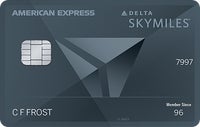
Delta loyalists who like traveling in style can make good use of this top-tier Delta SkyMiles® Reserve American Express Card, which grants multiple opportunities for seat upgrades to Delta First Class. Enjoy airport lounge access — and bring a friend four times a year — as well as annual credits for Delta Stays, Resy, rideshare and Global Entry or TSA PreCheck.
You’ll also earn 3X miles on Delta purchases and 1X miles on all other purchases.
Pros
After earning your annual MQDs credit of $2,500, you’re halfway to the first elite status level, which gets you complimentary seat upgrades for most flights except Basic Economy.
Cardholders without elite status can also get on the complimentary upgrade list after elite status members.
Access Delta Sky Club® lounges, The Centurion Lounges and an annual companion certificate.
Cons
The high annual fee is hard to justify if you don’t fly Delta often or tap into all the luxury perks and credits.
Best for American Airlines flyers
Citi® / AAdvantage® Executive World Elite Mastercard®
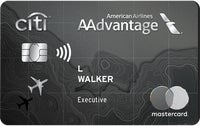
If you fly American Airlines often but dream of upgrading to a first-class seat and stopping by the lounge en route, the Citi® / AAdvantage® Executive World Elite Mastercard®* can get you there. By using the card for eligible purchases, you’ll get 1 Loyalty Point per mile earned, as well as up to 20,000 Loyalty Points per year toward elite status. Plus, get into more than 100 Admirals Club and partner lounges worldwide after breezing through airport security with TSA Precheck or Global Entry, paid for by the card.
You’ll also earn 4X miles on eligible American Airlines purchases and 1X miles on all other purchases.
Pros
After earning at least 40,000 points to reach Gold elite status, get complimentary seat upgrades for American and Alaska Airlines flights.
Access Admirals Club and partner lounges, priority boarding and free checked bags.
Cons
The high annual fee is hard to justify if you don’t fly American Airlines often or use your lounge membership (an $850 value).
Best for United flyers
United Quest℠ Card
United Quest℠ Card* has a more modest annual fee than comparable co-branded airline cards, while offering similar miles value and a chance at elite status. Plus, the $200 annual credit covers over half the fee. Reaching elite status takes more spending than other cards, but you can cash in on the first year’s welcome bonus of earn up to 100,000 United MileagePlus bonus miles and 3,000 PQP after spending $4,000 on qualifying purchases in the first three months of opening an account (90K + 10K more miles with an authorized user*).
You’ll also earn 10x total miles on eligible United flights, 4x miles on all other eligible United® purchases, 2X on dining, select streaming services and all other travel and 1X miles on all other purchases.
Pros
By earning 10,000 points after spending $20,000, you can become a Premier status member with free seat upgrades.
The annual United purchase credit, up to 10,000 miles in flight credits and free checked bags can make the card pay for itself.
Cons
The amount you have to spend to reach the first tier of elite status is higher than with other airline cards.
As an Atmos™ Rewards Ascent Visa Signature® credit card cardholder you can earn Alaska Airline’s $99 Companion Fare (plus taxes and fees from $23) each year after spending $6,000 or more in the year before your account anniversary — making this a useful card for travelers who often bring a family member or friend on Alaska or partner flights. You’ll also get free checked bags and preferred boarding, and you can work your way up to elite status by earning 1 elite-qualifying mile (EQM) for every $3 spent on your card, up to 30,000 EQMs.
You’ll also earn 3X miles on eligible Alaska Airlines purchases; 2X miles on gas, EV charging station, cable, streaming services and local transit (including ride share) purchases and 1X miles on all other purchases.
Pros
By earning at least 20,000 EQMs — through $60,000 in purchases — to reach the first tier of elite status, get complimentary seat upgrades for you and your companion. (Companions will be eligible starting later in 2025 for the first tier, MVP status. Companions are already eligible for the upper statuses.)
For the lower annual fee, you can get the Companion Fare and free checked bags for you and six other people on the reservation — making it a good travel card for families.
Cons
The Alaska Airlines network is somewhat limited in destinations.
Southwest loyalists love the Southwest Rapid Rewards® Priority Credit Card for its annual travel credit and anniversary points worth more than the annual fee, on top of its big rewards on Southwest purchases and four free upgraded boardings per year. Southwest doesn’t have first class, but getting on the plane first affords you a better seat. If you can earn the Companion Pass through a limited-time offer, by flying 100 qualifying one-way flights or earning 135,000 qualifying points in a calendar year, you can bring a passenger on flights with you for free — getting even more bang for your buck.
You’ll also earn 4X points on Southwest Airlines® purchases, including flights, inflight, and Southwest gift cards; 2X points at gas stations and restaurants and 1X points on all other purchases.
Pros
By spending $116,667 on the card or flying 20 qualifying one-way flights, you can reach A-List status with priority boarding and same-day changes or standby.
Cons
The card doesn’t offer luxury perks like lounge access, and there’s technically no first-class seating option.
If you fly with multiple airlines and want to earn and redeem rewards more flexibly, the Chase Sapphire Reserve® is a way to earn generous points on travel and dining reservations or takeout. You could use the annual travel credit to upgrade at least one flight a year and you get a Priority Pass Select lounge membership so you can wait for your flights in style. Points are also transferable to Chase partners, but they generally won’t count toward elite status when you do this.
You’ll also earn 8X points on all travel purchases booked through Chase Travel; 4X points on flights and hotels booked directly with airlines and hotels; 3X points on dining and 1X on all other purchases.
Pros
The $300 annual travel credit covers almost half of the annual fee and could go toward upgrading your flight. The credit covers all travel purchases, not just those through the issuer’s travel portal.
Enjoy lounge access, expedited airport entry, travel insurance, a DashPass subscription and more perks.
Cons
The hefty annual fee is hard to justify if you don’t maximize the card or value luxury travel and dining.
Best for flexible flyers who prefer a lower annual fee
The Capital One Venture X Rewards Credit Card is another upper-tier travel card with flexible rewards earning and redemption through Capital One Travel. The annual fee is easier to swallow with the annual travel credit and anniversary points, which you could put toward upgrading a flight. Points are also transferable to Capital One partners, but they generally won’t count toward elite status.
You’ll also earn 10X miles on hotel and rental cars through Capital One Travel, 5X miles on flights and vacation rentals through Capital One Travel and 2X miles on all other purchases.
Pros
The $300 annual credit and 10,000 anniversary points (worth $100) cover the annual fee and could go toward upgrading to first class on a flight through Capital One Travel.
Access Priority Pass Select and Capital One Lounges, luxury hotel credits, expedited airport entry, travel insurance, travel guide subscriptions and more perks.
Cons
The annual credit is only usable through Capital One Travel, and transfer partners are limited.
Cardholders can be added to the complimentary upgrade list, after Medallion® members
Earn $2,500 Medallion® Qualification Dollars (MQDs) each year and $1 MQD for each $10 in purchases to help reach a Medallion® status
Citi® / AAdvantage® Executive World Elite Mastercard®*
American Airlines flyers
$595
Earn 1 Loyalty Point for every 1 mile earned on eligible purchases
Earn 10,000 Loyalty points after reaching 50,000 Loyalty Points and another 10,000 points after reaching 90,000 points in one year to help reach elite status
Preferred boarding
United Quest℠ Card*
United Airlines flyers
$350
Earn 1 Premier qualifying point (PQP) for every $20 in purchases up to 18,000 points to help reach Premier statusPriority boardingAnnual $200 United purchase credit you can use to book an upgraded ticket
Annual $300 travel credit you can use to book an upgraded ticket through Capital One Travel
How to choose a credit card for flight upgrades
If you want a more consistent way to upgrade to first class without relying on luck, your best bets are earning elite status or cashing in rewards. But those might call for a rewards card with a high price tag. Here are some considerations for picking a card.
Decide between a co-branded airline card and a general travel card. An airline card can offer a smooth path toward elite status with first-class upgrades, as well as airline-specific perks like free checked bags and companion passes. On the other hand, a general travel card lets you use rewards with multiple airlines more freely but won’t offer the same boosts toward airlines’ elite statuses.
Consider whether you’ll spend enough to reach elite status. Airlines’ elite statuses come with great perks like complimentary upgrades — and because of that, the earning requirements are high. Most upper-tier airline cards offer a boost in earnings, but you’ll still have to spend thousands with the card to reach elite status.
Weigh the value of luxury perks against a high annual fee. Are lounge access, potential for elite status and annual credits worth paying hundreds of dollars in a card’s annual fee? For some people, the answer is yes. For more casual travelers, the answer might be no. You can opt for a lower annual fee travel card — it just may not offer the same potential for flight upgrades.
However, Ryan Flanigan, Bankrate credit cards writer and frequent traveler, points out that an earned flight upgrade may not always be eligible for first class:
If you earn upgrades through credit cards or elite status, it may only be from economy to premium economy.
— Ryan Flanigan, Bankrate credit cards writer
The right travel credit card can get you into first class by achieving elite status, cashing in rewards or paying for it with an annual travel credit. You’ll just want to consider how often you fly the airline and whether the credit card annual fee is worth it. You can also try finagling a first-class seat on a less full flight by asking a crew member, but securing it ahead of time is a more reliable route.
Frequently asked questions about cards for flight upgrades
If you don’t have elite status, you can still improve your odds of getting a flight upgrade. First, you’ll want to be on a flight with empty seats in an upgraded class — which means skipping busy flights in favor of less popular ones. Look for flights that are cheaper and scheduled for the middle of the week outside peak hours. It also helps if you’re a member of the airline’s frequent flyer program.
You can also ask the gate agent or flight attendant if you can move up — the odds are getting slimmer, but it doesn’t hurt to try. You also might be able to pay for a discounted upgrade at check-in.
Elite status is something you achieve with an airline’s loyalty or frequent flyer program. It means you’ve spent enough and flown enough to reach one of the elite status tiers, offering perks like free flight upgrades, priority boarding, lounge access, free checked bags and more.
Hotels, rental car companies and retailers can also offer their own versions of elite status.
The best travel card for you is the one that you can maximize enough to justify an annual fee. That likely means you fly often enough with the co-branded airline or partner airlines to earn rewards, and you can tap into any statement credits, companion passes or lounge access that are offered.
That said, some travel cards offer better rewards on everyday spending than others. If you prefer to use your travel card for all your purchases, look for at least 2X points or miles on purchases besides travel.
*The information about the Citi® / AAdvantage® Executive World Elite Mastercard® and United Quest℠ Card has been collected independently by Bankrate. The card details have not been reviewed or approved by the issuer.
Information about the Atmos™ Rewards Ascent Visa Signature® credit cardwas last updated on July 1st, 2026.
Did you find this page helpful?
Why we ask for feedback
Your feedback helps us improve our content and services. It takes less than a minute to
complete.
Your responses are anonymous and will only be used for improving our website.
Help us improve our content
Thank you for your
feedback!
Your input helps us improve our
content and services.
Quick citation guide
Select a citation to automatically copy to clipboard.
APA:
Kelton, K. (2026, April 01). Best credit cards for flight upgrades. Bankrate. Retrieved September 01, 2026, from https://www.bankrate.com/credit-cards/travel/best-credit-cards-flight-upgrades/
Copied to clipboard!
MLA:
Kelton, Katie. "Best credit cards for flight upgrades." Bankrate. 01 April 2026, https://www.bankrate.com/credit-cards/travel/best-credit-cards-flight-upgrades/.
Copied to clipboard!
Chicago:
Kelton, Katie. "Best credit cards for flight upgrades." Bankrate. April 01, 2026. https://www.bankrate.com/credit-cards/travel/best-credit-cards-flight-upgrades/.