


Upstart Personal Loan: Best for thin or no credit

- APR
- 6.20% - 35.99%
- Minimum credit score
- 300
- Estimated monthly payment
- $202
- Loan amount
- $1K - $75K
- Bankrate score
- 4.7 out of 5 stars
 Edited by
 Reviewed by
Edited by
Reviewed by
Reviewed by
Edited by
Reviewed by



Our team researched the best emergency loan rates available so you can compare lenders in one place.
Fill out a quick form to be matched with lenders that meet your needs. The details you provide are for prequalification purposes only and will not impact your credit score.
Choose a loan from a Bankrate partner and receive your funds if you qualify.
Use Bankrate's calculator to find the perfect emergency loan repayment plan for you. Enter different loan amounts, terms and interest rates to compare calculate estimated monthly payments and compare the amount you'll pay in total interest.
Remember: A shorter term has a higher monthly payment but costs you less overall interest. A long repayment term has lower monthly costs but costs more over the life of the loan.
When it comes to comparing personal loan offers for an emergency, you may want to prioritize speed over anything. However, if you have some time before you need the funds, the following steps are worth knowing.
The author’s expert insight
"As someone who used to broker loans for a living, I know that the lowest rate lenders are not always the best choice for your circumstances. Those low rates may come with extra fees, short terms, and requirements that don’t fit your financial needs or that you can’t qualify for. A lender that offers slightly higher rates but longer terms may give your budget more breathing room than a lender that offers super low rates on loan balances you have to pay off quickly at a high monthly payment."
The interest rate you're offered will depend on several factors, including your credit score, your income, your current debts, the Federal Reserve's actions, the type of loan you're interested in and the repayment term you choose.
Average rates as of March 18, 2026
| Personal loans | 12.26% |
To get an up-to-date picture of industry rates, Bankrate's Market Analysis team conducts the weekly Bankrate Monitor survey. The rate we share is the average offered by America's largest banks and thrifts to customers with a 700 FICO score, $5,000 loan amount and three-year repayment plan.
What this means if you're shopping for the best rates:
Average personal loan interest rates vary significantly based on borrowers’ credit scores. Lenders offer borrowers with fair or bad credit higher rates because they see them as more likely to default.
Borrowers with good or excellent credit are more eligible for the lender's most competitive rates and terms. Lenders often also charge lower rates for shorter terms, higher loan amounts and may offer discounts for automatic payment set up. Other factors beyond your control also influence lender rates, including the Federal Reserve's actions.
Check your credit score to calculate your potential interest rate.
An emergency loan is a type of personal loan that's used for emergency situations, like medical bills, vehicle repairs or household appliance repairs. Most borrowers seek out these loans for quick access to cash — which many lenders can deposit directly into your account within one business day of approval after verifying your income and credit score.
Emergency loans are typically installment loans, meaning you receive all your funds in a lump sum and repay the balance in fixed payments. Repayment periods are generally between one and seven years. Unlike credit cards, emergency personal loans feature fixed rates, giving you a predictable payment for the life of the loan.
Bankrate insight
Many standard personal loans are branded as “emergency loans.” Always check the advertised funding times — some lenders offer same-day funding which may come in handy if you need cash faster than the one to two business days most lenders take to fund an emergency loan. Consider starting or beefing up your emergency savings fund to avoid borrowing for unexpected issues in the future.
There are many ways to get funds in an emergency. Some carry more benefits than others. A few of the most common types of emergency loans include the following.
Personal loans are a good option for emergencies because you can get money quickly sometimes the same day you’re approved. Many credit cards have interest rates of 20 percent or more, while the average personal loan interest rate hovers just above 12 percent, making them a cheaper emergency funding choice. People with excellent credit and a strong income can score rates below 8 percent.
In terms of risk, personal loans are often unsecured. This means you won't lose any collateral if you default on a personal loan.
Home equity loans and home equity lines of credit (HELOCs) are less common for emergency uses since they take longer to fund. However, they usually come with the lowest rates since they're secured by your home.
Your credit card company may extend you a short-term loan in the form of a cash advance. This type of loan is one of the fastest ways to access money since you get the cash from a credit card you already have. The drawback is the interest rates and fees can be higher than those for standard purchases with your card. Also, unlike with a standard purchase, there's typically no grace period, so interest starts accruing immediately.
Payday loans are short-term loans that don't require a credit check and typically must be repaid with your next paycheck. They are extremely risky with triple-digit APRs and high fees. Failing to make payments could send you deeper into debt.
Better for: This type of loan is best used as a last resort for borrowers who can’t qualify for a bad credit personal loan and need the funds to cover essentials like heat or food for their family.
Title loans are a type of short-term loan typically repaid within 15 to 30 days after getting the funds. Like payday loans, they often don’t require credit checks. These loans, while convenient, carry increased risk, like sky-high interest rates and fees. They also use your car as collateral and the lender could seize your vehicle if you default on your loan.
For small emergencies bills — usually between $100 and $500 — check out early payday apps. They don’t typically require credit checks and come with low or no fees. However, the apps need to verify a history of paychecks deposited into your bank account to qualify. Some charge fees for quick cash access. But remember that the money will come out of your future paychecks, meaning they’re best used only in a temporary pinch.
Financial health check
Borrowing money to pay for an emergency is a sign that your savings health may need a checkup. Bankrate’s 2025 Annual Emergency Savings Report found that 19 percent of U.S. adults have no emergency savings as of March 2025. Consider automating your savings, even if it's a small amount, to build a fund to pay cash for the unexpected rather than racking up interest charges with an emergency loan.
When you're in a pinch, it can be hard to take the time to consider the pros and cons of emergency loans. But knowing how they can assist you and what may be at stake will help you make the right choice for your urgent needs.


Getting an emergency loan is similar to getting a regular personal loan, but you'll need to pay close attention to each lender's funding timeline. Have the necessary documentation on hand before beginning the process.
Try some of these tips to improve your odds if you get denied on the first couple of attempts:
There are a few places to get an emergency loan. Some of the most common sources include banks, credit unions, online lenders and comparison sites.
Unemployment, an urgent medical procedure, emergency repairs and sudden death or disability can easily put your finances under pressure. While you can't completely prepare for unexpected hardship, you can at least build yourself a buffer.
An emergency fund is a separate account that ideally should house between three to six months' worth of expenses. Putting aside even a little bit of money at a time into a dedicated savings account can help you prepare for any setbacks.

An emergency fund provides money to cover the cost of unforeseen expenses, such as car repairs or unemployment. You should save half a year’s salary in an emergency fund in case you need it. A loan, on the other hand, is borrowed money that must be repaid. The difference is with an emergency fund, you save in advance, while with a loan, you pay afterwards. But, you may not always be able to get a loan in an emergency, and a loan costs more than an emergency fund.

Emergency loans exist because most consumers don’t keep enough cash in an emergency fund to pay for unexpected expenses. The balance in an emergency fund should grow with every asset you acquire. If you buy a new car, you should stash cash to pay for a tire blowout, a check-engine light repair or regular maintenance items like oil changes. If you own a home, consider adding funds for an unexpected plumbing or air conditioning crisis to avoid turning to credit cards or loans. The beauty of an emergency fund is that it allows you to pay in full for those rainy day moments. Monthly payments on emergency loans are like constant reminders of a one-time crisis.

Everything you need to know about emergency loans
Learn the ins and outs of emergency loans before you’re in a crisis.

5 types of emergency loans and their uses
Picking the right type of emergency loan can save you a bundle in interest and fees — the wrong one could create a financial emergency.

Can you get an emergency loan with no job?
Some lenders offer emergency loans to unemployed borrowers, but the costs generally outweigh the benefits.
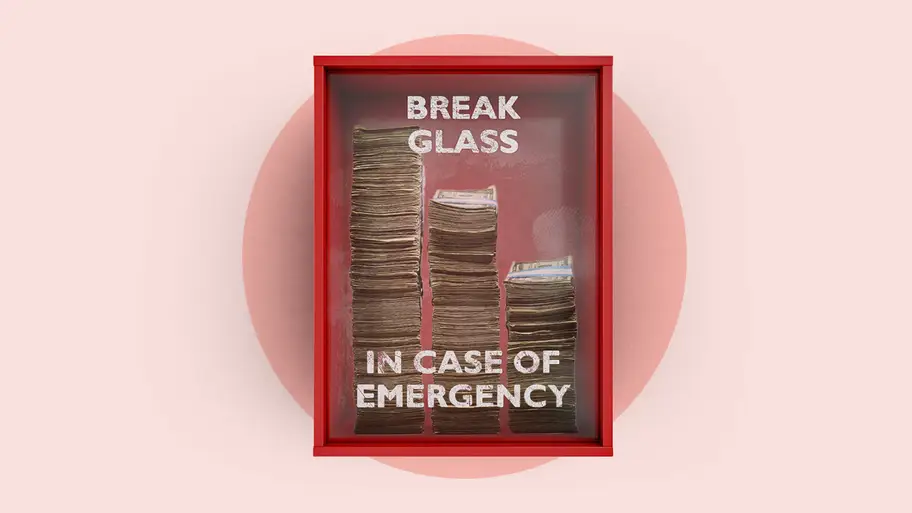
The true cost of an emergency loan in 2025
Knowing the costs of emergency loans in advance could help you avoid taking one out that hurts your budget.
48
years in business
45
lenders reviewed
20
loan features weighed
900
data points collected
To select the best personal loans, Bankrate’s team of experts evaluated over 50 lenders. To earn a spot on our emergency loan list, a lender must offer same-day approval, next-day funding and a maximum rate below 36 percent and be available in at least 80 percent of states. The best overall lender meets additional criteria, including a minimum FICO credit score under 620, a joint borrower option and a Bankrate score of at least 4.5 of 5 stars.
We also assign each lender a Bankrate score based on a meticulous 20-point system, focusing on four main categories:

We appreciate your feedback
Thank you for taking the time to share your experience.