Best and worst states for pay equality between women and men


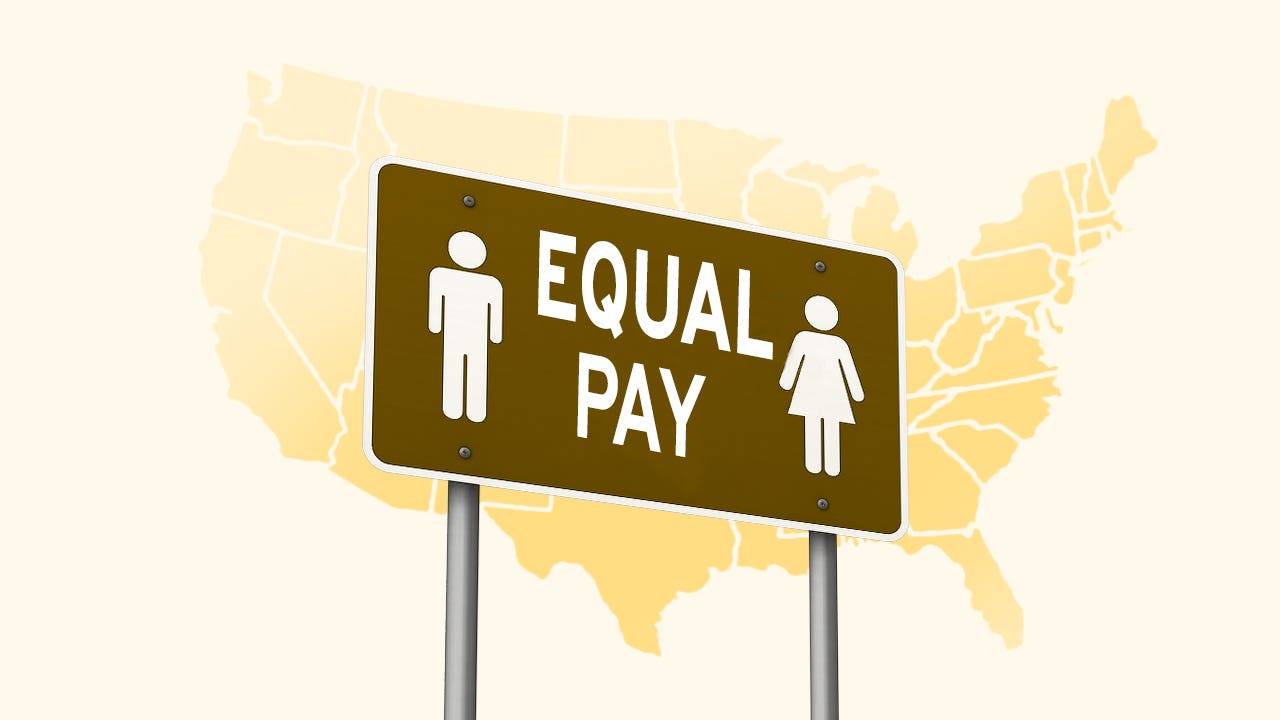
While the gender wage gap has narrowed over time, Census Bureau data shows it remains pervasive across the country. In every state, and even in the nation’s capital, women still earn less than men on average.
Some states fare worse than others, including Louisiana, Alabama and Utah. The size of the gap often depends on the kinds of jobs and industries that drive a state’s economy, as well as the demographics and education levels of its workforce.
A 2021 report from the Institute for Women’s Policy Research found that closing the wage gap wouldn’t just raise women’s earnings — it would give every state’s economy a significant boost. If women were paid the same as comparable men, their average annual earnings would rise by nearly 17%, adding about $541 billion to the U.S. economy, according to the report. It would also reduce poverty for working women by more than 40%.
See how your state stacks up for pay equality.
States with the smallest and largest gender wage gaps
Rhode Island is the closest to achieving pay parity, as women there earn 89 cents for every dollar a man makes.
Nicole Smith, chief economist at Georgetown University’s Center on Education and the Workforce, said a smaller wage gap in a state doesn’t necessarily mean there’s greater pay equity. A narrower gap may reflect broader labor market or policy factors, such as pay transparency laws, a more educated workforce or less wage variation overall.
“These types of legislation work to decrease gaps, especially when enforced and embraced by all concerned,” Smith said.
She adds that states with higher levels of education and more workers in professional or public-sector jobs often have smaller wage gaps because those roles tend to have more standardized pay structures.
In addition to Rhode Island, these are the five states with the smallest gender pay gaps:
| State | Men’s median annual earnings | Women’s median annual earnings | Female-to-male earnings |
| Rhode Island | $70,274 | $62,763 | 89 cents per $1 |
| Vermont | $63,691 | $55,832 | 88 cents per $1 |
| New York | $71,168 | $62,111 | 87 cents per $1 |
| California | $70,692 | $61,544 | 87 cents per $1 |
| Hawaii | $62,489 | $54,348 | 87 cents per $1 |
Louisiana, Utah and Alabama were among the worst states for gender pay parity. Women in Louisiana make about 71 cents for every dollar a man makes.
States like Louisiana, Utah, and North Dakota may show wider gaps because of structural or demographic factors, including lower overall wages, relatively fewer women in the workforce and limited access to higher-paying occupations, according to Smith.
“In these cases, the gaps reflect compressed wage distributions and less opportunity overall,” Smith said.
These are the five states with the largest gender pay gaps:
| State | Men’s median annual earnings | Women’s median annual earnings | Female-to-male earnings |
| Louisiana | $60,294 | $42,954 | 71 cents per $1 |
| Utah | $70,008 | $50,852 | 72 cents per $1 |
| Alabama | $58,319 | $43,074 | 74 cents per $1 |
| Wyoming | $62,142 | $45,971 | 74 cents per $1 |
| North Dakota | $67,128 | $50,587 | 75 cents per $1 |
What is the gender wage gap in your state?
Why we ask for feedback Your feedback helps us improve our content and services. It takes less than a minute to complete.
Your responses are anonymous and will only be used for improving our website.

Up next
These jobs are best – and worst – for gender pay equality

Black and Hispanic women face the longest wait for equal pay

A letter to my daughter: Career advice for an unfair world

These financial planners have a message for women: You’re in charge

We appreciate your feedback
Thank you for taking the time to share your experience.