on partner site
Best small business loans of February 2026
on BusinessLoans.com
on Bankrate
on Bankrate
on Bankrate
on Bankrate
on Bankrate
on Bankrate
on BusinessLoans.com
How Bankrate works
How Bankrate works
Get lender information
Bankrate uses a careful methodology to select the top lenders for small business loans. You can compare the main features and pros and cons easily.
Compare personalized rates
Click "get personalized rates" and fill out some information to see what loans you may be qualified for.
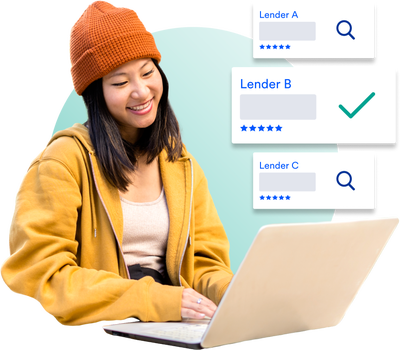
Get matched with lenders
Bankrate will show you which lenders you match with. You can choose one and apply if you are qualified.
A closer look at our top small business lenders
Best for fast approval: Fora Financial
In addition to fast funding and fair loan terms, you can apply for a loan with Fora Financial without impacting your credit. Fora does a soft pull when you apply, and it only conducts a hard credit check after you've been preapproved. This makes it highly popular for borrowers shopping around with several different lenders at once.
Pros and cons
- Possible early repayment discount
- Soft credit check at application
- Minimum FICO score of 570
- Maximum factor rate is fairly high
- Few types of loans
- Steep annual revenue requirement
Best for flexible repayment terms: iBusiness Funding
Flexible repayment terms help iBusiness Funding stand out. Loan terms range anywhere from six months to 30 years, giving business owners an opportunity to access capital and repay in a way that fits their business.
Pros and cons
- Approvals as little as one day
- Lower annual revenue requirement
- Timely payments build credit
- Relatively high credit score requirement
- Origination fee up to 10.49%
- Startups aren't eligible
Best for startups: Fundbox
Fundbox only requires three months in business and $30,000 in revenue to qualify for one of its loans. It offers fast approval and flexible repayment terms on its lines of credit, making it a good option for newer businesses that are just getting up and running.
Pros and cons
- Fast funds accessible by app
- Unsecured option
- Wide range of loan amounts
- Min. annual revenue may be prohibitive
- Short repayment terms
- Weekly fee makes rate comparison hard
Best for low revenue requirements: American Express Business Blueprint
Borrowers can qualify for American Express's Business Blueprint line of credit with just $3,000 in monthly revenue — provided the business has been operation for at least a year and the owners have fair credit.
Pros and cons
- Fair monthly average revenue requirement
- No origination or early repayment fees
- Available across the U.S.
- Only available to established businesses
- High borrowing costs for longer terms
- Fees make cost comparisons hard
Best for bad credit: Credibly
Applicants need only a minimum credit score of 550 to qualify for a loan with Credibly. Loans can be funded in as little as one business day, making Credibly a good option for business owners who don't have good credit but still need quick access to working capital.
Pros and cons
- Potential early repayment discount
- Prequalify in as little as 10 minutes
- Funds in as little as one day
- Unavailable in 13 states
- High minimum revenue requirement
- High minimum borrowing amount
Best lender for startups: Ondeck
Ondeck may be a good fit for startups that want a short-term business loan. It has relaxed eligibility requirements compared to other lenders and even offer same-day funding. This is especially useful for companies that need fast capital.
Pros and cons
- Same-day funding
- Early repayment incentives
- Helps build business credit
- High APRs
- Loan origination fees
- Requires personal guarantees
Best for bank experience: Bank of America
Bank of America is one of the country's oldest and most well-known financial institutions. While there are plenty of competitive online lenders on the market, Bank of America has both physical branch location and online services. For those who value real-time guidance through the loan process, this is exceptionally helpful.
Pros and cons
- Free business credit score monitoring
- No collateral needed
- Bank customers can apply online
- Need two years in business
- $150 origination fee
- High credit score requirement
Best lender for good-to-excellent credit: Wells Fargo Business
Wells Fargo is our pick for small business loans for borrowers with good-to-excellent credit. It operates in most states and offers competitive rates on its lines of credit and term loans, making it a good fit for business owners who meet its credit requirements, regardless of their stage of growth.
Pros and cons
- Competitive rates
- Rewards program
- Multiple lines of credit
- High credit score requirements
- Personal guarantee or collateral required
- Annual fee for some products
Best CDFI for small business loans: Accion Opportunity Fund
Since 1994, the Accion Opportunity Fund has been providing far more than just loans to budding small businesses. The community development financial institution (CDFI) also offer hands-on advising for business owners and webinars about a variety of topics related to entrepreneurship. Like all CDFIs, Accion specifically targets small-businesses that are located in or serve underserved communities.
Pros and cons
- Low interest rates
- Helps minority businesses
- Mentoring and educational support
- Only offers a term loan
- Low maximum loan amount
Best for early payoff discount: National Funding
National Funding stands out from competitors due to its fair lending terms, high loan amounts and minimal eligibility requirements. In addition to no early payoff penalty, National Funding offers an early payoff discounts, which is novel in the small business loans space.
Pros and cons
- Possible prepayment discount
- No collateral on leases
- Lowest guaranteed payment on leases
- Max interest rate not disclosed
- No online prequalification tool
- Limited information on website
Calculate how much debt your business can handle
Taking on too much debt can quickly spell the end for your business, especially if you have a low-revenue month or are low on cash reserves. Before you apply for a loan, it’s a good idea to assess your debt-to-income ratio and use a business loan calculator to determine how much you’re comfortably able to borrow.
In general, you shouldn’t borrow more than 36% of your business’ annual income. This counts for all debts you hold, so keep this in mind if you have multiple loans and balances.
Keep in mind that business loans can have daily, weekly or monthly payments, and taking on a payment schedule and amount that you can handle can prevent you from missing payments or defaulting on your loan.
Types of small business loans
There are several types of small business loans to choose from. Some have more stringent requirements than others, particularly those offered by traditional banks. But online lenders typically have options available for new businesses and business owners with fair or bad credit.
-
- Speed: ★★★★☆
- Cost: ★★★★★
- Requirements: ★★★☆☆
- Funding amounts: ★★★★★
The most common type of business loan among startups and established companies, term loans let you borrow a lump sum to cover business expenses. You then repay the loan over the agreed-on repayment term with interest. Term loans are accessible through most banks and credit unions, and loan amounts range from $1,000 to the millions.
To qualify for a term loan, you’ll likely have to generate a sizable amount of revenue and provide a personal guarantee to qualify for funding. Plus, you can expect higher borrowing costs if you’re starting out in your business.
Best for:
- Large purchases
- Lower fees
- Specific purchases or projects
9 types of business loans
From lines of credit to microloans, find the right lending product for your unique business needs.
Learn moreHow to compare small business loans
There are a huge variety of loans, lending products and lenders to choose from in the business loan sphere. Which one is right for your business will depend on your needs, limits and priorities. Here’s what you should consider.
| If your most important deciding factor is… | …then you should consider |
|---|---|
| Interest rate |
|
| Funding flexibility |
|
| High amounts |
|
| Low amounts |
|
| Ease of approval |
|
| Speed of approval |
|
What are small business loans and how do they work?
Small business loans can be used for a variety of purposes, making them a versatile and popular lending product.
Learn moreWhere to get a small business loan
Small business loans are available from lenders, including banks, credit unions, online lenders and community lenders. Each type of lender has its own requirements that business owners will need to meet. Research your options because the interest rates and application processes vary widely between lenders.
A business loan makes sense when it helps a company grow or overcome a business challenge without creating unsustainable level of debt. Taking out a loan can be a very prudent way to raise capital, assuming the business has a strong credit profile, consistently positive cash flows and a well-defined plan for using the money and repaying the debt.Thomas Brock: CFA, CPA
Common small business loan requirements
When you’re comparing the best business loans, it’s important to take multiple factors into consideration.
- Do you meet the minimum requirements?
- Is this loan designed for your needs?
- What is the interest rate?
- How fast can the loan be funded?
Decide which features of a loan are most important for your business, such as flexible terms or startup support, and then take a closer look at Bankrate's list of best small business loans.
Each lender has its own set of eligibility criteria for small business loans. That said, you’ll want to keep some general guidelines in mind as you research your options and prepare to apply for a business loan.
Most lenders will typically evaluate the following to determine if you’re a good fit for a small business loan:
- Business revenue: You’ll likely need to generate a certain amount of gross annual or monthly revenue to qualify for a small business loan. Meeting this requirement demonstrates to the lender that you have the means to make monthly loan payments without disrupting your company’s cash flow.
- Business credit history: Some lenders will check your business credit score when evaluating your loan application. Your business credit history will also show the lender your payment history with vendors and service providers.
- Personal credit score: Most small business lenders will check your personal credit score and history to determine the risk you pose. Some lenders may offer business loans for a credit score of 500 or less, but they may come with high interest and fees. A higher credit score means you’ll have better approval odds and lower interest rates with more lenders.
- Time in business: In most instances, you’ll need at least six months of business to qualify for funding. Some traditional lenders require at least two years of business experience to secure a small business loan. But startup loans exist, too.
- Industry: Lenders want to know you’re operating in a stable industry or one that isn’t at risk for a major downturn that could significantly affect operations and your ability to repay the loan.
- Business debts: Prepare to provide a business debt schedule, which lists your current outstanding business debt obligations and monthly payments to the lender. This information will be used to determine how much of your revenue is allocated to current debts and if you can afford to take on a new monthly loan payment.
Documents needed
- Business plan and loan proposal (if applicable).
- Business license and operating agreement.
- Employer identification number (EIN).
- Recent personal and business tax returns.
- Recent bank statements.
- Proof of business insurance.
- Payroll records.
- Lease agreement.
- List of accounts payable and accounts receivable.
- Business financial statements (i.e., balance sheet, profit and loss statement).
How to get a small business loan through Bankrate
Getting the capital your business needs doesn’t have to be complicated. Let Bankrate walk you through the process and help you find the right loan for you.
- The first step in getting a small business loan is calculating exactly how much capital you need to borrow and how much you can reasonably afford. Nailing down this information can help you with the next step, which is finding the right type of lender and loan option. You can use Bankrate's online small business loan calculator to get a clearer picture of what the payments for a business loan would look like for various loan amounts.
- Next, you'll need to research and compare the various types of loans available, as well as the lenders that may be suitable for your borrowing goals. You can use Bankrate's lenders table as a starting point to learn about potential lenders and their offerings, but it's also important to visit each lender's website to gather even more information about their products and eligibility requirements. Some of the important factors to keep in mind when comparing lenders include ease of approval, interest rates, loan amounts available and funding timeline.
- After identifying loan options and lenders that may be suitable for your capital needs, gather the documents required to submit a borrowing application, ensuring that you have everything a lender may request.
- Once you're prepared, it's time to submit a loan application with the lenders you've identified. Working with Bankrate, you can submit your loan applications all in one place.
- Finally, before making a borrowing decision, review all loan offers to identify the most competitive borrowing option.
Frequently asked questions
How Bankrate chooses our best small business loan lenders
Bankrate's trusted small business loan industry expertise
57
years in business
30
lenders reviewed
22
loan features weighed
770
data points collected
- Small-business
- Small-business loans
- Small business loans
- Personal finance


.png?optimize=medium&format=pjpg&auto=webp)
.png?optimize=medium&width=200&format=pjpg&auto=webp)