What is a cashier’s check? Definitions, uses, how to buy one, cost and alternatives


Key takeaways
- A cashier’s check is a bank-guaranteed payment drawn from the bank’s own funds, typically used for large transactions like car purchases or home down payments.
- Cashier’s checks cost $10-$15 at most banks and credit unions, though some accounts waive this fee.
- These checks clear faster than personal checks because funds are guaranteed by the bank, not your personal account.
- To get one, visit your bank branch with a government-issued ID, the recipient’s name, and funds to cover the check amount plus fees.
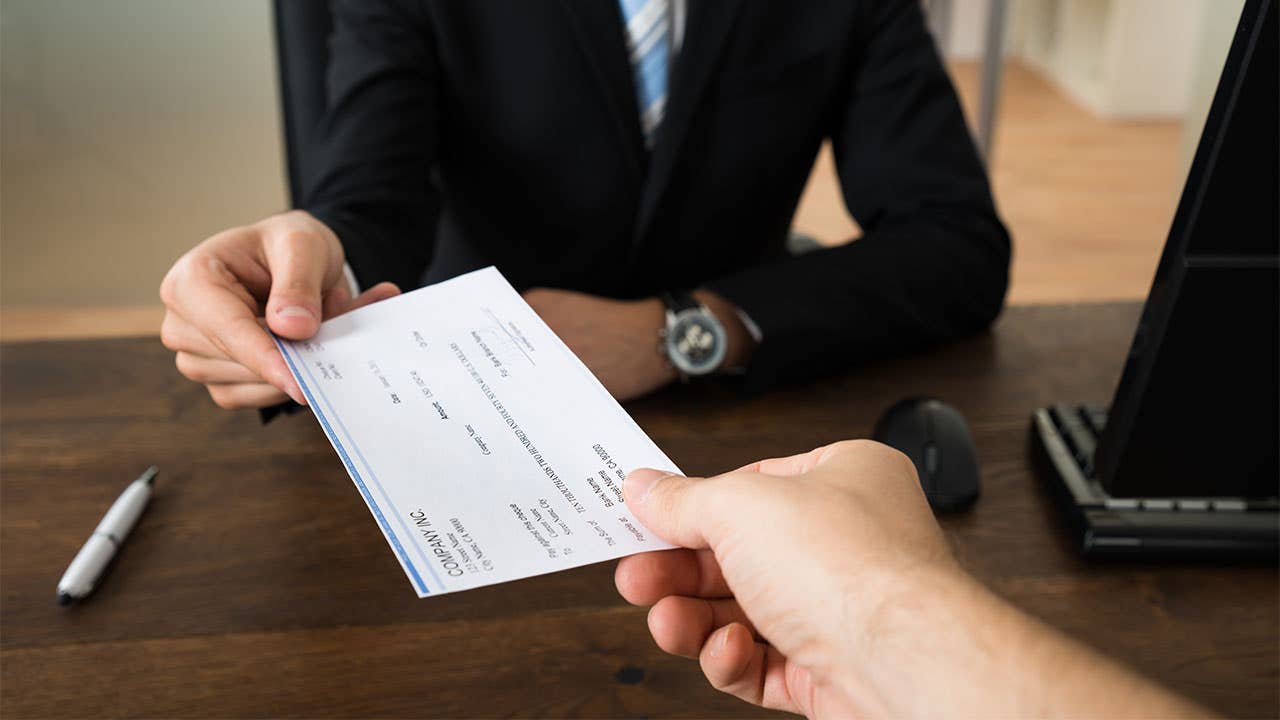
A cashier’s check is a payment guaranteed by your bank or credit union, drawn from the institution’s own funds rather than your personal account. When you need to make a large payment — buying a car, paying rent deposit or closing on a home — a cashier’s check provides security that personal checks can’t match.
The bank withdraws money from your account upfront, then issues a check from its own funds to your designated recipient. This means the check won’t bounce, and funds typically clear faster than personal checks.
What is a cashier’s check?
A cashier’s check is issued and guaranteed by a bank, drawn from the bank’s own funds rather than a customer’s personal account.
For major transactions like buying a boat or home, a cashier’s check assures the recipient that funds are guaranteed. There’s no risk of the check bouncing because it’s backed by the bank’s funds, not your personal checking account balance.
Here’s how it works: You pay the bank upfront for the full check amount. The bank deposits those funds and issues the cashier’s check to your designated recipient. Only that specific person or business can cash it, and settlement is typically faster than with personal checks.
When to use a cashier’s check
Use a cashier’s check when you need to make a large payment and a personal check or credit card isn’t acceptable — and when paying with cash isn’t safe or practical. Common scenarios include:
- Security deposits on apartments or rental properties
- Down payments on vehicles or homes
- Real estate transactions that must settle quickly
- Payments to merchants who won’t accept personal checks
Some vendors specifically require cashier’s checks because they want guaranteed funds. A merchant or property manager who’s been burned by bounced checks will often insist on a cashier’s check for the security and guarantees it provides.
Ready to make your next large purchase? Compare the best checking accounts to find one that offers free cashier’s checks.
Where to get a cashier’s check
You can purchase cashier’s checks at any bank or credit union branch. Some financial institutions also offer them through their websites or mobile apps, though you’ll typically pay delivery fees for mailed checks.
Most banks issue cashier’s checks only to existing customers, though some will sell them to non-customers for an additional fee. Opening a checking account at a bank you use regularly gives you easier access to cashier’s checks when you need them.
Some banks now let you order cashier’s checks online, which will be mailed to your recipient. This adds 3-5 business days but works if you’re not near a branch.
How to get a cashier’s check
Getting a cashier’s check is straightforward:
- Get a receipt: Keep your receipt as proof of payment and to track whether the check has been cashed
- Bring identification: Have your driver’s license or other government-issued ID ready
- Have funds available: Ensure you have enough money in your account to cover the check amount plus fees
- Provide recipient information: Banks cannot issue blank cashier’s checks—you must provide the exact name of the person or business receiving payment
- Pay the fee: Most banks charge $10-$15 per check
How much does a cashier’s check cost?
Cashier’s checks typically cost $10-$15 at traditional banks and credit unions. Some institutions waive the fee for premium account holders. Here’s what major banks charge:
- Wells Fargo: $10 in-branch, $18 for online delivery
- Bank of America: $15 (waived for Preferred Rewards members)
- Chase: $10
- Capital One: $10 in-branch, $20 online
If you need cashier’s checks regularly, look for checking accounts that offer them free. Some online banks like Ally Bank provide cashier’s checks at no charge to account holders.
Are cashier’s checks safe?
Cashier’s checks are one of the safest payment methods because they’re backed by the bank’s funds, not a personal account. The bank guarantees payment, which is why they’re preferred for large transactions.
“Cashier’s checks are generally pretty secure because they’re backed by the bank, not just an individual’s account,” says Hanna Horvath, certified financial planner and Managing Editor at Bankrate. “The bank will set aside the money upfront, which is why they’re often used for big purchases like homes or cars.”
But Horvath warns these checks aren’t scam-proof. “A classic cashier’s check scam is where someone sends a fake cashier’s check for more than the amount, then asks for the difference back — once the check bounces, your money is gone.”
How to protect yourself:
- Save all documentation related to the transaction
- Get your cashier’s check directly from your bank — never accept one from someone you don’t know
- If you receive a cashier’s check, verify it’s legitimate by calling the issuing bank directly (don’t use phone numbers printed on the check)
- Wait for the check to fully clear before using funds, even though some money may be available immediately
Cashier’s checks vs. money orders vs. certified checks
Several alternatives exist to cashier’s checks, each with different benefits:
Money orders
Best for: Payments under $1,000
Money orders are easier to obtain than cashier’s checks — you can buy them at post offices, grocery stores, and convenience stores, not just banks. They’re also cheaper, typically costing $1-$3 vs. $10-$15 for cashier’s checks. However, they’re usually capped at $1,000 per money order. If you need to send $5,000, you’d need five separate money orders. They’re also less secure than cashier’s checks, though they’re prepaid and won’t bounce.
Certified checks
Best for: When the sender wants to use their own account funds
A certified check is a personal check that your bank has verified and certified. The bank confirms you have sufficient funds and sets that money aside, but the funds still come from your account, not the bank’s. Certified checks can technically still bounce if there are issues with your account. They also typically have fewer security features than cashier’s checks.
Wire transfers
Best for: Urgent payments, especially long-distance
Wire transfers move money electronically within 24 hours, making them faster than waiting for a check to arrive and clear. However, they’re typically more expensive ($15-$35) and carry some fraud risk since they’re difficult to reverse.
Bottom line
Cashier’s checks offer a secure way to make large payments when cash or personal checks aren’t practical. While you’ll pay $10-$15 for the guarantee, that’s a small price for the security and faster settlement they provide.
If you frequently need cashier’s checks, compare checking accounts to find one that waives the fee — it could save you hundreds of dollars over time.
Why we ask for feedback Your feedback helps us improve our content and services. It takes less than a minute to complete.
Your responses are anonymous and will only be used for improving our website.