on BusinessLoans.com
Best startup business loans in December 2025
Updated December 4, 2025
on Bankrate
on Bankrate
on Bankrate
on Bankrate
on BusinessLoans.com
How Bankrate works
How Bankrate works
Compare startup business loans
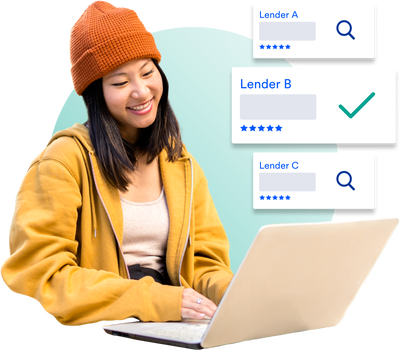
Bankrate collects the top lenders for startup business loans so you can compare their eligibility requirements, pros and cons, rates and other details.
Get personalized rates
Click "get personalized rates" and fill out your information.
Get matched with a lender
When you get matched with a lender you qualify for, you can apply for your loan and get the funding you need.
A closer look at our top startup business loans
Bankrate 2025 Award Winner Best lender for newer businesses: Taycor Financial
Taycor Financial stands out by supporting startups with just three months in the market, a rare find since most lenders want to see several years of operating history. Taycor Financial is also known for its equipment loans and leases, which offer up to 100% financing.
Pros and cons
- Approval time within hours
- Low credit requirements
- Large range of loan amounts
- High fees
- Longer application process for loan amounts above $400,000
- Potentially high factor rates
Best for fast funding: Fundbox
Fundbox focuses solely on its line of credit product that offers funding options up to $150,000 with three- or six-month terms and weekly repayments. Customers love its fast funding, offering approvals in just three minutes and funding within one business day.
Pros and cons
- Fast funds
- Fairly wide range of loan amounts
- Unsecured option
- Minimum annual revenue is somewhat high
- Non-sufficient funds fee
- Weekly fee makes rate comparison hard
Best for loan variety: Lendzi
Lendzi offers an array of business lending choices, from business lines of credit to SBA loans to merchant cash advances and invoice factoring. Its loans are flexible in loan sizes, reaching into the millions of dollars, and in terms, offering long-term loans up to 84 months. These features outpace the competition’s loans, which often stop at $250,000 for 24 months or less.
Pros and cons
- Fast funding
- High lending amounts
- Acesssible to a variety of borrowers
- Potentially high interest rates and fees
- Mixed loan details from representatives
Bankrate 2025 Award Winner Best lender for startups: OnDeck
OnDeck offers short-term loans and lines of credit with fast funding, allowing you to receive funding the same day you apply. Lines of credit also allow you instant access to new funding once you’re approved for the credit line, entirely taking away the wait to make your purchase.
Pros and cons
- Same-day funding
- Helps build business credit
- Relaxed eligiblity requirements
- High APRs
- Not available in all 50 states
Best for community support: Kiva
Kiva has revolutionized the lending industry, offering the chance to get a business loan from individual investors as a crowdfunding campaign. You raise funds for the loan and then repay over a period of three years or less. Kiva doesn’t require credit checks or a minimum amount of revenue, and you don’t pay any interest. You will need a strong personal network of people interested in investing in your business.
Pros and cons
- Zero percent interest on up to $15,000
- Aimed at underserved community
- No credit check
- Not a traditional loan
- Getting funds can take weeks
- Must do your own fundraising
Bankrate 2025 Award Winner Best CDFI for small business loans: Accion Opportunity Fund
Accion Opportunity Fund is on a mission to help disadvantaged small businesses get access to capital even when they’ve been turned down by traditional banks. About 90% of its customers are minority or low-income business owners. To deliver on equitable lending, AOF doesn’t post a minimum credit score, devoted to evaluating more than just your credit to approve you for its loans.
Pros and cons
- Low interest rates
- Helps minority businesses
- Mentoring and educational support
- Only offers a term and truck loan
- Only offers loan amounts up to $250,000
How we chose the best startup business loan lenders
Bankrate's trusted small business loan industry expertise
57
years in business
30
lenders reviewed
22
loan features weighed
770
data points collected
How to get a startup business loan through Bankrate
When you're ready, follow Bankrate's step-by-step process to find the right startup loan for you and your business needs.
1. Determine if a startup business loan is right for your business
Startup loans can be a good option to get your business off the ground in the right circumstances. Consider it if:
- You have a good credit score and history. The better your credit score, the more likely it will be you’ll get approved and get a better interest rate.
- You have a good revenue stream or projection statement. If your business already has revenue, or you have data to back up how much it will make, lenders will be more likely to approve you for a loan.
- You know exactly how you’ll use the funds. If you can demonstrate to lenders how your funds will be used to grow the business, you’re more likely to use your loan productively and be able to pay it back.
- You need fast funds. Loans can be quicker to obtain than crowdfunding or grants.
- You can handle the higher interest rates and fees. Since startup loans are riskier, be prepared for more interest rates than a loan for an established business.
Ultimately, it’s up to you to weigh the pros and cons of a startup loan. Keep in mind that these types of loans tend to be risky for both the borrower and the lender, as startups are more volatile and have a higher chance of failure than more established businesses, as they are often testing new markets and ideas, and may not have the cash reserves that an older business does. As such, they tend to have higher requirements and fees attached to them.
Entrepreneurs should be mindful of loan terms and costs associated with taking on this burden. My recommendation is to choose the right lender, build a relationship with that lender, and start with a manageable loan amount to ensure you can prudently handle the debt and make timely payments that do not negatively impact your cash flow.Ryan Rosset, co-founder at business lender Credibly
What is a startup business loan?
Startup loans can help you get your business idea off the ground. Here’s what makes them stand out from traditional business loans.
Read now2. Calculate how much debt your business can handle
Startups are in a uniquely precarious position when it comes to income, since you may not know how much you’ll bring in month to month while you get your business off the ground. This is why it’s crucial to only take on as much debt as you can manage to prevent your business from becoming overburdened by debt before it can truly launch.
When you’re just starting out, you may want to base your loan balance on an outside source of income, such as another business, job or piece of collateral that you secure the loan with. This way, if you have a slow month, you’ll still be able to make the loan payment.
Calculating how much you can borrow can go one of two ways — either the total amount of debt you can handle or how much you can afford to pay each month.
As a general rule of thumb, your total debt shouldn’t exceed 36% of your annual business revenue. If you aren’t sure of your revenue projections, you can adjust this to your personal income. For example, if your business makes $30,000 in a year, then you shouldn’t take out more than $10,800 in total loans.
You can also work backwards from your monthly payment with a business loan calculator. For example, if the maximum monthly payment you can afford is $500, then, with a 9% APR for a three-year loan, you could borrow a maximum of $15,723.
How much can you borrow with a startup business loan?
Startup loans tend to have lower borrowing limits, as lenders see them as riskier than other loan types. Here’s how much you can expect to borrow.
Read now3. Make sure you meet requirements
The exact requirements for a startup business loan will vary depending on the lender, but most have a few set criteria they base approval off of.
- A minimum personal credit score (good or excellent credit will increase your chances of approval) of 600 to 700.
- Minimum annual revenue of $50,000 to $100,000.
- Minimum amount of time in business of three months to a year.
- A personal guarantee, appropriate business collateral or a cosigner to mitigate the risk to the lender.
- Operating in an approved industry.
Depending on your startup, your lender may also evaluate your personal income from other businesses or jobs to see if you have an alternative method of making your loan payments.
Business startup statistics
According to the Federal Reserve Banks’ 2025 Small Business Credit Survey, community development financial institutions (CDFIs) were most popular with newer businesses, with over one in 10 (12% ) applying for a loan there.
Documents needed for a startup loan
In addition to general eligibility criteria, lenders will also ask you for personal and business documents including but not limited to:
- Balance sheet.
- Business plan that includes market research, financial projections and a breakdown of how you’ll use and repay the loan funds.
- Cash flow statements.
- Copy of your company’s business license and formation documents from your state.
- Personal and business tax returns from the past three years.
- Personal guarantee.
- Personal information, such as your name, address and Social Security number.
- Profit and loss statements.
- Recent personal and business bank statements.
- Your company’s employer identification number (EIN).
Documents needed for a startup loan
From bank statements to P&L, here’s what you need to have when you apply.
Read now4. Prequalify through Bankrate
When shopping for loans, consider prequalifying through Bankrate. Our selection of lenders offer multiple benefits, including:
- Instant prequalification based on your credit profile.
- No hard credit checks.
- Access loan information and applications in one place.
- Build a profile you can access later in the process.
Bankrate's platform allows you to compare multiple lenders at once instead of one lender at a time.
Business startup statistics
According to the Federal Reserve Banks’ 2025 Small Business Credit Survey, conventional banks and online lenders are the most popular sources of financing for companies that are two years old or less. Over one-third (36% ) of newer businesses applied for credit at large banks, with 31% applying at small banks and 23% at online lenders.
Types of startup business loans
The startup loan that's right for you will depend on your business’s priorities. Though your options may be limited by your lack of time in business, you still have some options based on your needs.
Term loans
Time in business: ★★☆☆☆
Revenue: ★★★☆☆
Cost: ★★★★★
Funding amounts: ★★★★★
Term loans are lump-sum loans with regular payments over a set time. They tend to require at least one year in business and revenue minimums of $50,000, but offer low interest rates if you have good credit. Funding for startups tends to be limited based on revenue, although qualified business may be able to access over $500,000 in funds.
Lines of credit
Time in business: ★★★☆☆
Revenue: ★★★★☆
Cost: ★★★★★
Funding amounts: ★★★★☆
A line of credit is a type of revolving credit that can be drawn from flexibly. Interest is only charged on what you withdraw. Lenders tend to require at least six months in business and revenue minimums of $30,000, but like term loans, lines of credit offer low interest rates if you have good credit.
SBA loans
Time in business: ★★★★★
Revenue: ★★★★☆
Cost: ★★★★★
Funding amounts: ★★★★★
SBA loans backed by the federal government through the Small Business Administration (SBA). Interest rates are capped, and they are accessible to startups or newer businesses — though your business will need to have sufficient revenue to qualify.
Equipment loans
Time in business: ★★☆☆☆
Revenue: ★★★★☆
Cost: ★★★★☆
Funding amounts: ★★★★★
Loans used to fund equipment, which is used as collateral to secure the loan, tend to have somewhat higher interest rates than term loans. While they can be accessed by startups, many lenders have requirements of at least 2 years in business and a minimum revenue of $50,000.
Peer-to-peer lending
Time in business: ★★★★☆
Revenue: ★★★★★
Cost: ★★★★☆
Funding amounts: ★★★☆☆
Peer-to-peer lending platforms pair investors with borrowers in order to secure funding. Some platforms may require six or more months in business, but these loans tend to be accessible to startups with low revenue. The downside to these products is the interest rates, which tend to be higher than the market rate.
Business grants
Time in business: ★★★★★
Revenue: ★★★★★
Cost: ★★★★★
Funding amounts: Varies
If your business is owned by a minority (such as a woman, person of color or veteran) or meets other requirements, it may qualify for a grant. Granted money is given to qualifying businesses that apply, without the need to pay it back. Brand-new, low-revenue businesses can apply, and there are no interest or borrowing fees. The total funding amount depends on the grant, and they tend to be competitive.
Crowdfunding
Time in business: ★★★★★
Revenue: ★★★★★
Cost: ★★★★★
Funding amounts: Varies
For newer businesses, a crowdfunding campaign may be more accessible. Platforms like Kickstarter or GoFundMe, allows brand-new, low-revenue businesses to get startup funds. There is no money required to run a campaign, but funding depends on campaign and public participation. It also requires promotion and proof-of-concept to gain investors.
Secured vs. unsecured startup business loans
Secured business loans can help you get approved for a startup loan more easily – at the risk of your collateral. Here’s everything you need to know about secured and unsecured startup loans.
Learn moreFrequently asked questions about startup business loans
- Small business loans
- Personal finance