One Big Number: $672 | The average annual Social Security raise in 2026


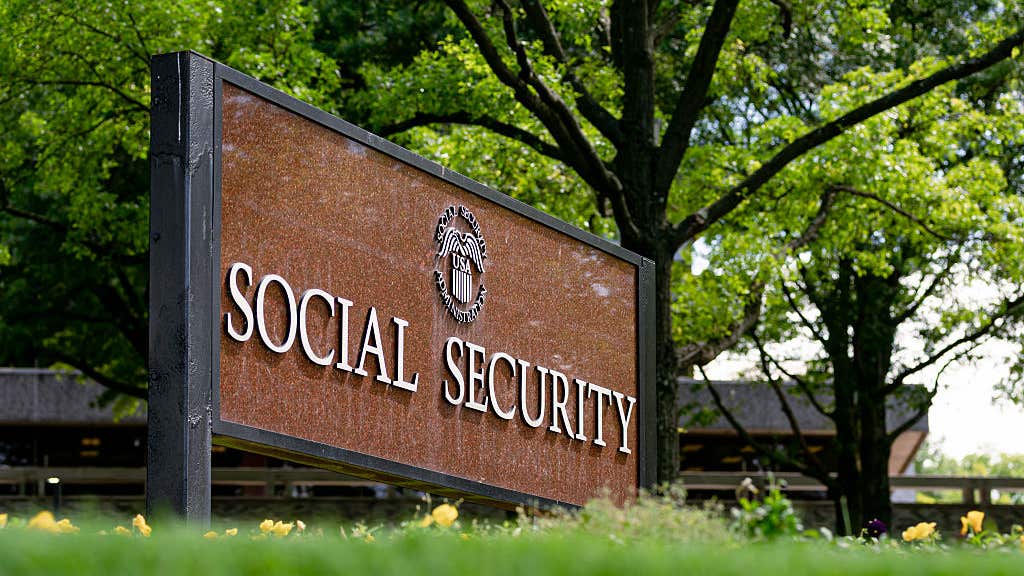
The average Social Security recipient can expect to see a $672 annual raise in 2026, according to official numbers announced on Oct. 24. The Social Security Administration’s cost-of-living adjustment (COLA) is increasing benefits by 2.8 percent starting in January.
The good news
Everyone likes getting a raise, and that is exactly what this is. If you are receiving Social Security, you will automatically see this adjustment starting in January. The 2026 adjustment of 2.8 percent is higher than the 2025 adjustment, and it remains above the 25-year average of 2.58 percent.
That said, the actual adjustment you will receive depends on the amount you receive as a benefit today. Essentially, a 2.8 percent increase means that, for every $1,000 in Social Security benefits you receive, you’ll get an additional $28 in 2026.
With the average Social Security benefit coming in at $2,015 per month in 2025, this would become $2,071 per month in 2026 — an increase of $56 per month (or $672 per year). This change will apply to anyone receiving Social Security benefits, and spousal benefits will also be adjusted using the same formula.
The bad news
Unfortunately, this adjustment may not be enough to balance the impact of inflation on your personal budget. The Social Security Administration uses third-quarter inflation data for their adjustments, meaning that COLA decisions are made based on a snapshot in time. If inflation continues to rise later this year or next year, a larger corresponding adjustment to benefits won’t be made until 2027.
Another factor you will need to account for in your 2026 income planning is the coming increase in Medicare Part B premiums, which could cut into your higher payout from Social Security.
Medicare Part B premiums will be announced in November, so you won’t know the final impact on your 2026 benefits for another month. However, estimates from Medicare trustees point to an increase of $21.50 for standard monthly premiums — negating nearly half of the average Social Security cost-of-living adjustment. If you are a higher-income-earning retiree, the premium increase could be even larger.
Why this is happening now
By law, the government must calculate the cost-of-living adjustment for Social Security by Nov. 1 — and it needs the September CPI report to complete this calculation. The current government shutdown comes second to the responsibilities owed to Social Security beneficiaries, so although other government departments remain closed (and the completion of some reports remains at risk), we will get a CPI report in October after all.
To complete the September CPI report — originally scheduled for release on Oct. 15 — the Bureau of Labor Statistics (BLS) is calling back a limited number of employees with a goal of wrapping up the work by Oct. 24. This will also be just in time for the Federal Reserve meeting scheduled for Oct. 28-29. This data will offer much-needed clarity for the Federal Reserve committee as they decide whether to lower interest rates again.
Zooming out
The Social Security cost-of-living adjustment is tied to the consumer price index for all urban wage earners and clerical workers, otherwise called CPI-W.
- CPI-W (Consumer Price Index for All Urban Wage Earners and Clerical Workers): The CPI-W population excludes many households, including professional and salaried workers, those without full-time work, self-employed workers and retirees. The data used is the same as other consumer price indices, but the weights of the CPI-W are based on a subset of the specific CPI-U population. This subset covers approximately 30 percent of the U.S. population.
- CPI-U (Consumer Price Index for All Urban Consumers): The most commonly used and quoted consumer price index — sometimes called “headline CPI” — is a broad price index that covers the buying habits of the residents of urban or metropolitan areas in the United States (which constitutes more than 90 percent of the U.S. population).
Although the annual COLAs do not always match the CPI-W or CPI-U indices, the growth has maintained the pricing power of Social Security recipients over the last 25 years.
| Date | SS COLA | CPI-W | Headline CPI (CPI-U) |
| 2000 | 3.50% | 3.52% | 3.47% |
| 2001 | 2.60% | 2.61% | 2.68% |
| 2002 | 1.40% | 1.40% | 1.58% |
| 2003 | 2.10% | 2.11% | 2.22% |
| 2004 | 2.70% | 2.66% | 2.67% |
| 2005 | 4.10% | 4.11% | 3.82% |
| 2006 | 3.30% | 3.30% | 3.34% |
| 2007 | 2.30% | 2.28% | 2.35% |
| 2008 | 5.80% | 5.84% | 5.25% |
| 2009 | 0.00% | -2.09% | -1.61% |
| 2010 | 0.00% | 1.49% | 1.20% |
| 2011 | 3.60% | 4.25% | 3.72% |
| 2012 | 1.70% | 1.66% | 1.68% |
| 2013 | 1.50% | 1.49% | 1.50% |
| 2014 | 1.70% | 1.70% | 1.79% |
| 2015 | 0.00% | -0.41% | 0.16% |
| 2016 | 0.30% | 0.76% | 1.16% |
| 2017 | 2.00% | 1.96% | 1.94% |
| 2018 | 2.80% | 2.79% | 2.61% |
| 2019 | 1.60% | 1.56% | 1.75% |
| 2020 | 1.30% | 1.28% | 1.22% |
| 2021 | 5.90% | 5.92% | 5.27% |
| 2022 | 8.70% | 8.75% | 8.29% |
| 2023 | 3.20% | 3.20% | 3.56% |
| 2024 | 2.50% | 2.49% | 2.66% |
| 2025 | 2.80% | 2.76% | 2.90% |
| Growth since 2000 | 88.38% | 88.33% | 87.91% |
Editor’s note: The original version of this table incorrectly stated SS COLA total growth since 2000. It has been updated.
Why we ask for feedback Your feedback helps us improve our content and services. It takes less than a minute to complete.
Your responses are anonymous and will only be used for improving our website.