Powered by Coverage.com (NPN: 19966249)
Coverage.com, LLC is a licensed insurance producer (NPN: 19966249). Coverage.com services are only available in states where it is licensed. Coverage.com may not offer insurance coverage in all states or scenarios. All insurance products are governed by the terms in the applicable insurance policy, and all related decisions (such as approval for coverage, premiums, commissions and fees) and policy obligations are the sole responsibility of the underwriting insurer. The information on this site does not modify any insurance policy terms in any way.
Car insurance estimate by make and model


 Edited by

 Reviewed by
 Edited by
Reviewed by
Edited by
Reviewed by


Powered by Coverage.com (NPN: 19966249)
Coverage.com, LLC is a licensed insurance producer (NPN: 19966249). Coverage.com services are only available in states where it is licensed. Coverage.com may not offer insurance coverage in all states or scenarios. All insurance products are governed by the terms in the applicable insurance policy, and all related decisions (such as approval for coverage, premiums, commissions and fees) and policy obligations are the sole responsibility of the underwriting insurer. The information on this site does not modify any insurance policy terms in any way.
Why do some cars cost more to insure?
It may be a common myth, but the color of your car is not a determining factor in car insurance rates. Other factors, however, do play a role, including the following:
- Body style: Some body styles, such as coupes and convertibles, may cost more to insure, partly because they may have more expensive parts and repair costs, and partly because they may be associated with faster speeds and riskier driving behaviors.
- Vehicle age: Because newer cars may have a higher market value, they tend to cost more to insure than older vehicles that have already depreciated in value.
- Safety ratings: Organizations such as the National Highway Traffic Safety Administration (NHTSA) generate safety ratings for most vehicles. Cars that have a demonstrated ability to sustain less damage and protect passengers in an accident are likely to earn a more favorable insurance rate.
- Theft rates: Cars that are frequently targeted for auto theft usually cost more to insure.
- Repair technology: Cars with advanced technology components, such as cameras and sensors, tend to be more expensive to repair, leading to higher premiums.
- Safety features: Cars equipped with robust safety features, like curtain airbags and lane assist systems, can be tricky to price. On one hand, strong safety performance may lower your premium, but on the other, these systems can be costly to fix, bringing up average rates.
The above list of insurance rating factors is not exhaustive, so the best way to find out how much you can expect to pay for your vehicle is to compare quotes from multiple companies.
Average car insurance rates by make and model
To help you determine the best car insurance companies for you, we analyzed November 2025 data provided by Quadrant Information Services to identify current average premiums for popular vehicle makes and models. The rates displayed are average annual premiums for full coverage and minimum coverage insurance. Your rate may be higher or lower based on multiple factors unique to you, including your driving history, where you live and the type of coverage you need.
|
|
|
|
|---|---|---|
|
$3,088
|
$767
|
|
|
$3,309
|
$807
|
|
|
Cadillac Escalade
|
$3,744
|
$879
|
|
Chevrolet Silverado
|
$2,687
|
$835
|
|
$3,691
|
$903
|
|
|
Dodge Ram
|
$2,748
|
$881
|
|
$2,442
|
$806
|
|
|
$2,630
|
$823
|
|
|
$2,678
|
$820
|
|
|
$2,446
|
$772
|
|
|
$2,407
|
$882
|
|
|
$2,573
|
$841
|
|
|
Subaru Outback
|
$2,242
|
$761
|
|
$3,419
|
$805
|
|
|
$2,774
|
$821
|
|
|
$2,856
|
$820
|

Powered by Coverage.com (NPN: 19966249)
Coverage.com, LLC is a licensed insurance producer (NPN: 19966249). Coverage.com services are only available in states where it is licensed. Coverage.com may not offer insurance coverage in all states or scenarios. All insurance products are governed by the terms in the applicable insurance policy, and all related decisions (such as approval for coverage, premiums, commissions and fees) and policy obligations are the sole responsibility of the underwriting insurer. The information on this site does not modify any insurance policy terms in any way.
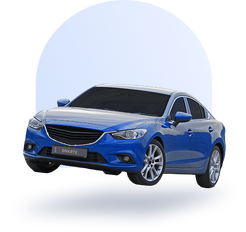
Compare auto insurance rates
Powered by Coverage.com (NPN: 19966249)
Coverage.com, LLC is a licensed insurance producer (NPN: 19966249). Coverage.com services are only available in states where it is licensed. Coverage.com may not offer insurance coverage in all states or scenarios. All insurance products are governed by the terms in the applicable insurance policy, and all related decisions (such as approval for coverage, premiums, commissions and fees) and policy obligations are the sole responsibility of the underwriting insurer. The information on this site does not modify any insurance policy terms in any way.
What are vehicle ‘makes’ and ‘models’?
Although you might hear the term ‘make’ and ‘model’ used interchangeably, they mean very different things. A vehicle’s make refers to the company or brand that manufactures the car, while the model refers to the vehicle’s specific name or version. For example, Kia is a car make and Forte is a specific Kia model.
Many car manufacturers produce vehicles with different models or body styles. It can help to know what you’re looking for in a vehicle before you head to a dealership. Here are some of the most common body styles:
- Coupes: These are traditionally sporty, two-door cars that have a hard top.
- Convertibles: Like coupes, convertibles usually have two doors, but they have a retractable top.
- Sedans: These cars usually have four doors and a trunk, and they can vary in size.
- Sports car: The body of a sports car is usually small and sleek, designed to hold a couple of passengers.
- Crossovers: Crossovers are generally SUV-style vehicles built on a car’s platform, which have a smaller, lighter frame.
- Hatchbacks: These often refer to sedans that have a rear-hatch door that opens up to cargo space, although larger vehicles are adopting a hatchback style.
- SUVs: Sport utility vehicles are larger than sedans and sit higher off the ground, offering more cabin space and storage.
- Minivans: Minivans and SUVs are often similar in size, but minivans typically feature a sliding passenger door and three rows of seating — often with the capability to reconfigure.
- Trucks: Pickup trucks feature a passenger cab and cargo bed. Some trucks offer more seating with extended cabs.
Car makes and models can vary from year to year. You may notice that some models have several trims available. A car’s trim level refers to the specifics that set it apart from another version of the vehicle that’s also available that year. For example, a 2024 Toyota Corolla comes in four trims: LE, Nightshade, SE and XSE. The trim levels help to identify a vehicle’s exact specifications, which is why insurance providers ask for these details when you request a quote. Typically, you’ll pay more for newer or more equipped vehicles since repair or replacement costs will typically be higher than for older or basic models.
How to get car insurance estimates
To get an accurate auto insurance estimate, you may want to follow these car shopping steps:
- Narrow down your vehicle choices: Before you start test driving cars, think through your needs. Can you get by with a coupe, or do you need something larger to accommodate your family? Do you need a truck to haul materials or tow your toys? Once you determine your needs, narrow down your car choices, especially the make and model. Have your top three vehicles in mind before requesting insurance quotes. Note that you do not need the vehicle identification number (VIN) to get quotes, but having this information can improve the accuracy of quoted rates.
- Decide how much coverage you need: If you are purchasing a car outright, you probably have more flexibility when choosing which type(s) of coverage to purchase. But if you are financing or leasing the vehicle, your lender may require full coverage insurance, which typically means comprehensive and collision coverage on top of liability. For leased vehicles, you may be required to carry higher liability limits, too. When getting quotes, let the insurance agent know if you plan to finance, lease or pay cash for a new car. That way, the agent can discuss coverage requirements and how those requirements affect rates.
- Get quotes for the same coverage: As a basis for comparison, it might help to use a car insurance calculator to estimate what you might pay. Then, experts recommend requesting quotes from several different insurers for the same coverage types and policy limits in order to identify which company offers the cheapest rate for the coverage you need.
Other factors that influence your car insurance rate
The make and model of the car you buy are not the only criteria auto insurance companies use to determine your rate. Other factors include:
- Coverage: The type of coverage and deductible you choose will also influence how much you pay for car insurance. Liability insurance, which covers other drivers’ costs if you are found at fault for an accident, is typically the base level of coverage and is required in almost every state. However, you may want to elect higher liability limits than what’s required by law for more financial protection and an additional premium. Adding on coverage types like medical payments, comprehensive coverage and collision coverage will affect your premium, as well. Essentially, the more coverage selections you choose and the higher the coverage limits, the more you will pay for insurance.
- Location: The state you live in and, in most cases, the ZIP code that you live in matters when it comes to car insurance costs. Geo-specific crime rates, population density and crash statistics are considered in setting premiums in most states.
- Personal information: Your age, gender, marital status, credit history and driving history can be used to determine your rate in most states. If there are other drivers in the household, their information matters, too. Keep in mind that California, Hawaii, Massachusetts, Michigan, North Carolina and Pennsylvania prohibit the use of gender to determine car insurance rates. In addition, the following states ban or restrict the use of credit to determine car insurance premiums: California, Hawaii, Massachusetts and Michigan.
- Vehicle use: How you use your vehicle can impact your rates. Statistically, drivers who spend more time on the road are more likely to be involved in an accident. As such, insurance companies usually charge less for low-mileage drivers.
- Your claims history and driving record: Of all the factors car insurance companies consider to determine your premium, your driving history may be among the most significant. Carriers review the type of driving activity listed on your motor vehicle report (MVR) and comprehensive loss underwriting exchange (CLUE) to determine the statistical likelihood that you will file a claim in the future. Drivers who are ticketless and accident-free are awarded some of the lowest premiums — and they might earn a safe driving discount, too.
- Your prior insurance history: Just one lapse of insurance may cause a spike in your premiums (and leave you financially vulnerable if you are unlucky enough to be involved in an uninsured accident). Maintaining continuous insurance can help keep your car insurance costs down.
How to save on car insurance
Employing money-saving strategies when purchasing a new car is a great way to stay on budget. Here are a few more ways to save on car insurance:
- Ask about discounts. Insurance companies offer discounts as a way to lower car insurance prices. Most can be stacked together to maximize savings, so make sure you ask about any you are eligible for to get the best car insurance estimate.
- Be a safe driver. People with good driving habits tend to get into fewer accidents and avoid getting tickets, which can make you eligible for additional discounts and keep rates low.
- Consider increasing deductibles. Increasing your deductible can help you save on your premium and prevent you from making small claims, which could affect your car insurance costs. Generally, the higher your deductible, the lower your premium. However, remember that your deductible is your responsibility to pay out of pocket in case of a claim. So make sure that you can comfortably afford a higher deductible first.
- Shop around. Even if you get quotes for the same coverage types, you will likely get a different price for car insurance from each company. Carriers have their own formulas to determine rates, so one may be more expensive than the other for the same coverage.
- Consider bundling. Carrying your homeowners and auto insurance with the same company may save you money via a bundling discount.
- Ask for a telematics discount. Many major car insurance companies offer a discount if you install a telematics device in your vehicle or download a telematics-based mobile app. A telematics device records your driving habits and reports them to your insurer. If your tracked driving behavior shows you are a low-risk driver, your company may offer you savings. Keep in mind that, with some companies, this can work both ways and demonstrating unsafe driving habits could potentially raise your rates.
Frequently asked questions
Methodology
Rates
Bankrate utilizes Quadrant Information Services to analyze November 2025 rates for all ZIP codes and carriers in all 50 states and Washington, D.C. Rates are weighted based on the population density in each geographic region. Quoted rates for our base profile are based on the following characteristics and full coverage limits with bundling and paperless billing discounts applied:
Bodily injury liability
$100,000 per person$300,000 per accident
Property damage liability
$50,000 per accidentPersonal injury protection
$100,000 per accidentUninsured motorist bodily injury
$100,000 per person$300,000 per accident
Collision deductible
$500Comprehensive deductible
$500To determine minimum coverage limits, Bankrate used minimum coverage that meets each state’s requirements. These are sample rates and should only be used for comparative purposes. Your quotes will differ.
If otherwise specified, the base profile has been modified with the following driver characteristics:
Other profiles


