Best checking accounts of June 2026


Updated June 9, 2026
At Bankrate we strive to help you make smarter financial decisions. Though our websites may earn compensation when a customer clicks on a link, when an application is approved, or when an account is opened, we maintain editorial integrity, and partners don't influence our product evaluations.
Here's
how we make money
and here is our
advertiser disclosure.
The best checking accounts offer easy access to your money, a large ATM network and don’t charge pesky fees. Some of the best accounts also offer perks, such as cash back, a decent annual percentage yield (APY) or ATM fee reimbursements. Bankrate reviewed and rated checking accounts from over 100 banks and credit unions based on their fees, balance requirements, funds access, perks and more to help you choose the best checking account for you.
PERSONALIZE YOUR SEARCH
How Bankrate works
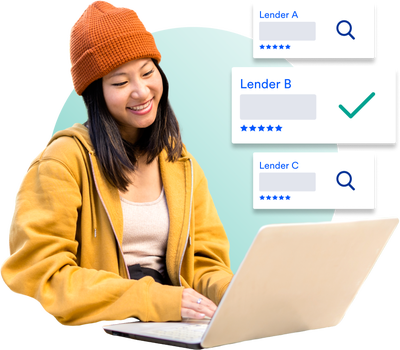
How Bankrate works
01
Compare rates
See checking accounts from different banks and credit unions in one place, so you can quickly compare your options.
02
Choose an account
Check the rate, terms and requirements, then pick the account with features that appeal to you.
03
Continue to the bank
Click through to the bank or credit union to open your account.
Learn more:
How we chose these banks
Table of contents
- Banks with the best checking accounts
- The competition: Other checking accounts you can consider
- What to look for in a checking account
- Compare: Standard vs. best checking accounts
- How to open a checking account
- Checking accounts at credit unions vs. banks
- How much should I keep in my checking account?
- Alternatives to checking accounts
- Checking account FAQs
- Research methodology
Banks with the best checking accounts for June 2026
Note: APYs may have changed since they were last updated and may vary by region for some products. Bankrate's editorial team validates this information regularly, typically biweekly. Bankrate only includes FDIC banks or NCUA credit unions in the editorial listings below.
CIT Bank
5.0
Bankrate score
Bankrate Savings rating = 5/5
Bankrate scores are objectively determined by our editorial team. Annual percentage yields (APYs), minimum opening deposit requirements and minimum balances to avoid monthly service fees are some of the things that make up Bankrate’s score.
-
Annual percentage yield
0.10% -
Min. deposit to open
$100
Why CIT Bank?
CIT Bank offers an online checking account that earns interest on all balances, though you'll need $25,000 or more to earn the top APY. The eChecking account comes with a number of features, including ATM fee reimbursements and Zelle capabilities. One of the top highlights, and what makes it an incredibly accessible account, is that there are no monthly service fees,overdraft fees or fees for online transfers. You will need at least $100 to open the account.
Quontic Bank
5.0
Bankrate score
Bankrate Savings rating = 5/5
Bankrate scores are objectively determined by our editorial team. Annual percentage yields (APYs), minimum opening deposit requirements and minimum balances to avoid monthly service fees are some of the things that make up Bankrate’s score.
-
Annual percentage yield
1.10% -
Min. deposit to open
$100
Why Quontic Bank?
You’ll need $100 to open Quontic’s High Interest Checking account, a solid option with up to 1.10% APY and no monthly or overdraft fees. Quontic also provides access to over 90,000 fee-free ATMs so you can access your funds with ease. To earn the APY, you must make 10 qualifying debit card purchases — of at least $10 — during your statement cycle.

UFB Direct
5.0
Bankrate score
Bankrate Savings rating = 5/5
Bankrate scores are objectively determined by our editorial team. Annual percentage yields (APYs), minimum opening deposit requirements and minimum balances to avoid monthly service fees are some of the things that make up Bankrate’s score.
-
Annual percentage yield
2.00% -
Min. deposit to open
$0
Why UFB Direct?
UFB Direct offers its interest-bearing Freedom Checking account with no minimum and no monthly fee — and an incredible 2.00% APY with no requirements to earn other than a balance greater than $0. When paired with the Portfolio Savings or money market account, you may also be able to boost your savings APY by up to 0.20% by completing a number of qualifying actions.
Bask Bank
5.0
Bankrate score
Bankrate Savings rating = 5/5
Bankrate scores are objectively determined by our editorial team. Annual percentage yields (APYs), minimum opening deposit requirements and minimum balances to avoid monthly service fees are some of the things that make up Bankrate’s score.
-
Annual percentage yield
1.00% -
Min. deposit to open
$0
Why Bask Bank?
Bask Bank’s Interest Checking account earns the same competitive APY on all balances, and it charges no monthly maintenance fees. There’s no minimum deposit requirement, but the bank may close your account if you don’t fund it within 15 days. Customers have access to a large fee-free ATM network and refunds on ATM surcharges at Allpoint ATMs.

Capital One
5.0
Bankrate score
Bankrate Savings rating = 5/5
Bankrate scores are objectively determined by our editorial team. Annual percentage yields (APYs), minimum opening deposit requirements and minimum balances to avoid monthly service fees are some of the things that make up Bankrate’s score.
-
Annual percentage yield
0.10% -
Min. deposit to open
$0
Why Capital One?
While its 0.10% APY is modest compared to some competitors on this list, the Capital One 360 Checking account stands out for the ability to deposit cash for free at thousands of retail locations, including CVS and Walgreens. It's an especially good fit for customers who want the flexibility of online banking without giving up the option of in-person support if you're in select states where Capital One offers branches.
NBKC Bank
5.0
Bankrate score
Bankrate Savings rating = 5/5
Bankrate scores are objectively determined by our editorial team. Annual percentage yields (APYs), minimum opening deposit requirements and minimum balances to avoid monthly service fees are some of the things that make up Bankrate’s score.
-
Annual percentage yield
1.75% -
Min. deposit to open
$0
Why NBKC Bank?
The biggest draw to online-only NBKC Bank's Everything Account is its competitive rate, which you earn without needing to meet any criteria. The account has no monthly service charge or overdraft fees and allows you to deposit cash. You also get access to over 90,000 fee-free ATMs and monthly ATM fee reimbursements of up to $12 per month.

Alliant Credit Union
5.0
Bankrate score
Bankrate Savings rating = 5/5
Bankrate scores are objectively determined by our editorial team. Annual percentage yields (APYs), minimum opening deposit requirements and minimum balances to avoid monthly service fees are some of the things that make up Bankrate’s score.
-
Annual percentage yield
0.25% -
Min. deposit to open
$25
Why Alliant Credit Union?
Alliant Credit Union’s High-Rate Checking account holders earn 0.25% APY by opting into e-statements and setting up one electronic deposit per month. The account doesn’t have monthly or overdraft fees and provides access to a large ATM network (and will reimburse you up to $20 per month for using out-of-network ATMs). Alliant Credit Union is easy to join for anyone, despite its status as a credit union. You'll be required to open an Alliant Savings Account to join, which you can do at the same time as you open a checking account.

SoFi
5.0
Bankrate score
Bankrate Savings rating = 5/5
Bankrate scores are objectively determined by our editorial team. Annual percentage yields (APYs), minimum opening deposit requirements and minimum balances to avoid monthly service fees are some of the things that make up Bankrate’s score.
-
Annual percentage yield
0.50% -
Min. deposit to open
$0
Why SoFi?
SoFi's Online Checking account’s 0.50% APY isn't the highest available but it applies to all balances. Note that when you sign up for a SoFi checking account, the bank will also automatically open a savings account in your name, which earns a solid interest rate too, if you meet certain requirements. SoFi is also currently offering a checking account bonus of up to $400 to new members who enroll and meet direct deposit requirements.

LendingClub
5.0
Bankrate score
Bankrate Savings rating = 5/5
Bankrate scores are objectively determined by our editorial team. Annual percentage yields (APYs), minimum opening deposit requirements and minimum balances to avoid monthly service fees are some of the things that make up Bankrate’s score.
-
Annual percentage yield
1.00% -
Min. deposit to open
$0
Why LendingClub?
LendingClub Bank's LevelUp Checking account offers a unique combination of interest earnings and rewards — but you'll need to meet certain requirements to earn them. While there is no minimum balance required to open the account, you only earn interest if you maintain $2,500 in the account. You'll also earn 1.00% cash back on certain debit card purchases when you set up a monthly direct deposit.

Zynlo Bank
5.0
Bankrate score
Bankrate Savings rating = 5/5
Bankrate scores are objectively determined by our editorial team. Annual percentage yields (APYs), minimum opening deposit requirements and minimum balances to avoid monthly service fees are some of the things that make up Bankrate’s score.
-
Annual percentage yield
2.00% -
Min. deposit to open
$0
Why Zynlo Bank?
ZYNLO's More Spending account earns a top-notch 2% APY with no minimum balance requirement and no maintenance fee. If you link it to a ZYNLO Tomorrow Savings account, the bank rounds up debit card purchases, transfers that amount to your savings account, and matches it (100% if you have an average daily balance of at least $3,000, or 25% if not).
TAB Bank
5.0
Bankrate score
Bankrate Savings rating = 5/5
Bankrate scores are objectively determined by our editorial team. Annual percentage yields (APYs), minimum opening deposit requirements and minimum balances to avoid monthly service fees are some of the things that make up Bankrate’s score.
-
Annual percentage yield
2.75% -
Min. deposit to open
$0
Why TAB Bank?
TAB's Spend account comes with a top-notch rate of 2.75% APY and 1% cash back on debit card purchases — and there are no activity requirements to unlock those benefits. The account requires no minimum opening deposit, and customers can make fee-free withdrawals at MoneyPass ATMs nationwide, making this account a rare find that combines high yields, rewards and few fees.

Ally Bank
5.0
Bankrate score
Bankrate Savings rating = 5/5
Bankrate scores are objectively determined by our editorial team. Annual percentage yields (APYs), minimum opening deposit requirements and minimum balances to avoid monthly service fees are some of the things that make up Bankrate’s score.
-
Annual percentage yield
0.10% -
Min. deposit to open
$0
Why Ally Bank?
Ally Bank offers a top-tier digital experience and accounts that generally come with few fees. Its checking account — which Ally calls its Spending account — earns a little interest on all balances. It doesn’t charge monthly maintenance or overdraft fees, and account holders can access more than 75,000 ATMs nationwide to make withdrawals, while receiving up to $10 in ATM fee reimbursements each statement cycle.
The competition: Other checking accounts you can consider
On Bankrate's list of best checking accounts, we surface the highest-rated checking accounts from the banks we review that are also available to most people nationwide. But that doesn't mean that these accounts will suit everyone's needs or that there aren't other great accounts out there. Below, you'll find a few more contenders to consider.
- American Express Rewards Checking: You have to already have an American Express credit card or a different existing account with the bank to open this account, so it didn't make our list based on this availability barrier, but it does get a good Bankrate score as it has few fees, no minimum deposit and earns a solid APY. Plus, you get American Express rewards points on qualifying debit card purchases.
- Chime Checking: Chime is a financial technology company, not a bank (which is why it doesn't make our list) but it does offer a checking account which has no monthly fees and no overdraft fees. Chime is a good option for a second-chance checking account because it does not check your previous banking history as a condition of opening the account. Note that your funds at Chime are covered by FDIC insurance through Chime’s banking partners and certain conditions must be met for pass-through insurance to apply.
- Chase Total Checking: This account's Bankrate score isn't nearly as high as the others on our list, but if you want in-person banking, Chase is likely a good option as they have branches in 48 states. But watch out for a super high monthly maintenance fee. Chase is also known for having checking account bonuses for new customers.
What to look for in a checking account
Learn more:
Checking account survey

What to know about checking account fees
Using a checking account can be expensive. The good news is you can find checking accounts that don't charge monthly maintenance fees as well as make it easy to avoid other common tolls. Here's what you need to know.
Learn moreCompare: Standard vs. best checking accounts
| Feature category | Traditional checking accounts | Top-tier checking accounts |
|---|---|---|
| Interest or rewards | May earn minimal interest (if any) | May earn interest (sometimes substantial); often offer perks like sign-up bonuses or cash back |
| Fees | Charges monthly fees (though with ways to waive), overdraft charges, out-of-network ATM fees | No monthly, overdraft, insufficient funds or ATM fees |
| Extra features | Bill pay, limited ATM access, early direct deposit, access to peer-to-peer platforms such as Zelle | Early direct deposit, access to peer-to-peer platforms such as Zelle, spending insights or roundup savings tools, out-of-network ATM rebates |
| User experience | Often offer in-person customer service, highly-rated mobile apps | Often online-only, with highly-rated mobile apps and extended phone customer service hours (e.g., 24/7) |
Deciding between branch access or online-only checking
Many of the best checking accounts on our list come from online-only banks because those banks tend to charge fewer fees and offer more perks. But that doesn't mean you shouldn't open an account at a brick-and-mortar bank if it has features you want. Be sure you can avoid service fees that would eat into your balance and that your funds are easy to access.
You can also consider keeping two checking accounts to enjoy the benefits of both kinds of banking — online and in person.
Bankrate staff insights
Where did this quote come from?
Our focus at Bankrate is on delivering accurate content and the right context for making well-informed financial decisions.
We gather real quotes from real people through surveys, interviews, and testimonials from consumers like you who have actual experience with these products. We then hand-pick what to feature to ensure credibility and relevance.
How to open a checking account: what you need
- Identification
- Most banks and credit unions require two forms of identification to open an account. A Social Security card, passport, state ID or driver's license are the most commonly required documents.
- Minimum deposit
- If an account requires a minimum deposit — which not all do — it's typically between $10 and $25 or more.
- Address
- You'll need to provide proof of address when opening an account. Utility bills, lease agreements and credit card statements can work well.
- Age
- It may be difficult to get a checking account under age 18. That said, opening a teen account, a joint account or a custodial account can be an option for minors.
Checking accounts at credit unions vs. banks
When it comes to checking accounts, the offerings from credit unions and banks are often similar enough, but the institutions themselves differ. Commonly, banks are for-profit corporations owned by shareholders, while credit unions are member-owned, not-for-profit entities. Credit unions are also known for involvement in their community, including providing loans to small businesses.
Another area where they differ is in who can open an account. While a bank doesn’t often have many restrictions over who can open accounts, membership in a credit union may be limited to certain people based on where they live, work or worship.
How much should I keep in my checking account?
Since your checking account is likely the account from which you pay your bills and make debit card purchases, it’s important to keep enough money in there to cover these expenses. In addition, it often helps to keep some extra money in the account in the event your expenses are slightly higher than anticipated in a given month.
Beyond your living expenses and a small cushion, it’s often best to keep additional funds in a savings account that earns a competitive APY. This is because many checking accounts don’t earn interest, and those that do bear interest often earn less than you can get from top-yielding savings accounts.
Your checking account is the equivalent of a financial airport. Money is coming and going quickly, and you shouldn't plan to turn it into a hotel stay. If you like to arrive at the airport with a few extra hours to spare, you probably like to keep extra money in your checking account. You only need enough to cover your monthly expenses, but it can pay to have a little extra as a security blanketStephen Kates, CFP®, Bankrate financial analyst
Next steps
While a checking account provides a wide range of unique money management benefits, you’ll likely also want a few more tools on your financial journey.
High yield savings account
A savings account enables you to earn interest on your savings, helping your money grow while still giving you easy access to your funds.
Money market accounts
Like savings accounts, but also commonly come with debit cards and/or check-writing privileges.
Certificates of deposit
A way to get a fixed savings rate for a set amount of time. These can be especially useful in falling markets.
Banking with purpose
Regardless of your current financial picture, there are probably places where you could improve. Read Bankrate's 12 tips to banking smarter.
Meet our Bankrate experts

Karen Bennett is a senior consumer banking reporter at Bankrate where she uses her years of banking and personal finance experience to help inform readers about money-related decisions. She’s been a reporter at Bankrate since 2021.
Expertise
- Consumer banking
- Savings accounts


How we choose the best checking accounts
Bankrate researches over 100 banks, including some of the largest financial institutions, online-only banks, regional banks and credit unions with both open and restrictive membership policies.
To find the best checking accounts, we rated these institutions on their checking account fees, minimum deposit requirements, ATM network, overdraft policies, APY offerings and more. The best checking accounts have few fees, no or low minimum deposit requirements, a large ATM network, forgiving overdraft policies and may offer some other perks, like early direct deposit, interest or cash back.
The highest-rated checking accounts from broadly-available banks and credit unions made our list. Learn more about how we choose the best banking products and our methodology for reviewing banks.
Learn more
Types of checking accounts
Learn about the most-widely available checking account types to decide which is best for you.
Steps to open a bank account
Know what to expect and what to look out for when opening a checking account online.
Bank ratings and reviews
Read Bankrate's expert reviews before deciding where to deposit your money.