Best Citi credit cards of June 2026


 Edited by

 Reviewed by
 Edited by
Reviewed by
Edited by
Reviewed by
Advertiser Disclosure: Bankrate’s editorial team chooses and recommends the credit cards on this page. Our websites may earn compensation when a customer clicks on a link, when an application is approved, or when an account is opened. However, our recommendations and card ratings are produced independently without influence by advertising partnerships with issuers.
Filter by
Showing 5 results
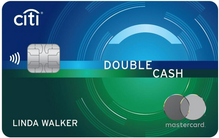
Intro offer
$200 cash back
Rewards rate
2% - 5%
Annual fee
$0
Regular APR
17.49% - 27.49% (Variable)
Why you'll like this: You can keep your rewards strategy simple with a leading flat rewards rate and intro balance transfer APR.
Reward Details
What you should know
Card Details
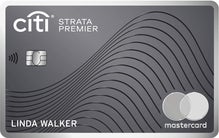
Intro offer
Earn 60,000 bonus ThankYou® Points
Rewards rate
1X - 10X
Annual fee
$95
Regular APR
19.49% - 27.49% (Variable)
Why you'll like this: Occasional travelers can easily rack up rewards toward their next trip with this card’s diverse roster of everyday categories.
Reward Details
What you should know
Card Details
Best for excellent credit
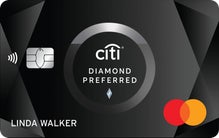
Balance transfer intro APR
0% for 21 months on Balance Transfers
Regular APR
16.49% - 27.24% (Variable)
Rewards rate
N/A
Annual fee
$0
Why you'll like this: With this card's intro APR offer, you'll have more than a year to pay down credit card debt.
What you should know
Card Details
Best for cash back
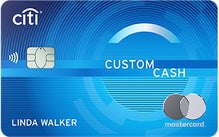
Intro offer
$200
Rewards rate
1% - 5%
Annual fee
$0
Regular APR
17.49% - 27.49% (Variable)
Why you'll like this: It adapts to your spending each billing cycle, letting it fit into nearly any rewards strategy thanks to its top cash back rate on ten possible categories.
Reward Details
What you should know
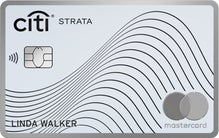
Intro offer
Earn 20,000 bonus Points
Rewards Rate
1X - 5X
Annual fee
$0
Regular APR
18.49% - 28.49% (Variable)
Why you'll like this: Its everyday rewards rates make it easy to earn travel rewards even if you don't actually spend a ton on travel.
Reward Details
What you should know
Card Details

Remove a card to add another to compare
Remove a card to add another to compare
Compare Bankrate’s top Citi credit cards
| Card name | Best for | Annual fee | Card highlights | Bankrate review score |
|---|---|---|---|---|
|
Flat-rate rewards
|
|
Up to 2% cash back on all eligible purchases (1% when you buy, plus another 1% when you pay off purchases) 5% cash back on hotels, car rentals and attractions via the Citi Travel 0% intro APR on balance transfers for 18 months (on transfers within the first four months), then 17.49% - 27.49% (Variable) APR |
4.2 / 5 Our writers, editors and industry experts score credit cards based on a variety of factors including card features, bonus offers and independent research. Credit card issuers have no say or influence on how we rate cards.
Apply now
on Citi's secure site
|
|
|
Travel |
|
10X points on hotels, car rentals and attractions booked via the Citi Travel℠ portal 3X points on air travel and other hotel purchases, at restaurants, supermarkets and gas and EV charging stations $100 annual hotel benefit discount on a single hotel stay of $500 or more booked via the Citi Travel℠ portal (excludes taxes and fees) |
4.2 / 5 Our writers, editors and industry experts score credit cards based on a variety of factors including card features, bonus offers and independent research. Credit card issuers have no say or influence on how we rate cards.
Apply now
on Citi's secure site
|
|
|
Excellent credit |
|
0% intro APR for 21 months on qualifying balance transfers within the first four months. Intro balance transfer fee of 3% of each transfer (minimum $5) completed within the first 4 months of account opening. After that, your fee will be 5% of each transfer (minimum $5). 0% intro APR for 12 months on purchases 16.49% - 27.24% (Variable) APR applies after intro APRs end |
4.1 / 5 Our writers, editors and industry experts score credit cards based on a variety of factors including card features, bonus offers and independent research. Credit card issuers have no say or influence on how we rate cards.
Apply now
on Citi's secure site
|
|
|
Balance transfers |
|
0% intro APR on balance transfers for 21 months (on transfers within the first four months) 0% intro APR on purchases for 12 months No late payment fees, no penalty APR and a low intro balance transfer fee (3% within the first four months, then 5%; $5 minimum) 17.49% - 28.24% (Variable) ongoing APR |
|
|
|
Cash back |
|
5% cash back on the top eligible spending category each billing cycle (up to the first $500 spent each cycle, then 1% cash back) 4% cash back on hotels, car rentals and attractions via the Citi Travel℠ portal (through June 30, 2026) |
|
|
|
Everyday spending |
|
5X Points on Citi Travel bookings 3X Points on supermarkets, transit, gas or EV charging and a self-select category. 0% intro APR on purchases and balance transfers for 15 months. Then 18.49% - 28.49% variable APR after intro period ends. (3% balance transfer fee, $5 minimum) |
3.7 / 5 Our writers, editors and industry experts score credit cards based on a variety of factors including card features, bonus offers and independent research. Credit card issuers have no say or influence on how we rate cards.
Apply now
on Citi's secure site
|



Researching the best Citi credit cards
We thoroughly rate and research the best Citi cards based on key criteria to help you make confident decisions when choosing your next credit card. Learn more about our methodology below.
What to know about Citi credit cards
Citi is one of the largest financial institutions in the world with more than 200 million customers and operations in more than 160 countries and jurisdictions. The issuer’s credit card selection isn’t as robust as some issuers’ card offerings, but Citi’s credit cards are usually low-cost powerhouses for everyday spenders and people hunting for top-notch balance transfer intro APR offers. Citi’s main rewards cards all earn ThankYou points, so they can stack up plenty of value toward travel if you decide to pair them with the premium Citi Strata Premier® Card or Citi Strata Elite℠ Card.
But if you’re interested in luxury-level travel cards, rewards-packed starter cards and leading business cards, though, Citi cards may not be the best picks. Determining the right card for you will depend on your spending habits, debt, future expenses and credit score, so be sure to keep these factors — and our experts’ advice below — in mind while weighing your options.
Bankrate insight
Outside of its ThankYou point-earning cards, Citi is also known for its popular co-branded cards. Frequent flyers may want to check out their best American Airlines cards, and frequent bulk buyers may be able to save even more money with the Costco Anywhere Visa® Card by Citi* or its business card counterpart.
Here’s how a Bankrate expert chose her Citi credit card
Despite her initial reluctance, Bankrate editor Courtney Mihocik has found the Citi Custom Cash® Card to be invaluable, allowing her to navigate her credit card journey with ease and flexibility. Its customizable features and rewards structure have enhanced her financial experience.
“I initially considered Citi as an issuer for my first general travel card, but its travel portal and benefits didn't stack up to competing issuers' travel cards. But I think Citi really shines with its cash back credit cards. I got the Citi Custom Cash card in 2022 and have used it solely for my grocery purchases for almost two years, racking up a solid amount of 'basic' Citi ThankYou points. I'm going to keep stockpiling the points until I have a hefty sum to cover a large grocery haul.
One of my favorite aspects of being a Citi cardholder is managing my account on the mobile app. With it, I can track my cash back rewards, easily pay off my balances and even request credit limit increases. And when I found a fraudulent charge on my Citi Custom Cash card in 2022, Citi was quick to cancel the card, refund the amount and send a replacement.”
— Courtney Mihocik, Bankrate editor
Citi customer experience
Citi ranks seventh in customer satisfaction among major credit card issuers, according to J.D. Power’s 2025 customer satisfaction study, holding a slightly lower rank since the 2024 survey. After its rise above the average score in 2024, Citi has since dropped below the average issuer score.
However, Citi still ranks in the upper half of issuers, landing in the top ten. Other issuers like Wells Fargo and Bank of America jumped several spots in the rankings while American Express continued to hold the highest score.
When it comes to Citi’s individual card offerings, Citi ascended to first place on airline co-brand cards with the Citi AAdvantage Executive World Elite Mastercard. It also snagged second place in the no annual fee cards category with the Citi Double Cash Card.
Consumers’ credit card needs have changed over the past year as there has been a shift toward cash back (away from points and miles), lower annual fees and interest intro APR offers to help manage sustained high interest rates and credit card debt. Considering these factors are major pillars among Citi’s credit cards, there may be more satisfying cards worth considering in the current market.
Pros and cons of Citi credit cards
Pros
-
Diverse rewards category rosters: Citi’s major credit cards focus on providing uniquely extensive bonus categories to capitalize on as much everyday spending as possible, potentially including both key expenses and niche categories.
-
Versatile rewards redemptions: Unlike some issuers’ points and miles, Citi ThankYou points can be redeemed for cash back at an equal value of 1 cent per point, which can make these cards more helpful if you don’t travel often.
-
Competitive intro offers: Several Citi cards have decent sign-up bonuses and top-tier intro APR offers for balance transfers, adding plenty of short-term value to the card and breathing room for debt consolidators.
-
Great for pairing: Citi’s no-annual-fee rewards cards don’t overlap with the issuer’s premium travel card, making Citi cards some of the best options on the market if you’re trying to maximize your rewards earnings with an affordable card stack.
Cons
-
Trailing travel value for rewards strategists: Based on Bankrate’s latest points and miles valuations, ThankYou points could be worth less on average through top travel transfer partners than Chase Ultimate Rewards points, Amex Membership Rewards points and Capital One miles.
-
Limited options for beginners and business owners: If you are focused on building credit or your small business, you’ll have few competitive starter options with Citi.
-
Basic credit card perks: Citi credit cards tend to sacrifice additional perks like travel and shopping protections, partner rideshare or delivery offers and non-essential travel benefits in order to optimize their rewards rates, bonus categories and intro APR offers.
Our data: Bankrate’s most popular Citi Card
In 2025, the most popular Citi card according to Bankrate’s proprietary data is the Citi Simplicity Card. At least 16 percent of Bankrate readers who saw it alongside other cards at the same time clicked on the Citi Simplicity.
The second most popular Citi card is the Citi Diamond Preferred Card. Fifteen percent of Bankrate readers clicked on that card when presented with other cards at the same time.
Both cards offer similar benefits, such as lengthy balance transfer periods, but they lack purchase rewards — which could be indicative of the current financial pressures consumers are facing with rising credit card balances.
The Citi Strata Premier card has undergone some unfavorable changes to its rewards lately, but it’s still relatively popular in Citi’s lineup of credit cards with 14 percent of Bankrate readers clicking on this card.
However, if you’re interested in the Citi Strata Premier you should know that the cash redemption of its ThankYou Rewards was recently reduced by 25 percent which took effect in August 2025. Not long before that, Citi announced a 20 percent reduction in transfer value of the Strata Premier’s ThankYou Rewards with Emirates Skywards which started July 27th of 2025.
Still deciding if a Citi credit card is right for you? Check out our Credit Card Spender Type Tool where you can get personalized credit card recommendations based on your credit score, spending habits and daily needs.
What makes a great Citi card
Citi cards typically have a few stand-out features to watch for. Of the five main cards Citi offers, you’ll typically find no annual fee, intro APR offers and flexible rewards redemptions.

What people say about Citi credit cards
Citi offers a thoughtful selection of cards that could suit almost any lifestyle. Most users on the popular subreddit r/CreditCards saw them positively, especially if you prefer cash back to travel rewards:
“I’ve had Citi for a decade and am very happy with them. I run the triple stack (double cash, custom cash, strata premier) and it’s a ton of points for $95 annually. It sucks you can’t transfer to Delta (I’m based in ATL) but there’s a ton of international transfer partners. Have had two fraud issues and both times customer service was super quick and helpful. Literally never had an issue.”
— Reddit User
Although this particular Reddit user didn’t experience any problems with Citi’s customer service, it was still a common pain point in many other responses. Another Reddit user cited poor customer service as one of the reasons they’re considering dropping their Citi cards.
“Every department is serviced differently. If an issue spans multiple departments or is a result of an interface between two departments, you'll get transferred back and forth.”
However, whether a Citi card is worth it for you will depend on your own goals and experience.
*The quotes and citations included on this page have been verified by our editorial team and are accurate as of the posting date. Outlinked content may contain views and opinions that do not reflect the views and opinions of Bankrate.
Expert advice for Citi Cards
Check out tips from our team of financial experts on how to maximize rewards and features on your Citi card.
Frequently asked questions about Citi credit cards
*The information about the Chase Freedom Flex®, Costco Anywhere Visa® Card by Citi, Citi Rewards+® Student Credit Card, Citi Custom Cash® Card, The Citi Simplicity®, and the Citi® Secured Mastercard® has been collected independently by Bankrate. The card details have not been reviewed or approved by the card issuer.
How we assess the best Citi credit cards
When evaluating the best credit cards from Citi, we take into account several factors, including how cards score in our proprietary card rating system and whether they offer features that fit the priorities of a diverse group of cardholders, from earning rewards to scoring a large sign-up bonus to saving on interest.
Our rating database covers over 250 of the most popular credit cards, allowing us to compare the quality of various Citi cards to each other and to cards in the same category from other issuers. We scored each card based on the factors most relevant to its primary category, including its rewards rate, estimated annual earnings, intro APR period, ongoing APR, perks and more to determine whether it belonged in this month’s roundup.
Here’s a look at how our card ratings are distributed as of August 2024, as well as some of the key factors that we considered in selecting this month’s best Citi cards.
-
5 stars 2%
-
4 - 4.9 stars 35%
-
3 - 3.9 stars 39%
-
2 - 2.9 stars 22%
-
1 - 1.9 stars 2%