What is a Treasury bond?


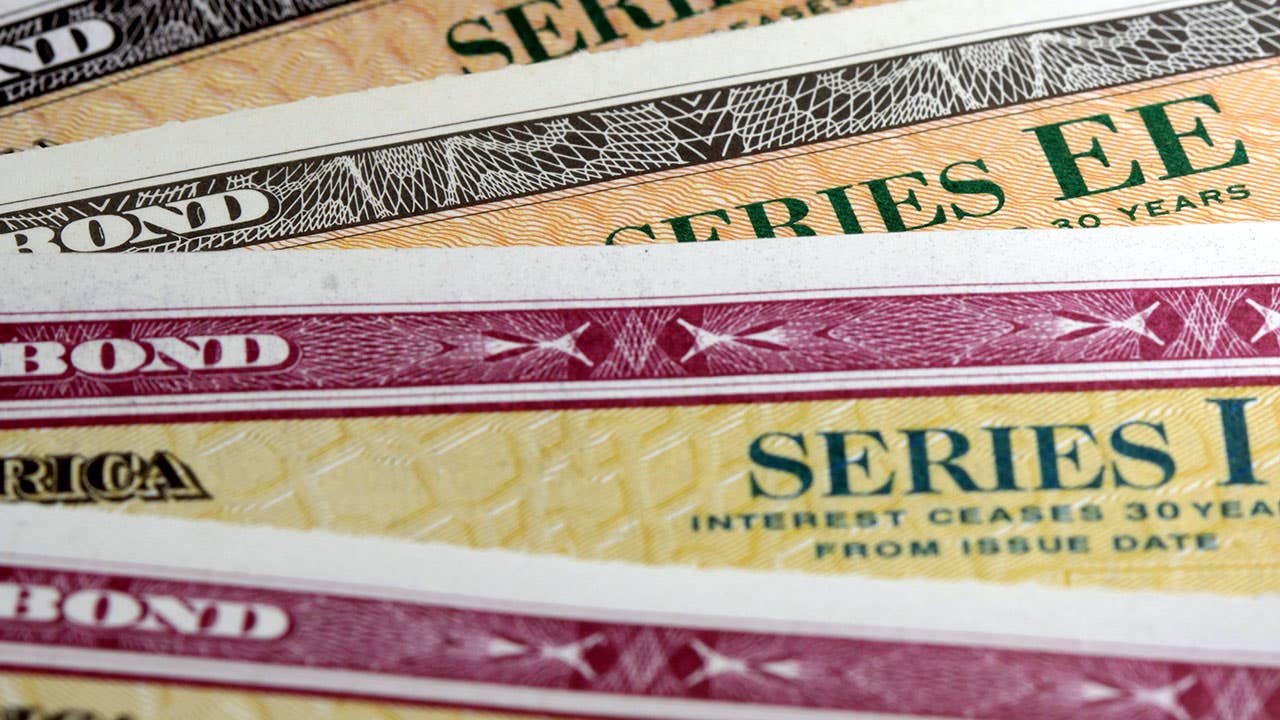
Diversification is a key strategy when it comes to investing, and one of the most common ways to diversify a portfolio is through bonds. As a form of government-issued debt, Treasury bonds can be a useful addition to a balanced investment portfolio, especially as you near retirement, offering stability, regular income and tax advantages.
“U.S. Treasurys have provided safe haven, diversification and reliable income to generations of investors during most of their 90-year history,” says Craig Bolanos Jr., a founding partner and CEO of Wealth Management Group LLC in Inverness, Illinois.
Here’s what you need to know.
What is a Treasury bond?
Treasury bonds, often referred to as T-bonds, are long-term loans made to the U.S. government. When you buy a Treasury bond, you’re essentially lending money to the federal government. In return, the government agrees to pay you a fixed rate of interest every six months for the life of the bond.
When the bond matures — in 20 or 30 years — the government pays back the original amount of the loan, also known as the bond’s face value.
These bonds are issued by the U.S. Treasury Department, hence the name, and investors can purchase the securities directly at TreasuryDirect.com. You can also buy Treasury bonds through a bank or broker, but you may pay a fee or commission for doing so. However, some of the best online brokers no longer charge any fees or commissions on Treasury bonds. Charles Schwab and E-Trade, for example, charge no fees on new issues or secondary trades on T-bonds.
Treasury bonds are widely considered a relatively risk-free investment because the U.S. government has never defaulted on its debt. However, investors should understand that even U.S. government bonds have interest rate risk. That is, if market interest rates rise, the prices of these bonds will fall — as they did throughout 2022 — and vice versa.
Types of Treasury securities
The U.S. Treasury offers several types of securities. Each has unique features and maturity periods that determine their interest rates and the way they’re traded.
- T-bonds: These come with original maturities of either 20 or 30 years and typically offer the highest interest rate for investors. Interest payments are made twice a year.
- T-notes: Original maturities for these securities range from two to 10 years and usually come with lower interest payments than a T-bond. T-note payments are also made twice a year.
- T-bills: These securities have the shortest time to maturity, with lengths ranging from four weeks to one year. T-bills are sold at a discount to the face value of the bond, so investors earn the difference at maturity.
How do Treasury bonds work?
Treasury bonds come with maturities of 20 to 30 years. A 30-year Treasury holds a minimum face value amount of $1,000, although they can be bought in $100 increments if purchased directly from the U.S. Treasury.
The term “fixed income” means that Treasury bonds deliver a fixed interest rate payout, paid to investors twice annually, or every six months.
In addition to the semiannual interest rate payments, bondholders eventually get all of their investment principal back. When a Treasury bond matures – meaning it has reached its maturity date and expires – the investor is paid out the full face value of the bond. So if the bondholder holds a Treasury bond worth $10,000, he or she will receive the $10,000 principal back, as well as earning interest on the investment.
Treasury bonds are liquid, meaning they can be sold by bondholders before they mature. Treasury securities can be traded in a secondary market, also known as the fixed-income market, or more commonly, the bond market.
Of course, bondholders can also elect to hang on to the Treasury bond until the maturity date.
Treasury bond rates explained
Treasury bond interest rates (also known as yield) are tied to the specific bond’s maturity date.
The T-bond’s yield represents the return stemming from the bond, and is the interest rate the U.S. government pays to investors to borrow their money for a period of time. For instance, an investor who purchases a $10,000 T-bond and earns 4 percent in interest from Uncle Sam will earn a $400 annual return from the Treasury bond purchase.
So-called long-term Treasurys, which include the 30-year T-bond, typically offer the highest interest rate payments of any security in the U.S. Treasury fixed-income family.
“Typically, the longer the maturity date, the higher the interest rate,” says Jacob Dayan, partner at Consumer Law Group in Chicago.
The reason: Longer-term bonds are riskier, as a spike in inflation could reduce the value of the interest payments.
In addition, if market-driven yields move higher, pushing the price of the bond lower, it makes the lower-yielding bond you own a less attractive investment. (However, there are times when shorter-dated securities, such as a 3-month T-bill, can yield more than a 10-year note. This phenomenon, dubbed an inverted yield curve, occurred in 2023.)
As of November 2024, yields on 30-year U.S. Treasury bonds were around 4.57 percent.
T-bond tax implications
Tax-wise, Treasury bonds are fairly straightforward.
Any interest earned on a Treasury bond investment is tax-exempt at the state and local levels, but that interest is taxed by the federal government.
If you hold your Treasury bond with the U.S. government, the amount of interest you earned is easily viewable on your IRS Tax Form 1099. If it’s with your bank or broker, your financial institution can provide your taxable interest earned on your T-bond investment.
How Treasury bonds fit into your portfolio
You aren’t likely to get wealthy from investing in T-bonds alone. Returns are typically around 2 percent to 5 percent, and they require putting your money away for a long time. There are other long-term investments with the potential for higher yields and more liquidity.
However, investors can leverage T-bonds to preserve the wealth they’ve already created.
“There’s consistent income potential with Treasury bonds and your investment likely won’t decrease if the stock market tanks, like other investment vehicles can do,” says Chase Lawson, author of “Financial Freedom: Breaking the Chains to Independence and Creating Massive Wealth.”
Since T-bonds are some of the safest investments around, they can also help mitigate risk within your portfolio during economic downturns.
“For many investors, U.S. Treasury bonds are the investment of choice for flight to safety (trades) as evidenced most prominently during periods of extreme market volatility,” says Bolanos.
The difference between Treasury bonds and Treasury notes
Treasury bonds are part of a larger federal government family of Treasury securities, comprised of Treasury bonds, Treasury notes and Treasury bills.
“Treasury notes and Treasury bonds are essentially the same type of instrument and only differ in original maturities,” explains Robert Johnson, professor of finance at the Heider College of Business at Creighton University.
The government issues Treasury bonds in 20- to 30-year maturities and Treasury notes in maturities ranging as short as two years to as long as 10 years. Both purchasers of Treasury bonds and notes receive an interest payment every six months.
Treasury bills (T-bills), the short-term debt of the government, differ from both Treasury bonds and Treasury notes.
“T-bills are issued with original maturities of four, eight, 13, 26 and 52 weeks,” Johnson says. “They don’t pay interest and are issued on a discount basis (which means your initial cost is lower than the face value of the T-bill). With T-bills, the investor receives a higher amount when the bill matures than they paid to acquire it.”
3 tips for investing in Treasury bonds
Here are a few easy ways to buy Treasurys:
- Buy direct. If possible, it’s preferable to buy Treasury bonds directly at TreasuryDirect.gov. That way, you’re buying your bonds from the federal government and eliminating any fees that may come with buying bonds through a middleman, as you would with a brokerage firm. Most bonds, except for I bonds, can be purchased elsewhere, however you can’t sell a bond before maturity that you purchased through TreasuryDirect without transferring it to a broker — a process that can take several months.
- Buy closer to retirement. Wealth is more about capital appreciation during the savings and investing years and capital preservation during your later years — and with good reason. When you’re young, investing in higher-risk, but higher-reward stocks generates capital appreciation. In short, you’re creating long-term wealth with your stock investments. However, when you’re either nearing or already in retirement, you want to preserve the wealth you’ve created. You can accomplish that via capital preservation tools like T-bonds, which represent lower-risk investments that reduce your odds of losing money in a market downturn.
- Go the ETF route. An effective, low-cost way to get in on the Treasury bond game is to invest in Treasury ETFs, or exchange-traded funds. Any low-cost, diversified Treasury-oriented ETF that emphasizes a long-term T-bond component is worth looking at. You can even mix and match different Treasury security funds. You can consult Bankrate’s list of top bond funds for retirement investing if you’re looking for inspiration.
If you’re looking for ETFs that invest in long-term Treasurys, have a look at iShares 20+ Year Treasury Bond ETF (TLT) and Vanguard Long-Term Treasury ETF (VGLT).
Bottom line
Treasury bonds can be an effective way to diversify your portfolio or preserve capital. They offer a fixed interest rate and are backed by the U.S. government, making them a low-risk investment. While they may not yield the highest returns compared to riskier investments, they can provide stability to your portfolio, particularly during times of market volatility. However, it’s essential to consider your financial goals. T-bonds can be an effective way to protect your wealth, but they aren’t necessarily a great way to build wealth.
Editorial Disclaimer: All investors are advised to conduct their own independent research into investment strategies before making an investment decision. In addition, investors are advised that past investment product performance is no guarantee of future price appreciation.
Why we ask for feedback Your feedback helps us improve our content and services. It takes less than a minute to complete.
Your responses are anonymous and will only be used for improving our website.