Advertiser Disclosure
Bankrate.com is an independent, advertising-supported publisher and comparison service. Our websites may earn compensation when a customer clicks on a link, when an application is approved, or when an account is opened. Therefore, this compensation may impact what products appear and how, where, and in what order they appear within listing categories, except where prohibited by law for our mortgage, home equity and other home lending products. Other factors, such as our proprietary website rules and whether a product is offered in your area or at your self-selected credit score range, can also impact how and where products appear on this site. While we strive to provide a wide range of offers, Bankrate does not include information about every financial or credit product or service.
Best business credit cards of June 2026
 Written by

- • NACCC Certified Credit Counselor (2025)
- • Credit cards
- • Debt management
 Edited by

- • Certified Financial Education Instructor℠ (CFEI)
- • Credit cards
- • 0% intro APR offers
Edited by
- • Certified Financial Education Instructor℠ (CFEI)
- • Credit cards
- • 0% intro APR offers
Advertiser Disclosure: Bankrate’s editorial team chooses and recommends the credit cards on this page. Our websites may earn compensation when a customer clicks on a link, when an application is approved, or when an account is opened. However, our recommendations and card ratings are produced independently without influence by advertising partnerships with issuers.
- Capital One Venture Business: Best for easy travel earnings
- Ink Business Unlimited® Credit Card: Best for large welcome offer
- Capital One Venture X Business Rewards Credit Card: Best for travel perks
- Sapphire Reserve for Business℠: Best for credits
- The Business Platinum Card® from American Express: Best for luxury travel perks
- Ink Business Cash® Credit Card: Best for office expenses
- Graphite™ Business Cash Unlimited Card: Best for cash back on business purchases
- Ramp Business Card: Best for expense management
- American Express® Business Gold Card: Best for category flexibility
- Atmos™ Rewards Visa Signature® Business Card: Best for international business travel
- Capital One Spark Cash Plus: Best for annual cash bonus
- The Blue Business® Plus Credit Card from American Express: Best no-annual-fee card
- Capital One Spark Cash: Best for simplicity
- American Express Blue Business Cash™ Card: Best for flat-rate cash back
How we make money
You have money questions. Bankrate has answers. Our experts have been helping you master your money for over four decades. We continually strive to provide consumers with the expert advice and tools needed to succeed throughout life’s financial journey.
Bankrate follows a strict editorial policy, so you can trust that our content is honest and accurate. Our award-winning editors and reporters create honest and accurate content to help you make the right financial decisions. The content created by our editorial staff is objective, factual, and not influenced by our advertisers.
We’re transparent about how we are able to bring quality content, competitive rates, and useful tools to you by explaining how we make money.
Bankrate.com is an independent, advertising-supported publisher and comparison service. Our websites may earn compensation when a customer clicks on a link, when an application is approved, or when an account is opened. Therefore, this compensation may impact what products appear and how, where, and in what order they appear within listing categories, except where prohibited by law for our mortgage, home equity and other home lending products. Other factors, such as our proprietary website rules and whether a product is offered in your area or at your self-selected credit score range, can also impact how and where products appear on this site. While we strive to provide a wide range of offers, Bankrate does not include information about every financial or credit product or service.
Bankrate has partnerships with issuers including, but not limited to, American Express, Bank of America, Capital One, Chase, Citi and Discover.
Filter by
Showing 13 results
Best for large welcome offer
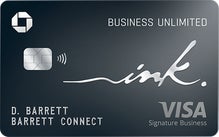
on Chase's secure site
See Rates & FeesIntro offer
Earn $750 bonus cash back
Rewards Rate
1.5%
Annual fee
$0
Regular APR
16.74% - 24.74% Variable
Why you'll like this: Its exceptional welcome offer and low cost make it a great starter option if you’re new to building business credit.
Reward Details
- 1.5%Earn unlimited 1.5% cash back on every purchase made for your business
What you should know
Alternatives: If you think the welcome offer spending requirements are too high, the Capital One Spark Cash Select offers the same solid rewards rate, but its sign-up bonus comes with a much lower spending requirement.
- The rewards program is straightforward and rather generous for a no-annual-fee card.
- You can pool and transfer rewards for extra value if you have a Chase Ultimate Rewards card.
- Depending on your business spending habits, you might be able to earn more rewards with a bonus category credit card.
- This card lacks an intro APR offer on balance transfers, which is a detriment if you need to pay down card debt.
Card Details
Earn $750 bonus cash back after you spend $6,000 on purchases in the first 3 months from account opening
Earn unlimited 1.5% cash back on every purchase made for your business
No Annual Fee
Redeem rewards for cash back, gift cards, travel and more through Chase Ultimate Rewards®.
Earn rewards faster with employee cards at no additional cost. Set individual spending limits for greater control.
Round-the-clock monitoring for unusual credit card purchases
With Zero Liability you won't be held responsible for unauthorized charges made with your card or account information.
0% introductory APR for 12 months on purchases
Earn 5% total cash back on Lyft rides through 9/30/27.
Member FDIC
Best for office expenses
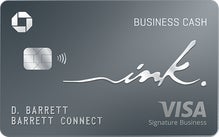
on Chase's secure site
See Rates & FeesIntro offer
Earn $750 bonus cash back
Rewards Rate
1% - 5%
Annual fee
$0
Regular APR
16.74% - 24.74% Variable
Why you'll like this: It has a great welcome offer and earns big on office supplies and internet purchases.
Reward Details
- 5%Earn 5% cash back on the first $25,000 spent in combined purchases at office supply stores and on internet, cable and phone services each account anniversary year.
- 2%Earn 2% cash back on the first $25,000 spent in combined purchases on dining and gas each account anniversary year.
- 1%Earn 1% cash back on all other purchases.
What you should know
Alternatives: If most of your monthly business expenses go beyond routine office supplies, you may find that a flat-rate card like the Ink Business Unlimited® Credit Card offers more value and still has additional Chase perks.
- The value of the sign-up bonus is superb for a card without an annual fee.
- The card’s rewards are generous and the categories are useful for small- and mid-sized businesses.
- The spending cap on cash back might limit the card’s usefulness for larger business budgets.
- There’s no intro APR on balance transfers, which hurts the card’s up-front value for business owners who want to pay down debts.
Card Details
Earn $750 when you spend $6,000 on purchases in the first three months after account opening
Earn 5% cash back on the first $25,000 spent in combined purchases at office supply stores and on internet, cable and phone services each account anniversary year
Earn 2% cash back on the first $25,000 spent in combined purchases on dining and gas each account anniversary year. Earn 1% cash back on all other purchases
With Zero Liability you won't be held responsible for unauthorized charges made with your card or account information.
No Annual Fee
Complimentary three-month lnstacart+ membership.
0% introductory APR for 12 months on purchases
Earn 5% total cash back on Lyft rides through 9/30/27.
Member FDIC
Best for travel perks

on Capital One's secure site
See Rates & FeesIntro offer
Earn 150,000 bonus miles
Rewards Rate
2X miles - 10X miles
Annual fee
$395
Regular APR
25.74% (Variable)
Why you'll like this: This card includes practical, valuable travel perks at a reasonable cost.
Reward Details
- 2X miles2 miles per dollar on every purchase
- 5X miles5 miles per dollar on flights and vacation rentals booked through Capital One Business Travel
- 10X miles10 miles per dollar on hotels and rental cars booked through Capital One Business Travel
What you should know
Alternatives: If you want the flexibility to redeem rewards at a decent value for both travel and cash back without worrying about a large annual fee, consider the Ink Business Preferred® Credit Card. You can get solid cash back redemption value and points might be worth more when you redeem for Chase Travel℠ bookings.
- The card boasts valuable, practical travel perks, including annual travel statement credits, anniversary miles and airport lounge access, making it easy to offset the annual fee.
- It offers ultra-flexible travel redemption, allowing you to redeem miles for travel via Capital One, transfer to participating airline partners and more.
- It’s not a great fit if you want the option to earn cash back. You can redeem miles for cash back, but it’ll cut your miles’ value in half.
- The issuer has few domestic airlines on the list of transfer partners, which might limit the rewards’ value if you don’t travel internationally.
Card Details
Earn 150,000 bonus miles once you spend $30,000 in the first 3 months from account opening
Earn unlimited 2X miles on every purchase, everywhere—with no limits or category restrictions
Earn 10X miles on hotels and rental cars and 5X miles on flights and vacation rentals booked through Capital One Business Travel
With no preset spending limit, enjoy big purchasing power that adapts so you can spend more and earn more rewards
Empower your teams to make business purchases while earning rewards on their transactions, with free employee and virtual cards. Plus, automatically sync your transaction data with your accounting software and pay your vendors with ease
Redeem your miles on flights, hotels and more. Plus, transfer your miles to any of the 15+ travel loyalty programs
Every year, you'll get 10,000 bonus miles after your account anniversary date. Plus, receive an annual $300 credit for bookings made through Capital One Business Travel
Receive up to a $120 credit for Global Entry or TSA PreCheck®. Enjoy access to 1,300+ airport lounges worldwide, including Capital One Lounge and Landing locations and participating Priority Pass™ lounges, after enrollment
Enjoy a $100 experience credit and other premium benefits with every hotel and vacation rental booked from the Premier Collection
Your card is designed to be paid in full. However, you have the option to carry over a portion of your balance with interest if needed. Pay at least the minimum payment amount by your payment due date, otherwise you'll be charged a 2.99% late fee
Top rated mobile app
Best for credits

on Chase's secure site
See Rates & FeesIntro offer
Earn 150,000 bonus points
Rewards Rate
1x - 8x
Annual fee
$795
Regular APR
Flex for Business Variable APR: 17.74% - 28.49%
Why you'll like this: It can offer frequent travelers extraordinary value with its many perks and credits.
Reward Details
- 8xEarn 8x points on Chase Travel℠ for airline tickets, hotels, including The Edit℠, car rentals, cruises, activities and tours.
- 5xEarn 5x total points on Lyft rides through 9/30/27.
- 4xEarn 4x points on flights & hotels booked direct.
- 3xEarn 3x points on social media & search engine advertising.
- 1xEarn 1x points on all other purchases.
What you should know
Alternative: The Capital One Venture X Business is a great alternative if you want to keep costs manageable without sacrificing too many perks. Its streamlined list of benefits is still highly valuable and practical, and the flat rewards rate makes it a perfect fit if you put a premium on simplicity.
- Its perks hold a ton of value, making it easily worth it if you can take advantage of them.
- It’s currently offering a generous welcome offer, so now is a great time to apply.
- However valuable its perks, the card’s annual fee is intimidating.
- Unless you get a Points Boost offer, points are only worth 1 cent each when you redeem for travel. And getting an offer may come down to luck.
Card Details
Earn 150,000 bonus points after you spend $20,000 on purchases in your first 3 months from account opening.
$6,000+ in value your first year. 150K points, valued at $3,000 for select flights and hotels through Chase Travel℠, plus $3,000+ in annual value through travel and business benefits.
Earn 8x points on Chase Travel℠ for airline tickets, hotels, including The Edit℠, car rentals, cruises, activities and tours.
Earn 5x total points on Lyft rides through 9/30/27.
Earn 4x points on flights & hotels booked direct.
Earn 3x points on social media & search engine advertising.
Get the most flexible travel credit compared to any other card, with up to $300 in statement credits each anniversary year on travel purchases.
Enjoy complimentary access to the Chase Sapphire Lounge® by The Club network and Priority Pass™ Select membership. Two guests may accompany the Primary Cardmember to the lounges free of charge.
Member FDIC
Best for luxury travel perks
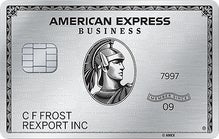
on American Express's secure site
See Rates & Fees, Terms ApplyIntro offer
As High As 300,000 points. Find Out Your Offer.
Rewards Rate
1X - 5X
Annual fee
$895
Regular APR
17.74% - 28.49% Variable
Why you'll like this: Its best-in-class perks, generous rewards rate on common business purchases and valuable welcome offer set it apart.
Reward Details
- 5XEarn 5X points on flights and prepaid hotels on AmexTravel.com.
- 2XEarn 2X points on purchases at U.S. construction material & hardware suppliers, electronic goods retailers and software & cloud system providers, and shipping providers, as well as on each eligible purchase of $5,000 or more, up to $2 million of these purchases per calendar year. Purchases eligible for multiple additional point bonuses will only receive the highest eligible bonus.
- 1XEarn 1X points on other eligible purchases.
What you should know
Alternatives: The American Express® Business Gold Card may be a better match if your business requires little traveling. Not only will you spend a lot less on annual fees, but you stand to earn a higher rewards rate on your top expense categories.
- The card could have an enormous welcome offer and hundreds of dollars worth of statement credits.
- Key card benefits include bonus rewards on useful business categories and an annual business-centric statement credit (terms apply).
- The card’s annual credits come with a number of caveats and can be tricky to maximize, depending on your spending needs.
- The annual fee is one of the priciest on the market.
Card Details
As High As 300,000 points. Find Out Your Offer. You may be eligible for as high as 300,000 Membership Rewards® Points after spending $20,000 in eligible purchases on your new Card in your first 3 months of Membership. Welcome offers vary and you may not be eligible for an offer.
The American Express Global Lounge Collection® can provide an escape at the airport. With complimentary access to more than 1,550 airport lounges across 140 countries and counting, you have more airport lounge options than any other credit card company on the market as of 07/2025.
See how you can unlock over $4,000 in business and travel value annually after meeting qualifying spend thresholds on the Business Platinum Card. Terms apply.
Get up to $300 in statement credits semi-annually for up to a total of $600 in statement credits per calendar year on prepaid Fine Hotels + Resorts® or The Hotel Collection bookings through American Express Travel using the Business Platinum Card®. The Hotel Collection requires a minimum two-night stay.
No Preset Spending Limit: The spending limit on the Business Platinum Card is flexible, so unlike a traditional credit card with a set limit, the amount you can spend adapts based on factors such as your purchase, payment and credit history.
Make the Business Platinum Card® work even harder for you. Hilton for Business members get up to $200 back per calendar year when you make an eligible purchase at Hilton properties across the globe. Gift cards are not an eligible purchase. Benefit enrollment required.
Fly like a pro with a $200 Airline Fee Credit. Select one qualifying airline to receive up to $200 back per year on baggage fees and other incidentals.
Use the Business Platinum Card and get up to $209 back per calendar year on your CLEAR+ Membership (subject to auto-renewal).
Maximize your time away with Fine Hotels + Resorts through Amex Travel™.
Enroll and get up to $150 in statement credits on U.S purchases directly with Dell Technologies on the Business Platinum Card and an additional $1,000 statement credit after you spend $5,000 or more on that same Card per calendar year.
Enroll and get up to $300 in statement credits per calendar year on U.S. purchases of ChatGPT Business* on the Business Platinum Card. *Subject to auto-renewal
Enroll and get a $250 statement credit after you spend $600 or more on U.S. purchases directly with Adobe per calendar year on the Business Platinum Card.
Get up to $90 in statement credits quarterly for purchases with Indeed on the Business Platinum Card. That’s up to $360 back per year. Enrollment required.
Get up to $10 in statement credits per month for wireless telephone service purchases made directly with a wireless provider in the U.S. on the Business Platinum Card. That’s up to $120 back per year. Enrollment required.
2X points on purchases at U.S. construction material & hardware suppliers, electronic goods retailers and software & cloud system providers, and shipping providers, as well as on each eligible purchase of $5,000 or more, up to $2 million of these purchases per calendar year. Purchases eligible for multiple additional point bonuses will only receive the highest eligible bonus.
5X points on flights and prepaid hotels on AmexTravel.com
1X points on other eligible purchases
Terms Apply.
Best for cash back on business purchases
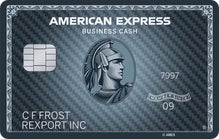
on American Express's secure site
See Rates & Fees, Terms ApplyIntro offer
Earn $1,500 Cash Back in the form of Reward Dollars
Rewards Rate
2% - 5%
Annual fee
$295
Regular APR
17.74% - 28.49% Variable
Why you'll like this: It's not beholden to only earning solid rewards on business-specific purchases.
Reward Details
- 2%Start saving while you spend. Get unlimited 2% cash back* in Reward Dollars on all eligible purchases. *Cash back is received in the form of Reward Dollars that can be redeemed as a statement credit and at Amazon.com checkout.
- 5%Get more for your travels with 5% cash back* on flights and prepaid hotel bookings through American Express Travel® Online. Purchases eligible for multiple cash back rates will only receive the highest eligible cash back rate.
What you should know
Alternatives: The Capital One Spark Cash Plus is a very similar card option, earning cash back at the same rates and in the same categories as the Graphite. However, this card offers a slightly higher welcome bonus with a lower spending requirement, meaning small business owners who aren’t loyal to Amex and need a little bit more cash upfront may prefer this card instead.
- This card has no preset spending limit, which can lend a lot of spending power to small business owners who need it.
- You can add up to 99 employee cards to your account (for a fee).
- Amex allows you to know if you’re approved for this card with no harm to your personal credit score.
- This card comes with a significant annual fee.
- The only boosted earnings rate (5%) is for travel purchases booked through Amex.
- Other business cards offer higher welcome bonus potential.
Card Details
Earn $1,500 Cash Back in the form of Reward Dollars after you spend $50,000 in purchases on your new Card within the first 6 months of Card Membership. Reward Dollars can be redeemed as statement credits and at Amazon.com checkout.
Start saving while you spend. Get unlimited 2% cash back* in Reward Dollars on all eligible purchases. *Cash back is received in the form of Reward Dollars that can be redeemed as a statement credit and at Amazon.com checkout.
Get more for your travels with 5% cash back* on flights and prepaid hotel bookings through American Express Travel® Online. Purchases eligible for multiple cash back rates will only receive the highest eligible cash back rate.
No Preset Spending Limit. The spending limit on this Card is flexible, so unlike a traditional credit card with a set limit, the amount you can spend adapts based on factors such as your purchase, payment and credit history.
Pay Over Time gives you the ability to carry a balance with interest up to your Pay Over Time Limit, so you can handle expected and unexpected expenses that come your way.
Your business, your choice: metal Employee Graphite™ Business Cash Unlimited Card for $95 Annual Fee for the first 5 Cards, $95 Annual Fee for each thereafter, or plastic Employee Business Expense Card for no Annual Fee.
Unlock up to $2,400 in statement credits for use in the next calendar year on American Express One AP® monthly fees** after spending $250,000 on eligible purchases on the Graphite™ Business Cash Unlimited Card this calendar year. Terms apply. **Monthly fees include an auto-renewing platform access fee.
Terms apply.
Best for expense management

Intro offer
Get a $1,000 Ramp card upon approval
Rewards Rate
Up to 1.5%
Annual fee
$0
Regular APR
N/A
Why you'll like this: You can set it and forget it when it comes to expense management with its automated tools and AI-driven features.
Reward Details
- Up to 1.5%Up to 1.5% cashback on every purchase, with no limits or restrictions
What you should know
Alternatives: The Brex Card* is another no-annual-fee business card that features more flexible rewards and bonus categories with similar expense management capabilities.
- There’s no personal credit check or personal guarantee required to apply, so you can keep your business and personal finances separate.
- Automated expense management tools make organizing spending easy and efficient.
- Sole proprietors and individuals aren’t eligible for this card.
- Rewards rates don't measure up to other business cards.
Card Details
Get a $1,000 Ramp card upon approval. Limit one per new customer. No minimum spend required.
Real-time visibility into business spending to help guide strategic business decisions
Seamless accounting and ERP integrations including NetSuite, Xero, QuickBooks, and more
Control wasteful spending before it happens with built-in vendor and category restrictions
Ramp is the world's first finance automation platform designed to save businesses time and money
5-in-1 platform combining corporate cards, expense management, bill payments, accounting integrations, and real-time reporting into one free solution
Up to 1.5% cashback on every purchase, with no limits or restrictions
Custom-branded physical cards
Virtual cards with support for Apple and Google Pay
First and only credit card with capabilities to control spend at the merchant, category, spend, and frequency level
No annual fees, interest rates, or foreign transaction fees
Ramp helps businesses save 5% on average
Zero liability & fraud protection
Best for category flexibility
on American Express's secure site
See Rates & Fees, Terms ApplyIntro offer
As High As 200,000 points. Find Out Your Offer.
Rewards Rate
1X - 4X
Annual fee
$375
Regular APR
17.74% - 28.49% Variable
Why you'll like this: It has a high-value welcome offer and great airline transfer partners.
Reward Details
- 4XEarn 4X Membership Rewards® points on the top two eligible categories where your business spends the most each month from 6 eligible categories. While your top 2 categories may change, you will earn 4X points on the first $150,000 in combined purchases from these categories each calendar year (then 1X thereafter). Only the top 2 categories each billing cycle will count towards the $150,000 cap.
- 3XEarn 3X Membership Rewards® points on flights and prepaid hotels booked on AmexTravel.com or the Amex Travel App™
- 1XEarn 1X on all other eligible purchases.
What you should know
Alternatives: If you like the idea of flexible reward categories but don’t want to deal with the higher annual fee, the Bank of America® Business Advantage Customized Cash Rewards Mastercard®* credit card offers similar flexibility at no annual fee.
- The card earns a generous return on some prime business-centric bonus categories.
- It offers access to several useful business expense management tools.
- The card’s highest bonus category is subject to a cap, which you might find limiting, depending on your spending.
- The annual fee may prove difficult to offset with the card’s niche statement credits.
Card Details
As High As 200,000 points. Find Out Your Offer. You may be eligible for as high as 200,000 Membership Rewards® Points after spending $15,000 in eligible purchases on your new Card in your first 3 months of Membership. Welcome offers vary and you may not be eligible for an offer.
Earn 4X Membership Rewards® points on the top two eligible categories where your business spends the most each month from 6 eligible categories. While your top 2 categories may change, you will earn 4X points on the first $150,000 in combined purchases from these categories each calendar year (then 1X thereafter). Only the top 2 categories each billing cycle will count towards the $150,000 cap.
Earn up to $20 in statement credits monthly after you use the Business Gold Card for eligible U.S. purchases at FedEx (through 10/01/2026), Grubhub, and Office Supply Stores. This can be an annual savings of up to $240. Enrollment required.
Enroll and get up to $300 in statement credits per calendar year on U.S. purchases of ChatGPT Business* on the Business Gold Card. *Subject to auto-renewal.
Enroll and get up to $150 in statement credits per calendar year for U.S. purchases with Squarespace. Subscription purchases subject to auto-renewal.
Get up to a $12.95** statement credit back each month after you pay for a monthly Walmart+ membership (subject to auto-renewal) with your Business Gold Card. **Up to $12.95 plus applicable taxes on one membership fee.
Earn 3X Membership Rewards® points on flights and prepaid hotels booked on AmexTravel.com or the Amex Travel App™.
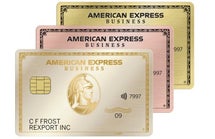
The Business Gold Card comes in three metal designs: Gold, Rose Gold and White Gold. Make your selection when you apply on Americanexpress.com.
Terms Apply
Best for international business travel

Intro offer
Limited-time online offer: 80,000 bonus points + a $99 Companion Fare
Rewards Rate
1 point - 3 points
Annual fee
$70 for the company and $25 per card
Regular APR
19.49% - 27.49% Variable APR on purchases and balance transfers
Why you'll like this: You can earn and redeem rewards worldwide thanks to the robust oneworld® Alliance travel partners.
Reward Details
- 3 pointsEarn 3 points for every $1 spent on eligible Alaska Airlines and Hawaiian Airlines purchases.
- 2 pointsEarn 2 points for every $1 spent on eligible gas, EV charging station, shipping and local transit (including rideshare) purchases.
- 1 pointEarn 1 point per $1 spent on all other purchases.
What you should know
Alternatives: The Blue Business® Plus Credit Card from American Express offers flexible and valuable Membership Rewards points as well as generous rewards rates, so it could be a better fit if you value simplicity. It also comes with an intro APR offer, which can come in handy if you need to finance business expenses.
- It carries no foreign transaction fee, so it’s a solid option for international business travel.
- The perks are practical and valuable, so the card will easily be worth it as long as you fly with Alaska and Hawaiian Airlines at least occasionally.
- It doesn’t offer many business-specific perks.
- You’ll face additional fees for employee cards, which can cut into your rewards value.
Card Details
Limited-time online offer: Get 80,000 bonus points and a $99 Companion Fare (plus taxes and fees from $23) after you make $5,000 or more in purchases within the first 90 days of opening your account.
Earn another Companion Fare ($99 fare plus taxes and fees from $23) each account anniversary after spending $6,000 or more on purchases within the prior anniversary year.
Free checked bag for any cardholder and up to 6 guests on the same reservation when you pay for your flight with your card – that’s a savings of $70 per person roundtrip!
Preferred boarding for any cardholder when you pay for your Alaska Airlines or Hawaiian Airlines flight with an Atmos™ Rewards Business Card.
Earn 3 points for every $1 spent on eligible Alaska Airlines and Hawaiian Airlines purchases. Earn 2 points for every $1 spent on eligible gas, EV charging station, shipping and local transit (including rideshare) purchases. Earn 1 point per $1 spent on all other purchases.
Earn a 10% rewards bonus on all points earned from card purchases if your company has an eligible Bank of America® business account.
Enjoy 20% back on Alaska Airlines and Hawaiian Airlines inflight purchases when you pay with your Atmos™ Rewards Business Card.
Get $100 off an annual Alaska Lounge+ Membership purchased with your Atmos™ Rewards Business Card.
Plus, no international transaction fees and a low annual fee of $70 for the company and $25 per card.
This offer may not be available if you leave this page or visit our website. You can take advantage of this offer when you apply now.
Best for annual cash bonus

on Capital One's secure site
See Rates & FeesIntro offer
$2,000 cash back
Rewards Rate
2% - 5%
Annual fee
$150
Regular APR
25.74% (Variable)
Why you'll like this: You’ll earn a great rewards rate on every purchase without worrying about tracking spending categories.
Reward Details
- 2%2% cash back on every purchase
- 5%5% cash back on hotels and rental cars booked through Capital One Business Travel
What you should know
Alternatives: The Capital One Spark Cash Select also has no preset spending limit. It’s a good choice if you don’t need the intro APR but want to pick up extra value through the card’s welcome offer.
- The card’s rewards program is straightforward and benefits higher-spending businesses.
- It’s a low-cost option for purchases when traveling abroad since it doesn’t charge foreign transaction fees.
- Offsetting the card’s cost may be difficult if you can’t reach the yearly spend requirement.
- Given it's a charge card, there are no flexible financing options.
Card Details
Earn a one-time cash bonus of $2,000 once you spend $30,000 in the first 3 months
Earn an additional $2,000 cash bonus for every $500K spent during the first year. You can earn this bonus multiple times over the course of year 1!
Earn unlimited 2% cash back on every purchase, everywhere—with no limits or category restrictions
Enjoy big purchasing power so you can spend more and earn more rewards. The Spark Cash Plus card has no preset spending limit, so it can adapt to your needs based on your spending behavior, payment history, credit profile and other factors
Earn unlimited 5% cash back on hotels and rental cars booked through Capital One Business Travel
Streamline your accounts payable process, employee spending, and more from your online account with free business management tools
Empower your teams to make business purchases while you earn rewards from their transactions with free employee and virtual cards
$150 annual fee - Spend $150,000 annually and Capital One will refund this fee every year
Your card is designed to be paid in full. However you have the option to carry over a portion of your balance with interest if needed. Pay at least the minimum payment amount by your payment due date, otherwise you'll be charged a 2.99% late fee
For businesses that need large spending capacity and want to maximize cash back
Top rated mobile app
Best no-annual-fee card

on American Express's secure site
See Rates & Fees, Terms ApplyIntro offer
15,000 Membership Rewards® points
Rewards Rate
2X
Annual fee
No annual fee
Regular APR
16.74% - 28.49% Variable
Why you'll like this: It offers great payment flexibility with its intro APR and Expanded Buying Power feature.
Reward Details
- 2XEarn 2X points on everyday business purchases such as office supplies or client dinners. 2X applies to the first $50,000 in purchases per year, 1 point per dollar thereafter. Terms and limitations apply.
What you should know
Alternatives: If your business has high monthly expenses, you may get more value from the Capital One Spark Cash Plus, which also offers flat-rate rewards on purchases without a spending cap.
- The card’s rewards are generous for a no-annual-fee card.
- You’ll have access to Expanded Buying Power, a flexible financing option that lets you potentially spend more than your card limit if needed.
- Your bonus rewards are subject to a cap, which may limit the card’s value if you run a business with large expenses.
- It charges a foreign transaction fee, which can make spending with international merchants expensive.
Card Details
Earn 15,000 Membership Rewards® points after you spend $3,000 in eligible purchases on the Card within your first 3 months of Card Membership.
0.0% intro APR on purchases for 12 months from the date of account opening, then a variable rate, 16.74% - 28.49%, based on your creditworthiness and other factors at account opening. APR will not exceed 29.99%
Earn 2X points on everyday business purchases such as office supplies or client dinners. 2X applies to the first $50,000 in purchases per year, 1 point per dollar thereafter. Terms and limitations apply.
You've got the power to spend above your credit limit* with Expanded Buying Power. *The amount you can spend above your credit limit is flexible, so it adapts with your use of the Card, your payment history, credit record, financial resources known to us, and other factors. Just remember, the amount you can spend with Expanded Buying Power is not unlimited.
No Annual Fee
Terms Apply.
Best for simplicity

on Capital One's secure site
See Rates & FeesIntro offer
Earn $1,000 cash back
Rewards Rate
2% - 5%
Annual fee
$0 intro for first year; $95 after that
Regular APR
24.49% (Variable)
Why you'll like this: Its flat rewards rate makes earning cash back a breeze, so it’s a great starting point if you’re new to rewards cards.
Reward Details
- 2%Earn unlimited 2% cash back for your business on every purchase, everywhere, no limits or category restrictions
- 5%Earn unlimited 5% cash back on hotels and rental cars booked through Capital One Business Travel
What you should know
Alternative: The higher-tier Capital One Spark Cash Plus may be a better value overall, especially if you have a lot of business expenses.
- You won’t have to plan your spending or enroll in bonus categories since it earns a flat 2% back on every purchase — perfect for minimalists.
- Employee card spending also earns unlimited 2% cash back, making it even easier for small-business owners to track purchases and rack up rewards.
- It doesn’t offer much in the way of business perks beyond its ongoing cash back rate — especially disappointing given its cost.
- A few competing business cards earn 2% back or 2X rewards with no annual fee. The tradeoff may be a rewards rate cap, but smaller businesses may never meet it.
Card Details
Earn a $1,000 cash bonus when you spend $10,000 within 3 months of account opening
For businesses that want to earn 2% cash back on all purchases with the familiarity of a traditional credit line
Earn unlimited 2% cash back for your business on every purchase, everywhere, no limits or category restrictions
$0 annual fee for the first year; $95 after that
Free employee cards, which also earn unlimited 2% cash back on all purchases
Rewards won’t expire for the life of the account, and you can redeem your cash back for any amount
No foreign transaction fees
Top rated mobile app
Best for flat-rate cash back
on American Express's secure site
See Rates & Fees, Terms ApplyIntro offer
$250 statement credit
Rewards Rate
1% - 2%
Annual fee
No annual fee
APR
16.74% - 28.49% Variable
Why you'll like this: It charges no annual fee and comes with an intro APR offer on purchases — a rarity on business cards.
Reward Details
- 2%Earn 2% cash back on all eligible purchases on the first $50,000 of purchases each calendar year.
- 1%Earn 1% cash back on all eligible purchases thereafter. Cash back earned is automatically credited to your statement.
What you should know
Alternatives: Small businesses that prefer the value of points over the convenience of cash back may prefer The Blue Business® Plus Credit Card from American Express. You can transfer Membership Rewards points to hotels and airline partners, often boosting their value beyond what you can earn on a typical cash back business card.
- This card offers reliable cash back and a solid intro APR on purchases.
- You can access Expanded Buying Power, a flexible financing option that lets you go above your spending limit.
- The 2% cash back rate is capped to your first $50,000 in purchases per year, then drops to 1%.
- This card offers no intro APR on balance transfers, which would’ve been a nice addition if you need to pay off existing card debt.
Card Details
Earn a $250 statement credit after you make $3,000 in purchases on your Card in your first 3 months.
0.0% intro APR on purchases for 12 months from the date of account opening, then a variable rate, 16.74% - 28.49%, based on your creditworthiness and other factors as determined at the time of account opening. APRs will not exceed 29.99%
Earn 2% cash back on all eligible purchases on the first $50,000 of purchases each calendar year, 1% thereafter. Cash back earned is automatically credited to your statement.
From workflow to inventory to floor plans, your business is constantly changing. That’s why you’ve got the power to spend beyond your credit limit with Expanded Buying Power.*
*The amount you can spend above your credit limit is flexible, so it adapts with your use of the Card, your payment history, credit record, financial resources known to us, and other factors. Just remember, the amount you can spend with Expanded Buying Power is not unlimited.
No Annual Fee. Terms Apply. Learn More.

Remove a card to add another to compare
Remove a card to add another to compare
Compare Bankrate’s top small-business credit cards
| Rewards highlights | Learn more | |||
|---|---|---|---|---|
| $0 | Hover to learn more Best for large welcome offer | ||
| $0 | Hover to learn more Best for office expenses | ||
| $395 | Hover to learn more Best for travel perks | ||
| $795 | Hover to learn more Best for credits | ||
| $895 | Hover to learn more Best for luxury travel perks | ||
| $295 | Hover to learn more Best for cash back on business purchases | ||
Apply now on Ramp's secure site |
| $0 | Hover to learn more Best for expense management | Apply now on Ramp's secure site |
| $375 | Hover to learn more Best for category flexibility |


Can I get a business credit card?
Good news! If you run a small business, you can get a business credit card.
You may also be surprised by what counts as a business. You don’t need to work in a traditional office building, own a store or warehouse, run a profitable business or even have a separate business entity to qualify for a business credit card. Sole proprietors can qualify for business credit cards using their Social Security number (SSN) as their business identification, although you can also use an employer identification number (EIN). In fact, 99.9% of all businesses (34.8 million) in the United States are small businesses, according to a March 2024 report by the Small Business Administration. These include:
- Retail and sales
- Food and hospitality
- Client services
- Trades and labor
- Tech and online services
As long as you meet the issuer’s criteria for approval based on your personal credit history, you can qualify for a business credit card, regardless of your industry and even if you’re just starting a new business. Even if your small business consists of just you as a sole proprietor, there's a good chance you can find a business credit card that fits your needs.
What do I need to apply for a business card?
You'll need to provide issuers with some personal and business information to apply for a business card, including:
-
Business name and contact information: Contact information would include the business address and contact phone number. This information may be the same as your personal information.
-
Your position in the company: Issuers need to know who is responsible for paying the bill and who is authorized to make charges. Sole proprietors can refer to themselves as “owners” of their business.
-
Your personal information: You’ll need to provide your SSN and date of birth so the issuer can check your personal credit score. This information helps issuers determine your creditworthiness before offering you business credit. You also give issuers a personal guarantee that you'll assume responsibility for debt if the company ceases to exist.
-
Business income and spending projections: If your business is just starting or isn’t yet profitable, reporting $0 is acceptable. Projecting how much you might spend can help secure a higher credit line if needed.
-
Business details: You might need to describe your industry or the service your business provides, how long you’ve been operating the business or how many employees you have. Sole proprietors can be listed as the only employee for their business. Some issuers may also require further proof of your business, such as an EIN or tax ID number.
How to choose a business credit card
Your next step is choosing the right business card based on your needs and goals. Keep these factors in mind:
1. Find spending categories to match your business needs
The best business card for you will be the one that earns rewards where your business spends most. A good rule of thumb is that you want the business card to cover at least two of your main spending categories.
Along with popular categories like dining and travel, business cards typically earn rewards on expenses like shipping, advertising, office supplies, telecommunications, construction materials and in many other categories not covered by personal cards.
If your business expenses span several categories or you’d rather keep things simple, choose a business card with a flat rewards rate. Be sure to pay attention to any quarterly or annual rewards rate caps — many cards drop your rate to just 1% after you've reached a certain spending threshold.
2. Assess the card’s ongoing value
The best card for your business is the one that gives you consistent value. Whether it's high rewards rates, statement credits or travel perks, you should always ensure you're getting enough value from your card to make any annual fees worth it.
You may decide you're unlikely to use many of a card's perks or you wouldn't earn enough in rewards to offset the fee. You might also find that you could earn substantially more rewards and benefits with a premium card than you would with a no-annual-fee card.
3. Find a competitive welcome offer
An easy way to get outstanding initial value from your card is with a competitive welcome offer. Whether it’s a plentiful boost of cash back, points or miles or an intro APR to help your business finance expenses, the welcome offer is one of the most valuable features of the best business credit cards.
Since you can only get a welcome bonus once with a new card, we recommend extracting as much value as possible. Look for limited-time offers that give you a chance at especially high-value bonuses. You can also time your application for when you have upcoming purchases to quickly meet the minimum spending requirement. Just make sure you can meet the requirement in the specified timeframe and pay off your charges in full.
Many business owners find that smart credit card usage makes it easier for them to file taxes. By separating their business and personal expenses, it's easier to find eligible deductions and stay organized. Some business credit cards make it even easier by integrating directly with the business' accounting software. By the way, credit card rewards are generally not taxable, since these are viewed as a rebate on spending.Ted Rossman, Bankrate Expert Contributor and senior industry analyst
Can I use a personal credit card for my business?
Whether you’re earning extra money from side hustles or running a small business, it’s generally a good idea to open a business credit card to keep your expenses separate from your personal spending.
While it’s not illegal to use a personal credit card for your business, it’s never a good idea to mix finances. You want to have a clear demarcation between business and personal spending, because it could become difficult to separate finances and there could also be tax implications.
Business credit cards offer rewards on business spending and business-specific perks like credits for expense management software. Personal cards focus more on rewarding everyday spending and offer perks designed to enhance your everyday life.
Here are some common features of business and personal credit cards to help you decide if a business card is right for you.
| Personal cards |
|
| Business cards |
|
A business credit score applies to business entities rather than individuals and can range from 1 to 100, depending on the credit bureau.
Major issuers will report your activity to commercial credit bureaus, such as Dun & Bradstreet. Not all issuers report business activity, though, so it’s worth checking your business credit report if that is an important factor for you.
How do business credit cards impact business taxes?

For solopreneurs and entrepreneurs, business credit card expenses can be tax-deductible if they’re ordinary and necessary, meaning common in your industry and directly related to your legitimate business. This can include annual fees, interest, and certain service charges. Note: a credit card statement isn’t a substitute for solid bookkeeping, and those rewards and perks only pay off if they save you more than they cost at tax time.
For solopreneurs and entrepreneurs, business credit card expenses can be tax-deductible if they’re ordinary and necessary, meaning common in your industry and directly related to your legitimate business. This can include annual fees, interest, and certain service charges. Note: a credit card statement isn’t a substitute for solid bookkeeping, and those rewards and perks only pay off if they save you more than they cost at tax time.

While business credit cards often carry higher fees than personal cards, many of those costs, ranging from annual fees to interest and transaction charges, may be tax deductible when tied to legitimate business use. It's a good practice to verify eligible deductions with a qualified tax professional, though.
While business credit cards often carry higher fees than personal cards, many of those costs, ranging from annual fees to interest and transaction charges, may be tax deductible when tied to legitimate business use. It's a good practice to verify eligible deductions with a qualified tax professional, though.

Using a business credit card can help organize expenses and make it easier to identify deductible items. It's generally suggested that small business owners, including those who own rental properties, have a separate credit card that they use exclusively for work purposes. That way, when tax filing time comes around there is one credit card report they need to look at to determine their expenses. With so many things to keep track of, simplifying your use of credit cards to one for personal and one for business can make your life easier.
Using a business credit card can help organize expenses and make it easier to identify deductible items. It's generally suggested that small business owners, including those who own rental properties, have a separate credit card that they use exclusively for work purposes. That way, when tax filing time comes around there is one credit card report they need to look at to determine their expenses. With so many things to keep track of, simplifying your use of credit cards to one for personal and one for business can make your life easier.
How our Bankrate experts use business credit cards
Our Bankrate experts explain their approach to choosing business cards and how they use them as part of their overall credit card strategy.
Bankrate staff insights
"As a former small business owner, I often had to pay contractors on net-15 or net-30 terms, even though clients took as many as 60 days to pay. Amex business cards helped me manage these expenses while earning extra points on business expenses and enjoying premium travel perks, like CLEAR reimbursement and Delta Sky Club lounge access."
 Sarah Gage, Bankrate Managing Editor
"My side hustle doesn't rack up a lot of expenses, so I wanted a card with no annual fee to justify but still solid rewards for the expenses I do have. The Ink Business Unlimited checked those boxes. Perhaps more importantly, though, it earns Chase Ultimate Rewards points and features a healthy sign-up bonus opportunity so it pairs well with the Chase cards I already have in my wallet."
 Brooklyn Lowery, Bankrate Senior Editor
Frequently asked questions about business credit cards
-
No, an LLC is not required to get approved for a business credit card. While it may be a good idea to help separate expenses and liabilities, issuers primarily evaluate creditworthiness, so having a good credit score and the required business information are the main factors.
-
Most of the top business cards require a good or excellent credit score (FICO score of 670 or higher). Many issuers consider your business credit score, but if it’s not established, a high personal credit score is necessary to demonstrate your creditworthiness.
-
Small business credit cards can provide a lot of value, but they’re not the best solution for every business. Some entrepreneurs will have expenses that exceed typical credit limits, need to carry a balance over a long period of time or simply have poor credit. The most common alternatives to business cards are:
-
Business loans: The best small business loans can have higher loan amounts and lower interest rates than business credit cards.
-
Business lines of credit: A business line of credit may come with higher credit limits than a business credit card, especially if you have good or excellent credit.
-
-
Yes. For example, you can qualify for the Revenued Business Card with a business credit score of 300. Other business credit cards for poor credit may also offer some easier-to-obtain options for you and your business. There are even a handful of secured business cards.
*The information about the Bank of America® Business Advantage Unlimited Cash Rewards Secured Business Credit Card and Brex Card has been collected independently by Bankrate. The card details have not been reviewed or approved by the card issuer.
How we choose the best business credit cards
We select cards for the “Best business credit cards” page based primarily on how they score in our proprietary card rating system, our editors’ subjective assessment of card quality, card approval odds and credit requirements and unique card features.
Cards typically must score a minimum of 3.0 stars to be included on this list. However, we may include cards with scores below 3.0 if they have low credit requirements or unique features — despite their scores, these cards may still be among the “best” in certain categories. Card ratings are not influenced by advertisers or issuer relationships in any way.
Card selection and ordering may also vary based on business considerations, including Bankrate visitor interest, site interactions and card application volume. Affiliate commissions (see how we make money), limited-time offers and a card’s general popularity in the product landscape may also influence which cards we feature on our pages and the order in which they appear. Bankrate’s editorial and business teams also strive to feature a variety of card types from various issuers.
When evaluating the best business cards, we consider a mix of factors, including how cards score in our proprietary card rating system and which cards offer features that fit the priorities of a diverse group of small-business owners, from earning rewards in popular business spending categories or receiving cash back to getting payment flexibility or high-value perks. Whenever possible, we also feature cards that are available at various credit levels and price points.
Here’s a look at how our rating methodology breaks down for business credit cards:
-
Value 40%
-
Flexibility 20%
-
Perks 20%
-
Customer experience 20%
-
The best business cards offer rewards in key business spending categories, so a primary factor in a business card’s rating is its rewards value. This includes the card’s average rewards rate and estimated annual rewards earnings.
To estimate a business card’s average annual rewards earnings, we first calculate its average rewards rate based on how much it earns in different bonus categories and how closely its categories align with the average small-business owner’s spending habits. In other words, we assess whether the card earns rewards at a high rate in the most popular business spending categories.
We researched 10 key business spending categories including dining, gas, office supplies, travel, telecommunications, insurance and more to get a sense of the average small-business owner’s spending habits. We assumed an average annual spend of around $40,000 per year based on Bankrate survey data. Using this data, we are able to assign a weighting to each of a card’s bonus categories.
This weighting allows us to estimate a card’s average annual rewards earnings — how many points or miles you’d earn with a given card if your spending was about average and you used the card for all of your business purchases.
With these calculations complete, we assign each card a score based on how its average rewards earnings and rewards rate stack up against other business cards, factoring in the card’s annual fee.
The better these values, the higher its score will be, making it more worthy of inclusion in our list and increasing its potential ranking.
-
We also score business cards based on how much it costs to keep them in your wallet or carry a balance.
To start, each business card is scored based on whether it offers an intro APR and how its ongoing APR compares to the rates available on other business cards. This is because an intro APR on new purchases or balance transfers can be a lifesaver if you need to pay down debt, finance a large business purchase or free up cash flow.
While intro APRs are not uncommon on business cards, they aren’t a given, so cards that offer this sort of payment flexibility will score higher in our card rating system.
Even more important to both a card’s score and its inclusion in our list, however, is how its annual fee influences its overall value. We consider a card’s annual fee in two ways — how it ranks relative to the fees you’ll find on other cards in the category and how it impacts a card’s overall rewards value.
Cards with an annual fee will always be at a slight disadvantage in our scoring system since annual fees inherently cut into your rewards value. However, if a card offers terrific value via its ongoing rewards and perks, it can earn a high score and a spot in our list even if it carries a high annual fee.
With this in mind, we rate a card based primarily on how its ongoing rewards value and ongoing perk value (such as annual credits or bonuses) stack up against those of other cards in the category when you subtract annual fees.
That said, we strive to include as many no-annual-fee options in our list as possible since many business owners would rather not worry about offsetting fees, even if a card carries impressive rewards and perks.
-
Business rewards cards may make it easy to earn a lot of points, miles or cash back, but how easy is it to use those rewards? After all, if it takes a ton of effort to redeem rewards or you can only redeem rewards in a couple of ways, a card may be more trouble than it’s worth.
As such, we rate each business card’s flexibility based on the restrictions it imposes on earning and redeeming rewards.
Flexibility factors include whether a card only allows you to earn a high rewards rate on only a small amount of spending or requires you to meet a certain earning threshold before you can redeem rewards. We also examine whether a card gives you the flexibility to transfer rewards to travel partners.
-
We also score each card’s set of features — its perks and benefits — against five tiers of features to provide a rating. Top-tier perks include benefits like airport lounge access, travel credits, elite status with an airline or hotel and credits for expedited security screening membership programs.
We give extra weight to perks especially useful or valuable for small-business owners, like being able to qualify with no personal guarantee, digital advertising credits, free employee cards and accounting perks.
-
We use primary sources to support our work. Bankrate’s authors, reporters and editors are subject-matter experts who thoroughly fact-check editorial content to ensure the information you’re reading is accurate, timely and relevant.
-
2024 Small Business Profile. U.S. Small Business Administration. Accessed on May 7, 2026.
-