How to invest in bonds


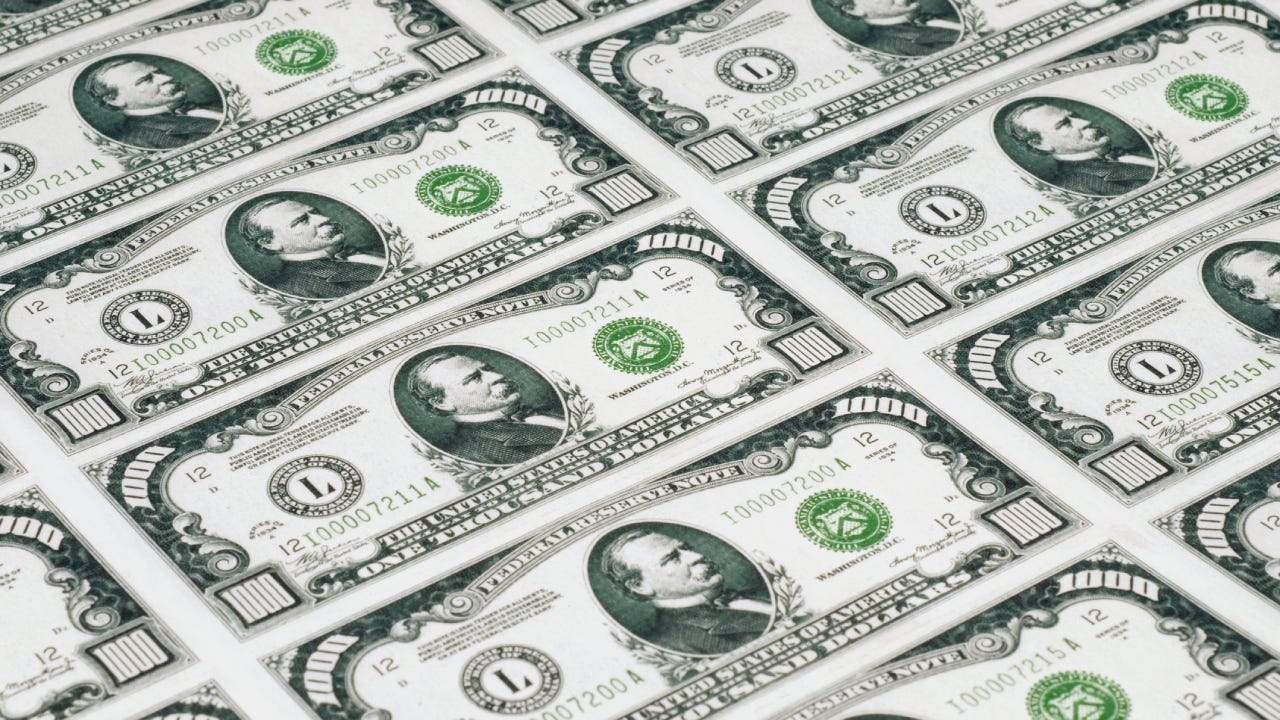
Bonds are generally considered an essential component of a diversified investment portfolio. They bring income to a portfolio, while typically carrying less risk than stocks. With the right approach, you can get as much yield as you would typically get from certificates of deposit (CDs) or savings accounts (and often more), though you may have to endure the fluctuation of bond prices and some additional risk to do so.
Here’s a look at how bonds work and the different types of bonds available. We’ll also go over some useful bond-buying strategies and discuss the pros and cons of investing in bonds.
What is a bond?
Bonds are an agreement between an investor and the bond issuer – a company, government or government agency – to pay the investor a certain amount of interest over a specified time frame. When the bond matures at the end of the period, the issuer repays the bond’s principal to the bondholder. A bond is one way to finance a business and it’s a type of debt security.
The payments on a bond come in two major types – fixed rate and floating rate.
- On a fixed-rate bond, the issuer agrees to pay a specified amount of interest, and that’s all an investor can expect to receive.
- On floating rate bonds, which are less common, the payment adjusts higher or lower in accord with the prevailing interest rate.
A bond will typically pay interest on a regular schedule, often quarterly or semi-annually, though sometimes annually.
A bond’s payment is called a coupon, and it will not change except as specified in the terms of the bond. On a fixed-rate bond, for example, the coupon might be 5 percent, so the bondholder would earn $50 annually for every $1,000 in face value of bonds, a typical cost for a bond.
If the price of the bond goes up, the bondholder still receives only that fixed payment. However, in this case the bond’s yield – its coupon divided by the bond’s price – actually falls. Similarly, if the bond’s price falls, the bond’s yield rises, even though the coupon remains the same.
Unlike stocks, where prices are driven in the long term by a company’s growth and profitability, bond prices are heavily influenced by the movement of interest rates, the bond’s time until maturity, the creditworthiness of the borrower and the overall sentiment of investors.
How to buy and sell bonds
It’s possible to buy bonds directly from the issuer. While that makes sense in some situations, ordinary investors more frequently buy and sell bonds using one of the following methods:
- Buying individual bonds through a brokerage account: You can buy bonds through most brokers like you would stocks. Fees vary greatly, though, and navigating all the options can be confusing, with potentially dozens of choices of bonds per company. In addition, you’ll need to analyze the company to be sure that it will be able to make its payments.
- Buying bond mutual funds and ETFs: You don’t need to make decisions about specific bonds to purchase when you buy a bond mutual fund or exchange-traded fund (ETF). Instead, the fund or ETF company chooses them for you and often organizes them into funds according to their type or duration.
- Buying bonds directly from the U.S. Treasury: The U.S. federal government allows you to buy Treasury bonds directly through a service called Treasury Direct. This method allows you to avoid a middleman and, thus, avoid fees you might normally pay a broker.
ETFs can be a great choice for investors because they allow you to quickly fill gaps if you’re trying to diversify your portfolio. For example, if you need short-term investment-grade bonds, you can simply buy an ETF with that exposure. The same goes for long-dated or medium-term bonds, or whatever you need. You have many options. ETFs also offer the benefit of diversification through exposure to a mix of bond types, and they usually charge low fees and are tax-efficient.
Bonds can easily be bought and sold through a broker. You may also have to pay a commission to a broker, or the broker might make a “markdown,” reducing the price to cover the cost of the transaction.
If you’re looking to cash paper government savings bonds, you can redeem them after you’ve held the bond for at least 12 months. In that case, they can be redeemed at your local bank.
If you sell the bond or bond fund for more than your purchase price, you’ll owe capital gains taxes on the profit.
Types of bonds
Most bonds purchased by ordinary investors fall into two categories: Bonds issued by governments and those issued by corporations. But government-sponsored agencies such as Fannie Mae and Freddie Mac also issue a type of bond called mortgage-backed securities.
Treasurys
Bonds issued by the U.S. federal government, for instance, are referred to as Treasurys. They are considered a relatively low-risk investment. The yield on Treasurys tends to be relatively low, but they’re backed by “the full faith and credit of the United States,” meaning that the federal government guarantees them.
The U.S. government is considered among the best credit risks in the world, and its bonds, by convention, are considered risk-free, though nothing is ever truly risk-free. In contrast, bonds issued by foreign governments may be considered less safe but may offer the potential for higher yields.
Savings bonds
The federal government also issues savings bonds, a kind of bond that allows individuals to save directly with the government. Savings bonds function differently from standard Treasuries, and they do not pay out the accumulated interest until you redeem the bond. Series I bonds are one type of savings bond, and they’ve become popular in recent years because of their built-in inflation protection.
Municipal bonds
Usually referred to as “munis,” municipal bonds are a type of government bond issued by state or local governments. The main advantage of munis and muni funds is that the returns they generate are exempt from federal taxes and, in some cases, from state and local taxes too.
Corporate bonds
These are bonds issued by large companies, both domestic and foreign. Corporate bonds pay a wide range of interest rates depending on the creditworthiness of the borrower and maturity. Longer-term bonds typically offer a higher yield than short-term bonds.
These bonds are usually divided into two categories:
- Investment-grade bonds are issued by companies that have earned a credit rating of at least triple-B from the credit-rating agencies such as Standard & Poor’s and Moody’s.
- High-yield bonds (formerly known as junk bonds) are issued by companies with lower credit ratings, which means they present a higher risk. But in exchange, these bonds also offer a higher yield than their investment-grade counterparts.
Mortgage-backed securities
Government-sponsored enterprises such as Fannie Mae and Freddie Mac offer a special type of bond called a mortgage-backed security, or MBS. These companies create bonds whose payments are derived from the mortgages backing them. So an MBS may have tens of thousands of homeowners supporting the payment of the bonds through their monthly home payment.
Bonds issued by Fannie and Freddie are not guaranteed by the government, though bonds issued by government agency Ginnie Mae (and by other firms qualified by Ginnie Mae) are backed by the federal government.
Advantages and disadvantages of bonds
Bonds offer benefits that make them a valuable counterpart to stocks in most investment portfolios. While stocks tend to offer higher long-term returns, bonds offer other advantages:
- Steady income: Bonds tend to offer relatively predictable returns, including regular interest payments.
- Diversification: Bonds perform differently as investments from stocks, which helps to reduce the long-term volatility of a portfolio. (Here’s why diversification is valuable.)
- Lower risk: Bonds generally offer a higher degree of security than stocks, though some bonds are riskier than others.
But those advantages are balanced with the following disadvantages:
- Lower risk, but lower return: The trade-off for less risk is less return. So bonds are typically a “slow and steady” investment, in contrast to stocks.
- Price depends on interest rates: The short-term price of bonds relies on interest rates, which investors can’t control, and investors generally have to take whatever rates the market offers or get nothing, creating substantial reinvestment risk.
- Principal not guaranteed: Unlike CDs where principal is guaranteed by the FDIC, a company or government can default on a bond, leaving the investor with nothing.
- Heavily exposed to inflation: Because bonds pay a fixed return (unless they’re floating-rate bonds), their value can decline precipitously if inflation moves up substantially.
These are a few of the most significant downsides to bonds, but the asset class has performed well in the U.S. over the last few decades as interest rates have continued to fall.
Basics of a bond quote
While stock from a single company usually comes in one variety — the common stock — bonds from the same company can have many different terms, including the interest rate, the maturity and other items called covenants, which may limit how indebted the borrower can become or stipulate other conditions.
A bond quote from a brokerage incorporates some of these items as well as giving you the last traded price. Prices are quoted as a percent of the bond’s full value (par value), which is usually $1,000.
Let’s look at an example from Apple, which has dozens of separate bonds outstanding. You can search by issuer to find a list of the company’s bonds, and here’s one Apple bond selected at random:
APPLE INC NOTE CALL MAKE WHOLE 2.85000% 08/05/2061
A bond quote includes the name of the issuer, here Apple, as well as the coupon on the bond, 2.85 percent. It includes the maturity date of the bond, August 5, 2061. The “call make whole” feature allows the company to redeem the bond early as long as it pays investors the net present value (today’s value of the future interest payments) of the bond at maturity.
The broker also provides the bond’s rating from the credit-rating agencies, the bond’s yield, the bid and ask prices from investors as well as recent trading prices for the security.
This bond is rated Aaa by Moody’s and AA+ by Standard & Poor’s. On the Moody’s and S&P scales, the bond ranks among the highest tiers, making it investment-grade. The rating means that Apple is judged as having very good credit and that this bond is considered very safe.
A bond’s rating is very important in determining how much interest the company will pay on it. A lower rating will cost the company more in interest payments than a higher rating, all else equal.
Popular bond-buying strategies
If you’re buying bonds for income, then one of your primary concerns is interest rates and where they’re going – up, down, or sideways. If rates rise, then the value of your bonds falls. If rates fall, then the value of your bonds rises. But bond investors are also concerned with reinvestment risk, that is, will they be able to earn an attractive return when their bond matures?
So, bond investors are constantly trying to optimize the current income from their bond portfolio versus the income that they might be able to earn in the future.
The following strategies are among the most popular:
Ladders
With this strategy, an investor buys bonds with staggered maturities (say, bonds that mature in one year, two years, three years, four years and five years). Then when a bond matures, it’s reinvested in a longer maturity at the top of the bond ladder. This strategy is useful when you want to minimize reinvestment risk without sacrificing too much return today. If rates rise in the future, you’ll be able to capture some of that rise.
Barbells
With this strategy, an investor buys short-term bonds and longer-dated bonds but doesn’t buy medium-term bonds. This strategy allows the investor to capture the higher yields on long-term bonds while still maintaining some access to cash with a series of lower-yielding short-term bonds. However, long-dated bonds can fluctuate a lot if interest rates rise.
Bullets
In this strategy, the investor buys bonds over a period of time that mature at roughly the same time. For example, if you know you have a big expense in five years, you can buy a five-year bond now, and then a four-year bond when you have more money next year. In three years, you can add a two-year bond. Then at the end of the original five-year period, you’ll have all the money available at the same time when you need it.
In each case, the strategy should reflect your anticipated needs as well as your expectations about how the market and interest rates will perform over time.
Are bonds a good investment?
Whether bonds are a good investment depends on several factors, including your risk tolerance, time horizon and investment goals. Bonds tend to be less risky than stocks, but that means they generally come with lower average returns. That is especially true for U.S. Treasury bonds. In other words, bonds have lower risk, which means less potential reward.
However, that doesn’t mean bonds are necessarily a bad investment. Bonds also tend to be less volatile than stocks, meaning they can help smooth the ride of a bumpy stock market. Stocks have outperformed bonds over time, but if dips in the stock market could cause you to sell your investments, bonds will help make those dips less pronounced on your portfolio overall.
Of course, like other investments, the return on bonds depends on when you buy them. If you buy bonds right before interest rates rise, then your bond prices will likely go down. While you’re likely to get your principal back, you may have to wait until the bond matures, meaning it might be many years, depending on the bond’s lifetime. On other hand, if you buy bonds right before rates fall, you may score an immediate capital gain in addition to the bond’s interest payments.
Lastly, if you are nearing retirement, it is a good idea to have a significant bond position in your portfolio. This is because market cycles can last several years. Thus, if the stock market starts to decline and you are close to retirement, your stocks may not have time to recover. That could jeopardize your retirement date, forcing you to work more years than expected.
The common wisdom is to add more bonds to your portfolio as you inch closer to retirement. In doing so, you reduce your risk over time, locking in a comfortable, financially secure retirement.
Do bonds go up when stocks go down?
Bond prices can sometimes increase when stocks go down, but there is no rule saying that must be the case. If this does happen, though, it is usually because the economy is slowing and interest rates are falling, thus increasing the attractiveness of safer investments like bonds.
A slowing economy often leads to lower interest rates. When interest rates fall, older higher-rate bonds become more valuable. The inverse is also true: rising interest rates means lower-yielding bonds are less attractive, driving down their value. Bonds with a longer maturity rate are more sensitive to interest rate changes.
Keep in mind that bonds do not always go up when stocks go down, or vice versa. For example, low-grade “junk” bonds often move in the same direction as stocks. These bonds are higher-risk, higher (potential) reward and don’t always behave the same way as safer investments.
Can you lose money in a bond?
While bonds tend to be safer than stocks and other market-based investments, you can still lose money investing in them. Here are some of the most common ways to lose money in a bond:
- Selling before maturity. Bond prices fluctuate, depending on many factors, but especially the prevailing interest rate environment. If you have to sell the bond when its price is down, you might not get the price you paid for it. However, if you hold until maturity, you are likely to get the face value of the bond.
- Buying bonds at a premium. A bond price can rise above its par value – the price you’ll receive at maturity – if prevailing interest rates fall. So an already-existing bond will pay higher income than you might receive elsewhere. But that higher income comes at a cost: a higher bond price. As a premium bond approaches maturity, its price will fall closer to par value as fewer of these relatively higher bond payments remain. Eventually at maturity, the bond price will be redeemed at par value.
- The issuer goes bankrupt or defaults. If the issuer defaults on payment of the bond, the bond price could plummet. If the issuer goes bankrupt (in the case of a company), the bond may become totally worthless, depending on the company’s financial situation.
It’s important to understand, however, that you can lose money on a bond in ways that are less obvious, namely, inflation. Every year that your bonds are earning less than the rate of inflation, you’re losing purchasing power. You may end up holding a low-yielding bond to maturity and not technically lose money, but you may lose a ton of purchasing power over time.
Bottom line
Bonds can provide an attractive return without demanding that you take on the same level of risk as investing in stock. Unlike a stock, where the company must thrive for the investment to be successful, a bond can be successful if the company (or government) merely survives. While bonds are relatively low risk, they do have some weak spots, especially if inflation and interest rates move higher. But using some smart investing strategies can help mitigate these risks.
Note: Bob Haegele also contributed to the update of this story.
Editorial Disclaimer: All investors are advised to conduct their own independent research into investment strategies before making an investment decision. In addition, investors are advised that past investment product performance is no guarantee of future price appreciation.
Why we ask for feedback Your feedback helps us improve our content and services. It takes less than a minute to complete.
Your responses are anonymous and will only be used for improving our website.