Bankrate.com

2010 Credit Card Guide
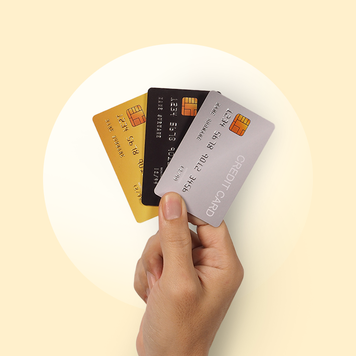
Credit card guide: Woman's hand holding blue credit card on peach background
credit cards
Best ways to establish credit

Stricter standards during this credit crisis have made it tougher to get approved for new credit cards. As of the second quarter of 2009, card originations were down almost 50 percent year over year, according to Charles Chung, senior vice president and general manager of decision sciences at Experian in Costa Mesa, Calif.

In this tight market, those with poor, average or no credit may find themselves shut out of unsecured credit cards that have desirable terms.

"A lot times in this new credit environment that we're in they really get lost in the shuffle and have very limited options for credit and to build credit," says Curtis Arnold, founder of CardRatings.com and author of "How You can Profit from Credit Cards."

Bankrate offers a look at cards that help people to establish a positive credit history.

3 cards that build credit
  1. Secured cards.
  2. Retail and gas cards.
  3. Prepaid cards.

1. Secured cards

Secured cards are backed by a collateral account consisting of funds deposited by the consumer, usually a minimum of $200 or $300. This amount generally serves as the credit line.

If the account is handled well, and reports to the three major consumer reporting agencies, it will help the user build credit. The FICO scoring formula treats secured accounts exactly like unsecured credit cards, according to Barry Paperno, consumer operations manager for the Minneapolis-based credit scoring firm. "There's absolutely no difference in terms of how the score looks at them."

Many companies will let you upgrade to an unsecured credit card after a certain time period and refund the deposit at that point. The upgrade typically occurs within 18 months, says Arnold.

Pros: Some secured cards pay interest on the deposit. The Citi Secured MasterCard account offers this perk, as does the Orchard Bank Secured MasterCard.

Cons: You have to fund your own credit line and do without that sum until the financial institution refunds it upon closure or upgrades you to an unsecured account.

Secured cards often charge annual fees, so consumers would do well to look for a low-fee card. "Get the annual fee under $50 -- $20 to $40, no other fees and a grace period," says Arnold.

2. Retail and gas cards

Another type of card that's easier for someone establishing or re-establishing credit to obtain is retail and gas company cards. These cards shouldn't be confused with store or gas rewards cards branded with a Visa, MasterCard, American Express or Discover logo, which can be used anywhere and have tougher qualification requirements.

Pros: "The upside to a retail card is that they're generally easier for a consumer who's had a checkered credit history to get because they have essentially nonprime terms, just as a structure of the card," says John Ulzheimer, president of consumer education for San Francisco-based Credit.com.

Store cards often offer an upfront discount on merchandise purchased on the day the account is approved. Many cards offer ongoing discounts and perks, which can benefit frequent customers and big spenders. For instance, a credit card for clothing retailer Express offers a $10 off coupon for every $250 spent on the card.

Cons: "They have very, very high interest rates, typically very, very low credit limits," says Ulzheimer. "Those are generally terms reserved for problem consumers."

Ulzheimer warns that some gas cards have open terms, which means they must be paid in full every month. Such cards don't report as revolving accounts or impact a consumer's revolving debt utilization, a major factor in FICO scores. He urges consumers to ask whether the card requires payment in full every month or allows minimum payments like a credit card.

If reported as revolving, the FICO scoring formula treats store and gas station credit cards like other unsecured cards, according to Paperno. "You can have a very good score if all you have is department store cards."

3. Prepaid cards

Prepaid cards are payment cards that work like gift cards, in that purchases deduct from the funds loaded onto the card. A few prepaid cards offer a credit-building component, sometimes for a fee.

Pros: Users can't get into debt, since they can only spend the money on the card.

Cons: Prepaid cards don't typically report to the major credit reporting agencies, though some do report to alternative credit bureaus, such as PRBC, says Ulzheimer. For example, the AccountNow Prepaid Visa Card and the Prepaid Visa RushCard report bill payment transactions to PRBC.

Establishing a PRBC report could help if a future lender used the report and the FICO Expansion Score based on it. "The challenge for the consumer is that the PRBC credit report hasn't become a mainstream alternative to the major credit bureaus. They're not quite there yet," says Ulzheimer.

The Elite or Preferred Level Eufora Prepaid MasterCard reports monthly fee payments to Experian and TransUnion, but as an installment account, not revolving. The trade line would still count toward payment history and length of history, notes Paperno, but not revolving utilization.

Prepaid cards are often fee-laden, so consumers should read the terms and conditions and compare costs. For instance, prepaid Visa RushCards charge a $3 activation fee, a $9.95 monthly maintenance fee and $1 for PIN-based transactions, under a monthly plan. For Account Now Visa and MasterCard cards, activation costs $9.95 without recurring direct deposits.

<< Back to the 2010 Credit Card Guide table of contents.

News alert Create a news alert for "credit cards"

advertisement

Compare Credit Card Rates


advertisement
Credit Card Averages
Product Rate
Balance Transfer Cards 15.93%
Cash Back Cards 16.47%
All Variable 14.35%
Low Interest Cards 10.37%
Compare rates:  
 

A little research could save you BIG on interest.

Don't have time? Our rate-tracker tool saves you time and money. Delivered Thursdays.
 
advertisement
Leslie McFadden
Credit card issuers are mailing out more "professional" card offers in the wake of the Credit CARD Act.
Is your money safe?
or ? See your bank, thrift or credit union's star rating. Find one that's safe enough for you.
advertisement