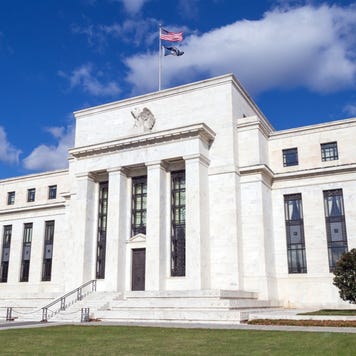
federal reserve

FOMC meeting concludes today

Wednesday March 18
Posted 11 a.m. Eastern

The Federal Open Market Committee concludes a regularly scheduled meeting this afternoon. For the foreseeable future, we won't be looking to the Fed for cues on interest rates but instead to see how they will employ other programs to get credit flowing and turn this economy around.

In the post-meeting statement, expect the Fed to talk up the long-awaited Term Asset-Backed Securities Loan Facility, or TALF, program that is designed to jump-start credit availability for auto loans, student loans, and credit cards -- the areas where consumers are really feeling it. This has already been increased from $200 billion to $1 trillion -- and it isn't even off the ground yet. In fact, this thing has had more delays than LaGuardia airport during a thunderstorm.

Another topic of discussion among the committee members will be whether or not to purchase long-term Treasury securities with the goal of driving down rates for mortgages and long-term corporate debt. My belief is that we will eventually see this, especially with the precedent of the Bank of England driving long-term rates lower by employing the same program. For now, I expect the Fed will keep this tucked away for a rainier day. Instead, it seems likely they will reiterate the goal of affecting mortgage rates by stepping up the purchases of mortgage-backed bonds.

Going through the mailbag: Sorry for the holdup folks, but here are some e-mails that have come in over the past several weeks that are blog-worthy.

Jeff writes:

"I do have a question about the often-quoted "personal savings rate." Does the savings rate we commonly hear reported include retirement contributions such as 401(k)s, IRAs and so forth, or is the savings rate average exclusively made up of the contributions we might make to a bank or credit union savings or money market account?"

The way the Bureau of Economic Analysis computes the personal savings rate is taking personal income, subtracting taxes then subtracting consumption. On that basis, yes, retirement contributions are included.

However, since the figures reflect aggregate totals and not individual household data, its a less-than-perfect statistic. For example, a retiree that has very little income (just interest and dividends), yet withdraws money from retirement accounts to pay expenses, is a drag on the savings rate. It is a statistic that I think is most useful in evaluating the trend of personal savings, not the actual percentage of income that people are saving.

Larry writes:

"My wife and I have several investment rental properties. Most of which are in fixed-rate, 10-year commercial notes (approximately $1.5M) that will move to prime plus 1.5 percent, but not for another 7 years. One property in particular is currently in a prime plus 1.5 percent for $600,000 , adjusted quarterly. My concern is that hyper-inflation will result from the current Fed stimulus and the huge deficit driving up the prime interest rate. We are in the process of moving it to a fixed-rate commercial note but think that we have a year or so before having to convert. We deal with an excellent community bank that holds ALL of our mortgages. They have been a great partner to work with, expecially on converting mortgage term.

"What is your sense of the inflation threat? I feel that the Feds can't do much to raise rates for a year or two. Buffett feels that inflation could be as bad as the late 1970's."

Yes, I am equally concerned about inflation. Not necessarily hyper-inflation, as governments around the world have also been printing money to varying degrees. But I am prepared for, and concerned about, the inevitable increase in inflation. The printing of money is one aspect that will devalue the dollar, but over the next 10 years I feel that global economic growth -- driven by the emerging economies -- will spur energy and other commodity prices higher. The prudent move to make as a borrower is to lock in fixed rates, as Larry is doing. As an investor, I think it is wise to position your portfolio with an eye toward the erosive effects of inflation in the ensuing decade or more.

From Sara:

"What about those people who make a good living, have a mortgage they can afford, have to sell their house (relocating for work) in this ridiculous market flooded with foerclosures, (and) who now have to take a loss on their house because it has to be priced against all those who bit off more than they could chew?!"

I'm with you 100 percent! And it isn't just those relocating for employment purposes, but also those looking to move up to a larger home or those aiming to downsize.

A helpful element that could have been included in the housing plan would be for the government to buy up foreclosed and vacant homes (remember that lenders hold a lot of real estate on their books that isn't even on the market right now, so this problem isn't going away), taking that low-ball inventory off the market. They could hire property managers to oversee the maintenance of the property (job creation!) and to get tenants into those properties (there is a big pool of would-be tenants resulting from foreclosures). The government could afford to hold these properties for years, increasing the likelihood of generating a profit that can pay down some of the national debt. And taking that low-priced inventory off the market means selling your home doesn't mean pricing against the foreclosure down the block that is undercutting prices by tens of thousands of dollars.

Here is another e-mail, from Nancy, on the same subject.

"When you are forced to move due to job change and have no choice but to take a loss when selling your home don't you think you should be able to write that loss off? Tens of thousands of families across the country are in this position."

For this, I turn to the Brad Lidge of tax mavens, the guru that is perfect in the clutch, Kay Bell. Kay writes the Eye on the IRS blog for Bankrate.com as well as her own blog Don't Mess with Taxes. I encourage everyone to check them both out.

Kay replies:

"Sorry. Capital losses on the sale of your principal residence are not deductible. And don't expect that kind of tax relief any time soon given the deficit!

"Way too many people would be writing this off for a long, long time, since you can use $3,000 in capital losses a year to reduce ordinary income (after you offset any gains; gains? what are they?) and carry forward any excess losses to future tax years."

And on the subject of housing, here are a couple other e-mails.

Sam: "From what I see, the 91-92 percent of homeowners who are making their payments on time resent (the) 8-9 percent who took advantage of the housing upswing by financing the increased value to buy cars, etc. and now want the majority to pay for their mistakes. If the government would stay out, the pain for those who got caught at the top and those who claim they missed the fine print on the ARM loans would be absorbed by the free market in a shorter period of time than is now the case, and things would return to normal a lot faster. Instead, we all have the problem of now not knowing where this will all lead. The 91-92 percent who are paying on time will now have to suck up more cash to pay for the mistakes of others. This sucks."

Well said. As of now, there are only 89 percent of us paying on time and carrying the freight.

Joyce: "I think you should be Secretary of the Treasury.
My whole family is disgusted. We played by all the rules, our kids played by all the rules and we are now being asked to finance the people who cheated the lenders and our entire society. They will only be refinanced to cheat some more. Every one we know (we live in So Cal) that lost their home was an undocumented immigrant who did not need to prove citizenship or employment. They also drank, partied nightly and drove expensive cars and loaded their kids with expensive toys - all at our expense."

Thank you for the kind sentiments. I assure you, I'm no candidate for a Treasury post. Although based on Mr. Geithner's performance thus far, there just might be an opening at some point.

advertisement

Compare Rates
advertisement
Overnight Averages
Product Rate +/- Last week
30 yr fixed
4.96%
5.03%
15 yr fixed
4.53%
4.56%
5/1 ARM
4.21%
4.19%
View rates in your area:
Product Rate +/- Last week
30K HELOC
5.29%
5.27%
30K Home Equity Loan
8.36%
8.32%
50K HELOC
5.02%
4.99%
View rates in your area:
Product Rate +/- Last week
48 Mo Used Car
7.02%
7.10%
48 Mo New Car
6.79%
6.80%
36 Mo Used Car
7.15%
7.22%
View rates in your area:
Product Yield +/- Last week
6 Mo CD
1.23%
1.27%
1 Yr CD
1.75%
1.72%
5 Yr CD
2.93%
2.94%
Compare rates:
Product Rate
Low Interest Cards 9.71%
Balance Transfer Cards 14.54%
All Variable 11.68%
Compare rates:  
mortgage
Banks, like car dealers, try to trip up consumers with a well-practiced array of tricks.
advertisement
Is your bank safe? Now you can find out
Look up a bank, thrift or credit union by clicking one of the buttons below.
advertisement