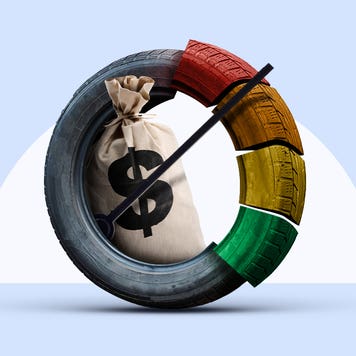

Car's onboard data system could haunt you
| A friend, who
was recently involved in a relatively minor auto accident, asked me why his insurance
company wanted to download information from his vehicle's onboard computer system.
I replied they probably wanted to know what he was
doing just prior to the accident -- to determine if he was speeding or driving
recklessly. My friend, who is a big believer in personal rights
above all else, was flabbergasted. "They can find out
that stuff from the car?" Depending on the car, the answer
is a definite yes. As vehicles have become more sophisticated
and systems monitor nearly all functions, it's possible to reconstruct what a
driver was doing just prior to an impact. It's done by capturing
data about speed, braking and steering input from what is called an event data
recorder. And it's going to get even more complex -- already there are systems
on some cars that warn when there's a vehicle in a car's blind spot, as well as
anti-collision warning systems like the one currently featured in a Volvo commercial. In
a lawsuit, an attorney could make much of data that showed, for example, that
a car had warned the driver of a stalled car ahead and the driver did nothing
to avoid it. The Big Brother aspect of all this is, in some
regards, an outgrowth of increasingly sophisticated maintenance and emissions
monitoring. Some manufacturers have found it cost effective
and desirable to install all manner of monitors in late-model vehicles. The upside
is that these wide-ranging monitoring systems can make it easier for technicians
to diagnose thorny problems that occur intermittently, or determine what systems
might have been compromised in an accident. As a safety feature,
systems like General Motors' OnStar can detect an airbag deployment and notify
rescue crews. GM is promising a new generation of OnStar that will be able to
transmit to rescue workers more detailed information about a crash such as: the
direction of the impact, whether the car rolled over, whether there was a change
in speed, and other data. But in our litigious society, some
car owners are worried that their vehicles are tattletales, ready to rat them
out for driving 20 mph over the speed limit. Proponents of privacy rights argue
that a car should not become a witness for the prosecution.But
the issue isn't that clear cut. The National Transportation
Safety Board wants so-called black boxes made mandatory so that researchers and
regulators can collect data to help create new safety technology. For
today's car buyer who is concerned about this issue, finding out what the car
knows and who it might tell is not an easily answerable question. The
National Highway Traffic Safety Administration issued a rule last August requiring
automakers to tell new-car buyers if an event data recorder has been installed
-- but the rule doesn't take effect until model year 2011 cars. In
2004, California passed a law requiring manufacturers to disclose whether there
is an event data recorder onboard and took the additional step of banning the
download of data from the recorder without the owner's permission or a court order. Some
other states have followed California's lead, but until the federal rule takes
effect there's no universal disclosure. And there's no federal rule about disclosure
when the vehicle changes hands as a used car. So in 2007, the
best course of action for a car buyer is to ask questions of the dealer's service
department, which should have specific information on what data the car tracks.
 |
| Here are this week's reader questions: |
 |
| |
|