How to sell a house without a Realtor — and what to know first


Key takeaways
- Selling your home without a real estate agent can save thousands of dollars in commission fees.
- However, it’s a big undertaking that requires a large time commitment and a lot of paperwork.
- Real estate contracts are complex, so even if you don’t use an agent, it’s smart to hire a real estate attorney.
Selling your home on your own, without the help of a real estate agent, can save you money because it means you don’t have to pay a listing agent’s commission fee. The typical fee runs about 2.5% to 3% of the home’s sale price — on a $400,000 home, 3% adds up to $12,000, a significant savings. Who wouldn’t want to keep that money in their pocket?
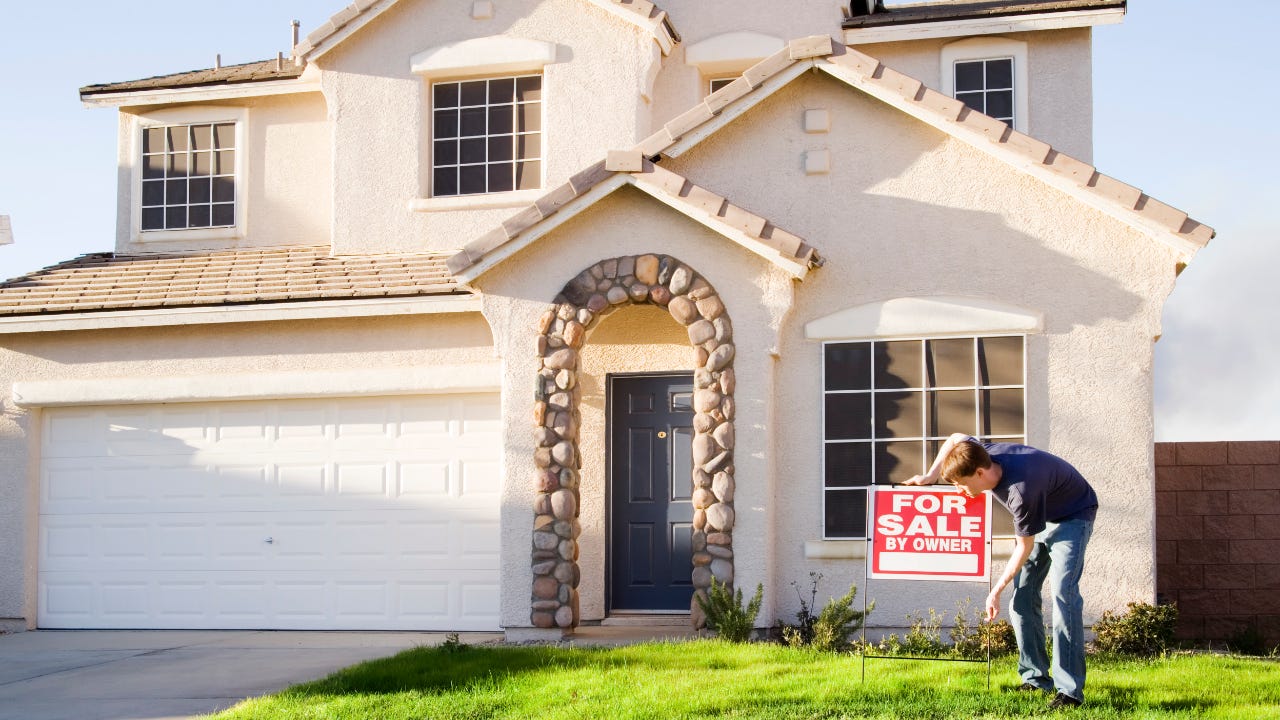
But a “for sale by owner” listing, known as FSBO for short, requires time, ambition and drive, says Sissy Lappin, a Houston-based real estate broker and author of “Simple And Sold,” a guide for FSBO sellers. It’s quite a lot of work for an amateur to do on their own: Everything a professional agent would normally do becomes your responsibility, from pricing to marketing to contract negotiations. Here’s what you need to know.
Pros and cons of selling by owner
A FSBO sale is a big commitment, so carefully consider both the benefits and drawbacks first.
Pros
- You save money: FSBO sellers keep more of their profits after closing because they don’t have to pay a listing agent’s commission fee. However, depending on the details of your deal, you may still have to pay your buyer’s agent.
- You’re in control: Having no middleman between you and the buyer can simplify the process. It also keeps you in the driver’s seat: You make all decisions yourself and can do things exactly as you like.
- You can move faster: Agents usually juggle multiple clients at once. When you don’t use one, you don’t have to wait for them to call you back or work around their schedule.
Cons
- It’s a lot of work: How much time do you have? As a FSBO seller, you have to do everything yourself — prepping the home for sale, doing market research to price it correctly, marketing it to buyers, setting up appointments and showings, fielding offers and negotiating contract terms. There’s plenty of paperwork, too.
- No professional guidance: Real estate agents are licensed pros who have extensive industry networks, deep expertise in their local housing markets and ace negotiation skills. Going without one means losing out on all that.
- You might earn less money: According to data from the National Association of Realtors, selling a house without pro help typically leads to a lower sale price. In 2025, it reports, the median sale price of a FSBO home was $360,000, while the median for agent-assisted sales was $425,000
How to sell a house by owner
If you decide to sell on your own, here’s a step-by-step guide to help set you up for success.
1. Set a realistic price
Pricing a home right from the get-go is crucially important, whether you sell with or without an agent. An asking price that’s too high might discourage buyers from even taking a look at it.
To get a sense of your home’s value, evaluate local comps. That means looking at similar homes that have recently sold in your area. Finding out how much those homes were asking, and how much they actually sold for, will give you a good sense of market values in your area.
You can also use listing websites to find information about recently sold properties. But be careful of relying too heavily on these sites’ home-value estimates — the prices can fluctuate wildly and might not take important details into consideration.
For the most accurate valuation, consider scheduling a professional home appraisal. It will likely cost a few hundred dollars, but it will give you the best estimation of how much your home is worth.
2. Get your home market-ready
You’ll want everything to be in tip-top shape for listing photos and showings. Here are some tips for prepping your home for sale:
- Clean it up: If your budget allows, consider hiring a cleaning crew to do a professional deep clean, Lappin says. A home that looks spick-and-span can bring in more money.
- Declutter: “We all have emotional attachment to our homes and the things in them,” says Debreen Oliva of D.O. Organize in Saratoga Springs, New York. “But once you decide to sell it, your house is no longer a home. It’s a product on the market. Spend the time and some money on staging so you make the best impression on potential buyers.”
- Add curb appeal: First impressions are everything, and your home’s exterior should be immaculate and welcoming. Tidy up the landscaping, store toys or bikes out of sight, consider adding a few pots of colorful flowers on the entryway or porch — a fresh coat of paint on the front door can also go a long way.
- Hire a photographer: Buyers will be looking at listings online, so professional-quality photos online are a must, Lappin says. A real estate photographer can vary in price depending on your location and the size of your home, but expect to spend a few hundred dollars. Some may also provide virtual tours to include on the listing.
3. Promote, promote, promote
When your house is pristine, your price is set and your photos are taken, it’s time for marketing. Post the photos, along with the home’s key details and features, on social media sites, and ask people to share the posts with those who might be interested. (Be cautious about how much info you give away online, though, especially if your family is still living there.) “And don’t underestimate a great sign in your yard,” Lappin says. “People drive through neighborhoods they want to live in.”
To reach even more potential buyers, look into listing your home on your area’s local multiple listing service (MLS). This is typically available only to real estate pros, but there are many online companies that will post your FSBO listing there for a fee (the cost varies widely). MLS listings are typically syndicated to large real estate sites like Zillow.
Finally, schedule an open house for potential buyers during a weekend afternoon, and be sure to promote the date and time. An open house lets buyers see your home up close in a setting that’s more casual than a one-on-one showing. “People like to be under the radar and have no pressure,” Lappin says. It’s smart to print out information sheets so attendees have something to take with them and a way to contact you to schedule a follow-up — or make an offer.
4. Confirm your buyer’s financials
Hopefully, you’ll receive an offer — and when you do, you’ll need to be sure the buyer can really afford the purchase. Ask all buyers who make an offer to provide a mortgage preapproval letter, Lappin says. Find out how much of a down payment the buyer is offering, what kind of loan they’re getting and what types of conditions they might have to meet, if any, to secure final approval.
5. Consider using an attorney
Real estate contracts are complex legal documents. Some states legally require that an attorney oversee the sale of a house, whether agents are involved or not. Many do not require attorneys, but even if a lawyer is not mandatory in your state, hiring one is money well spent — especially for FSBO sellers.
“If you’re going to attempt to sell your home without a Realtor, I would highly suggest engaging a real estate attorney to help you with a purchase and sale contract,” says Mark Cianciulli, who is both an attorney and a Realtor at the CREM Group in Los Angeles. Attorneys can also help you evaluate offers, draft closing documents and advise on disclosures.
“A real estate attorney can prevent a seller from making mistakes and/or incurring liability,” Cianciulli says. “If I were selling by myself, I would definitely want an attorney representing me in the sale.”
Bottom line
Selling a house by owner can save you money. For many people, that’s all they need to hear. But it can also be a bigger and more daunting undertaking than many sellers anticipate. Some people just don’t have the time, patience or organizational skills to sell their own house, says Adam Upchurch, owner/Realtor at Marvel Real Estate in Wilmington, North Carolina.
Upchurch says many clients have come to him for help after trying to sell their house on their own and running into obstacles. “They have a life. They have jobs and kids, and they can’t approve every appointment or grab the dogs to get them out of the house for every showing,” he says.
If you do decide to hire a real estate agent, look for someone who has experience selling homes in your area, as well as solid referrals from past clients. And keep in mind that commissions are often negotiable — have an honest conversation about money with potential agents before you hire one.
Why we ask for feedback Your feedback helps us improve our content and services. It takes less than a minute to complete.
Your responses are anonymous and will only be used for improving our website.