|
When loan checks arrive
by mail uninvited
By Salvatore Caputo Bankrate.com
Imagine
opening an official-looking envelope and finding an unexpected check
for thousands of dollars waiting for your signature. Wouldn't you
feel like you'd won a lottery? After all, who wouldn't want some
extra cash to play with? If you cashed that check, though, you'd
be playing a losing game.
Consumer advocates say that "live loan checks"
target the most vulnerable borrowers. The checks, which started
showing up in mailboxes in large numbers in 1996, are negotiable.
Just endorse them, and the amount is yours. Issuers of these unsecured
loans -- mostly small- to mid-sized financial firms -- say that
customers appreciate the convenience of having instant access to
cash.
However, live loan checks incur high-cost debt.
Their typical loan amounts -- ranging from about $1,500 to $3,000
-- seem manageable, but the terms, including interest rates as high

as 25 percent, are not user-friendly at all. Defaults or late payments
trigger higher interest and fees or demands for immediate payment
in full.
"To
entice and trap"
"Live check solicitations have one purpose, and one purpose
only -- to entice and trap consumers into high-cost debt that they
would never accept if offered by more legitimate means," says Rep.
John J. LaFalce (D-N.Y.), ranking minority member of the House Committee
on Banking and Financial Services. He reopened a debate on the issue
of live loan checks in June when he introduced a bill to ban them.
A similar ban was proposed two years ago, but
died after the industry promised to police itself with voluntary
standards, including clear disclosure of the loans' terms. That
hasn't worked, LaFalce says. "These so-called protections were never
uniformly implemented in live check solicitations in 1998. And they
have largely disappeared from many of the live check solicitations
that consumers have received this year."
3 steps to protect yourself
from live loan checks |
| 1 -- Prevent them
from coming |
- You can "opt out" of the list that the major credit
bureaus sell to creditors and insurers. The Fair Credit
Reporting Act gives you the right to be excluded from
what's called the "pre-screening" list, which gives two
years of relief, or you can complete a written form that
lets you opt out indefinitely. The biggest nationwide
credit bureaus -- Equifax, Experian, TransUnion -- have
established a joint, toll-free number specially established
for "opting out" of their marketing lists with one phone
call. The number is 888-5OPT-OUT (567-8688).
- The Direct Marketing Association, a professional association
of 3,600 financial services firms, catalog companies and
other marketers, offers a pair of similar free opt-out
services. To stop receiving unsolicited mail for five
years from its members, write to: DMA Mail Preference
Service, P.O. Box 9008, Farmingdale, NY 11735-9008. To
stop receiving telemarketing calls from its members for
five years, write to: DMA Telephone Preference Service,
P.O. Box 9014, Farmingdale, NY 11735-9014.
|
| 2 -- Shred any
unwanted checks |
|
If you do get an unwanted live loan check,
rip it into bits and put it in the trash -- preferably, with
pieces in more than one trash can. By law, you owe nothing
if a thief uses a loan check made out to you. The costs fall
directly on the creditors and on the companies that cash forged
checks. However, the hassle of getting the problem straightened
out? That you own, 100 percent. If a thief does cash your
check, make certain that the credit bureaus do not record
that bad debt as being yours.
|
| 3 -- Understand
the costs |
|
By signing or cashing a loan check, you agree
to all its terms and conditions. The lender is supposed to
completely reveal the terms of the loan. If it lacks information
about interest rate, expenses and grace period, rip it up.
|
The high interest rates and unfriendly terms
make live loan checks among the worst deals for consumers seeking
to borrow money, says Stephen Brobeck, executive director of the
Washington, D.C.-based Consumer
Federation of America.
Live loan checks differ from the ''convenience''
checks offered to customers through an existing credit card account.
With a convenience check, the consumer chooses the amount to be
borrowed -- within the established credit limit -- and that sum
shows up on the next monthly statement. With a live loan check,
the person solicited has no prior relationship with the firm offering
it.
They also differ from the look-alike checks
that arrive in mailboxes as solicitations from companies offering
home equity loans or lines of credit. Those "checks" are marketing
mock-ups with no value.
Close
kin of banned live credit cards
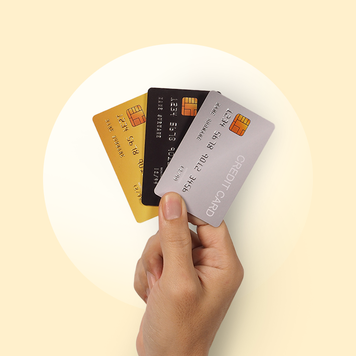
Live loan checks' closest kin were live credit cards -- ready-to-use
plastic that used to show up in consumers' mailboxes. The credit
cards arrived ready to let you (or anyone else who might get their
hands on them) rack up unsecured debt immediately.
Congress banned the practice in 1970. These
days, credit card companies can send only an application that's
subject to the lender's normal credit underwriting.
In other words, you can be turned down. Not
so with live loan checks. "They make high-cost credit far too easy
to obtain," Brobeck says. "Credit should not be that easy for anyone
to obtain, considering the obligations that it represents."
"Live check solicitations target senior citizens,
young families in need of credit and individuals who are already
heavily in debt," LaFalce says.
In June, when he introduced the Unsolicited
Loan Check Consumer Protection Act of 1999, LaFalce cited letters
from constituents to illustrate the problem. One writer said his
wife earned only $1,850 in 1998 and this year received a $5,000
loan check based on her "excellent credit standing."
Another letter described a young man at an entry-level
job who received several live loan checks for amounts from $1,500
to $2,000. He had little credit history and little means to repay,
yet the lenders saw fit to offer him thousands "just for extra cash"
at 22 percent interest.
"No responsible credit underwriting was involved,"
LaFalce said. "Credit was offered without any debt-to-income calculation
to determine if the recipient could afford additional debt."
Hazards
of credit offered so freely
Among the hazards of credit offered so freely is that some
consumers misunderstand the terms of the loan obligation these checks
create.
Others may confuse live loan checks with other
payments or reimbursements and not realize they're incurring a debt
at all. Live checks must conform with the Truth-in-Lending Act and
its disclosure requirements, but "the fine print is in legal language
that many people can't understand," Brobeck says.
In addition to creating high-cost obligations
for those who innocently cash them, live loan checks present great
opportunities for fraud. "They're relatively easy for someone else
to cash," Brobeck said. "We're not talking just about a professional
criminal, it could be an estranged spouse or a child. You can complain
and you won't be held liable for the loan but, nevertheless, it's
a major mess to clean up."
LaFalce's proposal came after President Clinton
weighed in on the issue at a May press conference. He called for
the ban on the checks, saying they could too easily fall into the
wrong hands. "Consumers should not feel they have to shred their
daily mail," Clinton said.
The bottom line, consumer advocates say, is
that live loan checks are a bad deal, one that Brobeck likens to
allowing the liquor industry to send out samples to everyone --
underage drinkers, alcoholics and DUI offenders included. "Credit
can have almost as devastating effects personally as liquor can,"
he says.
Salvatore Caputo is a freelance writer
based in Arizona
-- Posted: Aug. 30, 1999
|