What you should (and shouldn’t) store in a safe deposit box


Key takeaways
- Items that are difficult or impossible to replace, such as important documents and family heirlooms, are ideal for safe deposit boxes.
- It is not advisable to store items that may be needed quickly or in an emergency in a safe deposit box.
- Safe deposit boxes are not insured by the institution or the government, so it is important to purchase separate insurance for the contents stored inside.
With the growth of digital banking, renting a safe deposit box isn’t as common as it used to be. Some brick-and-mortar banks have either quit offering them or they’re scaling back. Still, safe deposit boxes can be a good place to keep important personal documents, collectibles and family heirlooms.
It’s important to make informed decisions about which things to store in a safe deposit box. Items that you might need to access quickly, for example, shouldn’t be stored in a safe deposit box. There are also items that a bank will not permit to be stored as well.
Here’s what you need to know about, and what to consider, when renting a safe deposit box.
What is a safe deposit box?
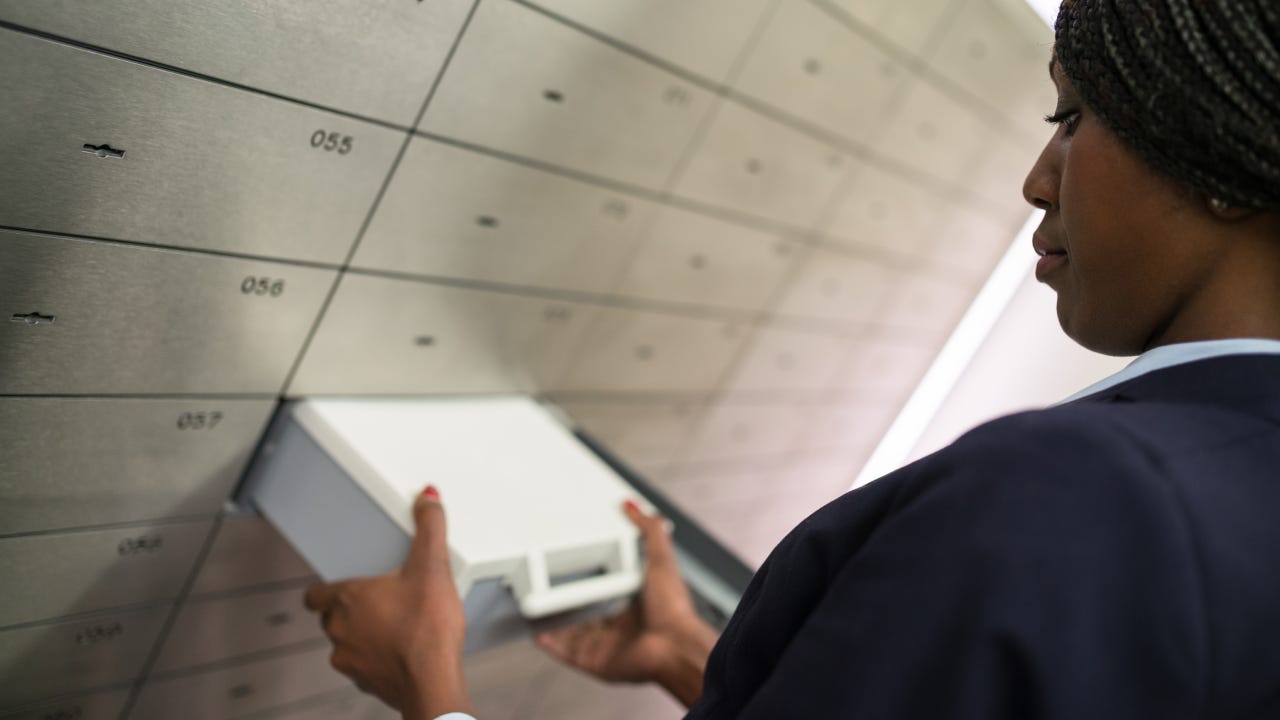
A safe deposit box is a secure container, usually made of metal, that’s used to store valuables at a bank or credit union. These boxes are often kept in vaults and can be rented by bank customers for a fee.
“Some of the larger nationwide mega-banks today have stopped installing boxes in new branches. They consider them an expensive, outdated service and have also stopped providing boxes to their existing customers,” says David P. McGuinn, president and founder of Safe Deposit Specialists.
McGuinn says there is still a demand for safe deposit boxes. He also notes that some credit unions and community banks continue to offer these boxes.
There are also virtual safe deposit boxes, where customers can securely store digital copies of important documents, such as birth certificates, last wills and tax records.
Average cost of a safe deposit box
The cost depends on the size of the box, your bank and your location. Expect to pay as little as $15 a year, up to about $150 a year.
The fee increases when you rent a larger safe deposit box. Some banks may offer discounts on the safe deposit box cost if you have a relationship with the bank. U.S. Bank, for example, offers 50 percent off its annual safe deposit box rental fee for those age 65 and over.
Here is a sampling of what financial institutions charge to rent safe deposit boxes:
| Bank name | State | Annual cost of safe deposit box | Box size |
|---|---|---|---|
| Community First National Bank | Kansas | $35-$100 | Ranging from 3-by-10 inches to 10-by-10 inches. |
| First Service Federal Credit Union | Ohio | $25-$75 | Ranging from 3-by-5 inches to 10-by-10 inches. |
| First Bank & Trust Co. | Oklahoma | $15-$150 | Ranging from 2-by-5 inches to 10-by-14 inches. |
| Forward Bank | Wisconsin | $30-$100 | Ranging from 2-by-5 inches to 10-by-10 inches. |
What should go in a safe deposit box
When considering what to store in a safe deposit box, it’s best to opt for items you can’t replace and ones that require safe keeping. However, these items should not be things you might need quickly.
Items to consider for a safe deposit box:
- Birth, death and marriage certificates
- Property deeds
- Car titles
- Stamp or coin collections
- Jewelry
- Paper stocks and bond certificates
- Contracts and business papers
A bank will have a rental agreement specifying what items you can’t store.
What should not go in a safe deposit box
There are many items you should leave out of your safe deposit box. Since you can only access your safe deposit box when the bank is open, you want to avoid choosing anything you would need in a timely manner.
Some examples are:
- Power of attorney documents
- Medical directives
- Passports
- Living wills
- Emergency cash
- Uninsured valuables
- Spare keys to your home, car or other item
Any documents and items you could potentially need urgently should be avoided.
Pros and cons of using a safe deposit box
Before making a decision to rent a safe deposit box, consider the benefits and potential downsides.
Pros
- High level of security: Safe deposit boxes are highly secure, stored in closed off areas of financial institutions with advanced surveillance.
- Environmental protection: They can protect your valuables from environmental damage, such as a flood or fire.
- Privacy: Only you and anyone you authorize have access to the contents of your box.
Cons
- Limited access: You can only access your safe deposit box during the institution’s business hours.
- Fees: There’s a fee associated with maintaining a box. Other options, such as home safes, have only a one-time cost.
- Potential legal complications: If not handled correctly, there could be legal issues in accessing the box, particularly after the death of the owner.
- Not insured by the bank: FDIC-insured banks offer deposit account insurance up to a certain amount, but do not offer insurance for safe deposit boxes. You may need to purchase separate insurance if the items in the box are highly valuable.
- Extra fees for lost keys. If you lose a key, you may have to pay an extra fee for replacement.
Are my belongings insured like my bank account?
A safe deposit box lives within the vault of a federally insured bank or credit union. But whatever you put inside that box isn’t insured by the institution or the government.
The Federal Deposit Insurance Corp. (FDIC), for example, protects only the money in FDIC-insured checking, money market and savings accounts, and certificates of deposit (CDs). If you want insurance on the items in the box, you must purchase it yourself — and it’s worth considering: You could lose valuables stored in a bank vault after a natural disaster.
Consider adding a special policy to your home insurance policy or contents insurance policy to cover valuable items. Insurers may give you a discount for storing valuable possessions in a safe deposit box.
FAQs about safe deposit boxes
-
The rules for what happens to the contents of a safe deposit box depend on state law and the rental contract with the bank, McGuinn says. “In most states, the state law says surviving renters have rights of access. Unfortunately, without a survivor, box access could be very difficult, expensive and possibly delayed.”
In some cases, the safe deposit box may be opened after the holder’s death to look for relevant documents, such as a will or life insurance policies. In some states, for example, a court may order a safe deposit box to be opened after the holder’s death if it has reason to believe that the box contains a will, deed or insurance policy.
-
Generally, third parties can’t access your safe deposit box unless you’ve given them authorized access (such as by giving them a key and adding their name to the rental agreement).
If you don’t pay the fees for the safe deposit box, it may be classified as abandoned and transferred to the state.
Bottom line
When choosing a bank or credit union to rent a safe deposit box from, consider prices, sizing and whether the institution’s safe deposit box policies abide by state laws and procedures. Think carefully about what you store in the safe deposit box. It’s important to avoid keeping items in the box that would lead to trouble if they couldn’t be quickly accessed.
Why we ask for feedback Your feedback helps us improve our content and services. It takes less than a minute to complete.
Your responses are anonymous and will only be used for improving our website.

You may also like
What is contents insurance in homeowners coverage?


6 best investments for beginners