Most homebuyers overpay for their mortgage. Here’s where it’s costing them the most


If you have a mortgage, you are almost certainly overpaying for it – by more than $3,300 per year, to be exact.
This is according to exclusive new Bankrate research that found 9 in 10 homebuyers didn’t get the lowest mortgage rate available to them and, as a result, are overpaying for their home loans. It’s happening throughout the country, in small towns and major metropolitan areas. This hidden homeownership tax costs the typical U.S. borrower $78,186 in extra interest and fees over a 30-year loan.
Here’s the thing: It’s completely avoidable. While housing research consistently shows that comparing offers from multiple lenders is the single most effective way to secure a lower rate, many buyers never do it.
“People don’t seem to understand that there is even an opportunity to shop [around for mortgage rates],” said Alexei Alexandrov, a mortgage industry researcher and former chief economist of the Federal Housing Finance Agency. “When you ask them just a simple yes or no question, ‘Do you think that every mortgage lender will offer you exactly the same rate?’ Most people say yes.”
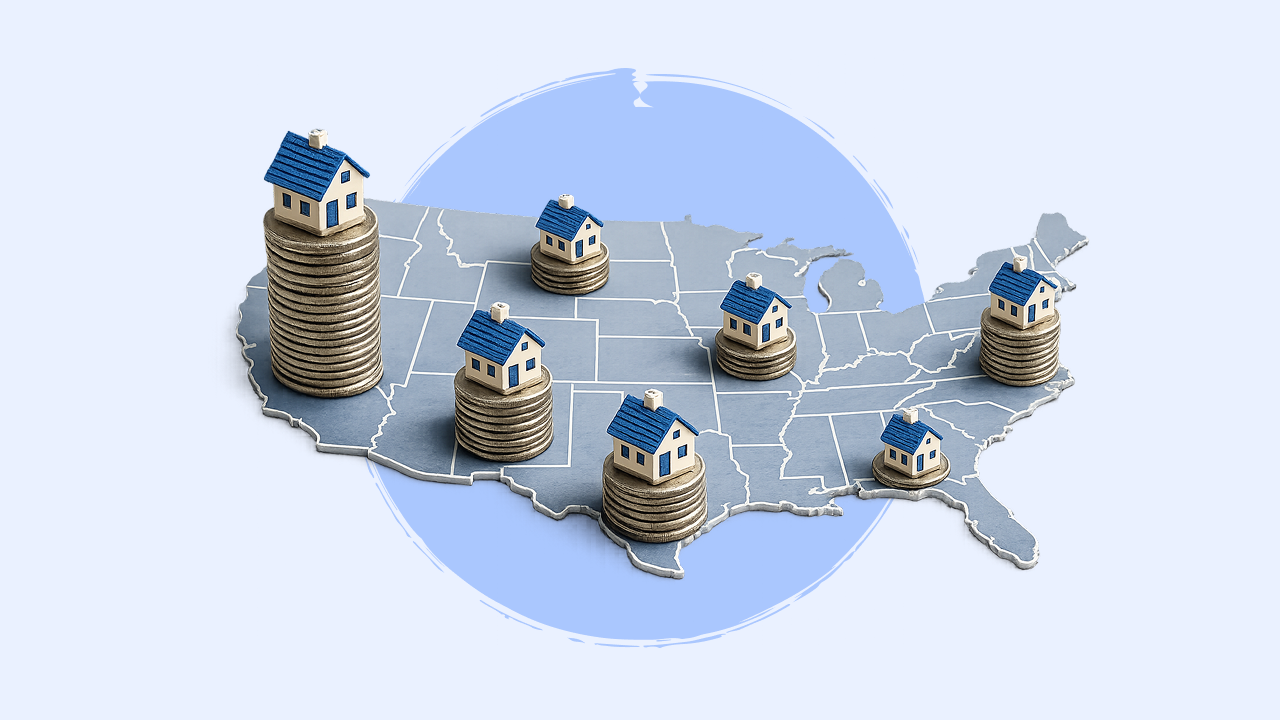
The severity of your mortgage overpayment depends heavily on where you live, according to Bankrate’s analysis. From Texas to California, borrowers across nearly a dozen Western and Southern metros lock in mortgage rates well above what they actually qualify for. Borrowers in other regions might see smaller rate markups, but they aren’t immune — the hidden homeownership tax still exists in every corner of the country.
See where your neighborhood ranks and how much extra your mortgage may be costing you.
You won’t find this hidden homeownership tax itemized on a closing disclosure or listed on your monthly mortgage statement. Hiding in plain sight, this tax costs homebuyers a collective $65 billion a year.
Where homebuyers are overpaying the most in the U.S.
The hidden homeownership tax stems from a single, expensive misconception: that all home loans are the same and rates are identical across lenders.
Combine that thinking with opaque industry practices and a weaker regulatory landscape, and the vast majority of borrowers unknowingly pay more than they need to for their mortgages.
“Almost half of borrowers don’t shop around for a mortgage. They only get one quote and sit with that,” said Katie Visalli, research analyst in the Housing Finance Policy Center at the Urban Institute. “There’s so much of this process that’s obscure.”
But because lenders are competing for your loan, you have more leverage than you realize. Not using it could mean paying an unnecessary premium for your mortgage every month, and the long-term cost of just a slightly higher rate are significant.
“Not many people realize just how much money there is to be saved and just how much of a difference even 25 basis points [0.25%] on your rate could save you over the course of the mortgage,” Alexandrov said.
To put that into perspective: On a typical $400,000 home loan, shaving just 25 basis points off a 6.5% interest rate decreases the monthly payment by roughly $66. Over the life of a 30-year mortgage, that can save the buyer more than $23,800 in interest alone.
But it’s actually even worse than that: Across hundreds of metros, Bankrate’s analysis finds that borrowers miss their market’s most competitive rates by more than 0.8 percentage points on average. The data shows a clear concentration in the Sun Belt and Midwest, and that may be because borrowers in those regions are facing less competitive local pricing, are shopping less frequently or a combination of both, according to Bankrate’s research.
To fairly compare metros, Bankrate used the average rate spread – the gap between the market’s best available rate and the rate borrowers signed up for. The gap reveals that while a big market like Los Angeles racks up the largest overpayments on average, borrowers in a smaller city like Victoria, Texas, are actually getting much worse rates on their home loans on average. The market’s best available rates are defined as the top 1% lowest-cost offers on Bankrate’s mortgage marketplace.
That extra interest adds up meaningfully in metros across the country, particularly in pricey coastal metros. Borrowers in Los Angeles and Santa Cruz overpay for their mortgages by an average of more than $44,000 over eight years, significantly higher than the national average ($26,744). For those who stay put for the full 30-year life of the loan, lifetime overpayments can top $100,000 in the country’s most expensive metros.
Mortgage overpayments by metro
Out of more than 350 metros analyzed, here are the 25 metros where borrowers face the widest gap between their actual rate and the market’s best offers, as well as what it’s costing them on average.
| 1. Victoria, TX | 1.24% | $2,841 | $22,729 | $63,038 |
| 2. Tyler, TX | 1.19% | $3,361 | $26,889 | $76,528 |
| 3. Los Angeles-Long Beach-Anaheim, CA | 1.18% | $6,075 | $48,599 | $149,073 |
| 4. Santa Fe, NM | 1.15% | $4,244 | $33,952 | $100,647 |
| 5. Elkhart-Goshen, IN | 1.14% | $2,607 | $20,854 | $61,705 |
| 6. La Crosse-Onalaska, WI-MN | 1.14% | $2,669 | $21,355 | $64,425 |
| 7. Santa Rosa-Petaluma, CA | 1.13% | $5,153 | $41,223 | $125,048 |
| 8. Corvallis, OR | 1.13% | $4,307 | $34,457 | $100,546 |
| 9. Santa Cruz-Watsonville, CA | 1.12% | $5,567 | $44,536 | $138,674 |
| 10. Kiryas Joel-Poughkeepsie-Newburgh, NY | 1.12% | $4,034 | $32,273 | $94,220 |
| 11. Longview, TX | 1.12% | $2,915 | $23,317 | $65,427 |
| 12. Battle Creek, MI | 1.11% | $2,060 | $16,483 | $46,298 |
| 13. Manchester-Nashua, NH | 1.11% | $3,853 | $30,823 | $93,250 |
| 14. Portland-South Portland, ME | 1.11% | $3,741 | $29,930 | $91,275 |
| 15. Midland, TX | 1.11% | $4,070 | $32,558 | $90,881 |
| 16. Miami-Fort Lauderdale-West Palm Beach, FL | 1.11% | $5,148 | $41,182 | $118,045 |
| 17. Napa, CA | 1.11% | $5,372 | $42,977 | $131,072 |
| 18. Oxnard-Thousand Oaks-Ventura, CA | 1.10% | $5,458 | $43,666 | $133,399 |
| 19. Flagstaff, AZ | 1.10% | $4,439 | $35,512 | $105,686 |
| 20. Michigan City-La Porte, IN | 1.10% | $2,471 | $19,771 | $56,935 |
| 21. Chicago-Naperville-Elgin, IL-IN | 1.10% | $3,456 | $27,644 | $81,810 |
| 22. Odessa, TX | 1.10% | $3,410 | $27,280 | $73,181 |
| 23. San Luis Obispo-Paso Robles, CA | 1.09% | $5,270 | $42,160 | $130,044 |
| 24. New Haven, CT | 1.09% | $3,626 | $29,005 | $84,435 |
| 25. Bloomington, IN | 1.09% | $2,638 | $21,100 | $62,332 |
*Average market rate spread is the average difference between borrowers’ selected mortgage rates and the most competitive mortgage rates available in the market.
*Avg annual overpayment divides the 8-year expected overpayment by 8. This reflects the average mortgage lifespan and captures front-loaded amortization costs (interest and fees) more accurately than a 30-year average.
Even where the average rate spread narrows, homebuyers are still overpaying. Here’s how much the hidden homeownership tax is costing borrowers in the 25 metros with the smallest mortgage markups.
| 1. Rocky Mount, NC | 0.65% | $2,108 | $16,864 | $46,410 |
| 2. Lakeland-Winter Haven, FL | 0.69% | $2,504 | $20,028 | $53,937 |
| 3. Dubuque, IA | 0.69% | $1,494 | $11,953 | $37,170 |
| 4. Waterloo-Cedar Falls, IA | 0.74% | $1,444 | $11,552 | $35,909 |
| 5. Cedar Rapids, IA | 0.75% | $1,491 | $11,928 | $36,604 |
| 6. Twin Falls, ID | 0.76% | $2,585 | $20,678 | $55,677 |
| 7. Spartanburg, SC | 0.77% | $2,320 | $18,559 | $51,613 |
| 8. San Antonio-New Braunfels, TX | 0.77% | $2,798 | $22,382 | $61,930 |
| 9. Minot, ND | 0.78% | $2,169 | $17,352 | $48,937 |
| 10. Greeley, CO | 0.78% | $3,276 | $26,211 | $77,199 |
| 11. Iowa City, IA | 0.79% | $1,735 | $13,878 | $45,480 |
| 12. San Jose-Sunnyvale-Santa Clara, CA | 0.79% | $4,025 | $32,199 | $109,669 |
| 13. Colorado Springs, CO | 0.80% | $3,131 | $25,044 | $73,971 |
| 14. Pueblo, CO | 0.80% | $2,437 | $19,495 | $54,639 |
| 15. Davenport-Moline-Rock Island, IA-IL | 0.81% | $1,731 | $13,850 | $41,065 |
| 16. Houma-Bayou Cane-Thibodaux, LA | 0.82% | $2,141 | $17,127 | $46,675 |
| 17. Jonesboro, AR | 0.82% | $2,177 | $17,413 | $49,339 |
| 18. Sioux Falls, SD-MN | 0.82% | $2,505 | $20,037 | $59,112 |
| 19. Austin-Round Rock-San Marcos, TX | 0.83% | $3,572 | $28,577 | $82,393 |
| 20. Laredo, TX | 0.83% | $2,772 | $22,175 | $56,591 |
| 21. Fargo, ND-MN | 0.84% | $2,412 | $19,292 | $55,956 |
| 22. Johnstown, PA | 0.84% | $1,654 | $13,234 | $35,457 |
| 23. Las Cruces, NM | 0.84% | $2,553 | $20,422 | $55,364 |
| 24. Rapid City, SD | 0.84% | $2,786 | $22,285 | $64,631 |
| 25. Boise City, ID | 0.84% | $3,427 | $27,417 | $77,973 |
*Average market rate spread is the average difference between borrowers’ selected mortgage rates and the most competitive mortgage rates available in the market.
*Avg annual overpayment divides the 8-year expected overpayment by 8. This reflects the average mortgage lifespan and captures front-loaded amortization costs (interest and fees) more accurately than a 30-year average.
Why are U.S. homebuyers overpaying for their mortgages?
What a lot of borrowers don’t realize is how diverse the mortgage market is. From commercial banks to independent brokers, every lender operates under a different business model and cost structure, according to Andy Warden, head of mortgage and housing market research at ICE Mortgage Technology, a consulting firm.
That’s why getting multiple quotes gives you the most leverage to find the lowest-priced mortgage.
“It can produce meaningfully different rate offerings for the exact same borrower profile, so where you start your search can have a real impact on where you end up,” Warden said.
The problem is that many borrowers pick their lender based on a recommendation from their real estate agent, friends or family. And for good reason: it’s easy to feel overwhelmed by the number of lenders on the market, and the convenience of a friendly connection feels reassuring and worthwhile.
While your agent or friend may have good intentions, the tradeoff is that it often stops you from doing a broader market search, so you can easily miss out on a more competitive rate because you decided to stop shopping after that first recommendation.
Recent research by Dayin Zhang, a real estate professor at the University of Wisconsin-Madison who studies realtor referral networks, finds the majority of real estate agents direct nearly half of their clients to fewer than four loan officers. He also found that this trend intensifies in cities with more lending options, which could explain why we see higher mortgage overpayments in certain parts of the country compared to others.
“No one is searching for all the lenders in the market,” Zhang said. “That is a complex and lengthy process. The real process is they ask their agent, ‘Can you give me a few names that I can go to to find a good deal for my mortgage?’”
Even when borrowers do try to compare, they often don’t know what fees to look out for or have a reliable benchmark to measure their offers against.
The mortgage industry lacks transparent pricing that allows borrowers to easily compare offers, Alexandrov said. Alexandrov agrees with the fix proposed in Bankrate’s research report: requiring lenders to add a line to loan estimates that shows an average annual percentage rate (APR) for borrowers with similar financial profiles.
“Mortgage disclosures show us step by step what this lender offers,” Alexandrov said. “What they don’t tell you is whether it’s a good deal or not.”
4 ways you can avoid overpaying for your mortgage
It might be tempting to lock in a higher rate for the sake of a quick closing or an existing banking relationship, but extensive research from the Philadelphia Federal Reserve shows paying a premium rarely gets you a better borrowing experience. A few specific strategies can help ensure you don’t overpay for your mortgage:
- Shop around: The only way to accurately weigh your options – and see if a lender’s service justifies their price – is to get multiple quotes and compare the numbers side by side. In high-overpayment metros like Los Angeles, the average rate gap is 1.18%, which means comparing even one or two additional quotes could potentially save a typical borrower around $6,000 year. Look into prequalifications or preapprovals to get these estimates, and try to batch your requests around the same time to protect your credit score.
- Ask for a better deal: Once you have multiple quotes from lenders, ask if they can do better. The lender may be willing to waive specific administrative fees or reduce the cost of discount points to win your business. Bankrate found the typical overpayment strips $47,000 in purchasing power from a household. In today’s market, that money is often the difference between affording a home and being priced out.
- Take a homebuyer education course: These courses are only mandatory for certain loan programs, but can be a valuable resource for buyers regardless of their loan type. They can help demystify the process so you know what to expect and can catch unexpected fees before it’s too late.
- Connect with a HUD-certified counselor: Counselors are the closest thing to consumer advocates in the mortgage industry. Unlike brokers or loan officers, they don’t earn a commission on your loan.
Why we ask for feedback Your feedback helps us improve our content and services. It takes less than a minute to complete.
Your responses are anonymous and will only be used for improving our website.