Homebuying in America: How a VA loan helped this veteran leave an unsafe neighborhood


Evelio Velez, a 40-year-old veteran, wanted to be a homeowner. But he was behind his peers from the start — saddled with a back injury from his time in the Navy, poor credit and debt from a divorce.
“I wanted a better quality of life, and one of my biggest concerns was the neighborhood where I was living,” he says. “It was not a safe environment.”
He was eligible for a VA home loan, which doesn’t require a down payment or private mortgage insurance and can offer a lower mortgage rate and closing costs. But first, he needed to get his finances in order.

In 2025, Soldier On, a nonprofit committed to ending veteran homelessness, connected him with a credit counselor through a partnership with Money Management International (MMI). With his counselor’s help, Velez improved his credit by more than 140 points and was preapproved for a mortgage.
The home search was on.
Setting the scene on homebuying
Mark McBride, a credit counselor of 25 years who works with MMI and Soldier On, starts conversations with veterans by asking them about their future.
“Overall, their long-term goal may be to use VA to purchase a home in the future, which could be weeks, months, years,” he says.
Buying a home is often challenging for service members and veterans, who may be dealing with frequent moves, tight timelines, complex income sources or a new civilian career.
Affordability adds another hurdle. USAA Education Foundation’s 2025 State of Personal Finance in the Military Community reported the typical veteran can only afford about one in five homes nationwide, even with VA benefits, which can make an already complicated process even more difficult.
Mark McBride, a credit counselor of 25 years who works with MMI and Soldier On, says the veterans he works with often have poor credit, debt and no stable housing. “A lot of times, [veterans] don’t have any credit because they might have had a bad experience — maybe while they were active duty, or maybe after coming home from active duty, being thrown into civilian life — where they didn’t pay something,” McBride explains.
The first step toward homebuying is to rebuild credit and make a budget. Once a veteran has regained their financial footing, they can start looking at homes in their price range.
Get your credit in line and save money.— Mark McBride, credit counselor with Money Management International, gives one piece of advice for veteran homebuyers
Behind his homebuying experience
Velez served four years on active duty in the Navy and four in the Navy Reserve. A fall left him with a serious back injury, needing surgery to repair two slipped discs. He got divorced after returning from deployment. After being discharged from the service in 2016, he took odd jobs and struggled with alcohol. He lost a lot of money and hurt his credit.

“I took 20 steps forward, and then got knocked back 100 [steps],” Velez says.
By 2025, he’d stopped drinking and was in recovery for his back. He was going to school full time for an art degree and receiving 100% service-connected disability payments. Still, he was living with his family in an unsafe neighborhood in Springfield, Mass., where he witnessed shootings and other crimes. Velez was ready to repair his credit, put his disability payments to good use and buy a home.
“More than anything, I wanted peace of mind and the opportunity to live in a safer neighborhood,” he explains.
That’s when Velez met his credit counselor, McBride. McBride helped him create a budget and apply for a credit card with a $300 limit. Velez used the card to make small purchases and on-time repayments, bringing his credit score from the 500s to the 700s. He also saved $20,000 of military back pay to use as a down payment.
And in August 2026, Velez was preapproved for a $300,000 VA loan at a 6.345% rate.
He and his real estate agent began looking for homes around $230,000, because McBride had helped him calculate what would be an affordable monthly payment. “The goal of buying a house is to not get a foreclosure,” McBride told him.
But many of the homes weren’t up to Velez’s standards. The houses needed a lot of work or were in bad neighborhoods. And when he did make offers, he was outbid — five times, to be exact.
“It was emotional damage,” he says. “You can have your heart set on the houses you want, but you might not get it.”
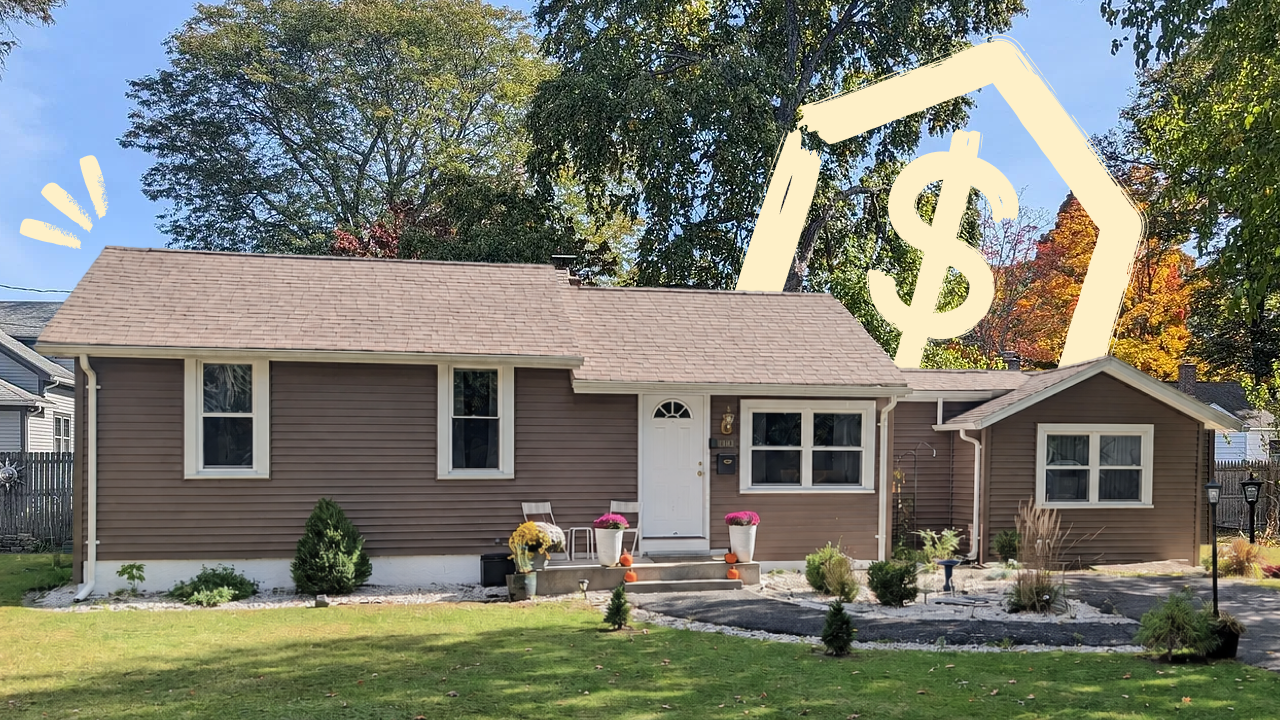
Still, Velez was undeterred. Every week, he and his agent went to see more houses. A two-bed, one-bath on a quiet street caught his eye, and he chatted with one of the neighbors. In October, his offer on the house was accepted.
“It’s beautiful,” he says. “I didn’t think they were gonna take me, but they accepted!” His closing date is November 24, and he hopes to move in shortly after that.
What this means for you

A VA home loan can help eligible veterans, active-duty personnel and surviving spouses to enter the housing market. “I would encourage veterans to always seek out VA for the home loan,” McBride says. “VA can help a veteran purchase a home with little or no down payment, versus [up to] 20% in conventional means.”
To qualify for a VA loan, you’ll need a Certificate of Eligibility (COE). Experts also recommend having a good credit score and debt-to-income (DTI) ratio of 41% or less. Even though the VA doesn’t set credit score or DTI requirements, lenders do.
And the VA doesn’t actually set your mortgage rate — the lender does. Bankrate research found around 4 in 5 (81%) VA loan borrowers overpay for their mortgage by not shopping around, costing them an average $2,922 per year.
That’s why it’s important to get at least three loan estimates, so you can compare loan terms and choose the best offer. It won’t significantly hurt your credit, because multiple inquiries within 14 days are typically treated as one by the credit bureaus.
An expert's take
His homeownership dream
“I have a feeling that when I find the house that I’m really looking for, all the things that I liked about all the other houses that I looked at are going to be all in one,” Velez told me while he was still searching for homes.
His hunch was correct. His new house has spacious rooms and a big yard for his dog to run around in. “As for the neighborhood, I was looking for peace and quiet,” he says. “I’m just blessed to be able to be there.”
Why we ask for feedback Your feedback helps us improve our content and services. It takes less than a minute to complete.
Your responses are anonymous and will only be used for improving our website.