- advertisement -

Big banks, bigger fees and biggest
check first are nightmare fodder


Bank merger horrors

Is bigger better? Maybe for bank stockholders, but in the aftermath of a wave of mergers, banks are raising rates and finding new ways to charge their customers.

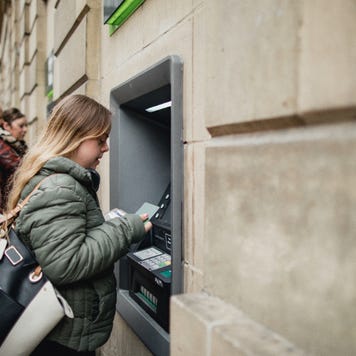
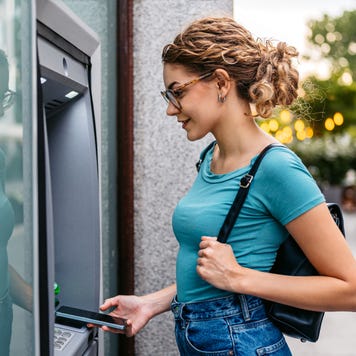
You need to keep more money in a checking account to avoid monthly charges. An increasing number of banks are charging their own customers to use an ATM -- in addition to the extra charge they impose on noncustomers. Some have adopted a "biggest first" check-cashing policy that makes it more likely that the customer will suffer multiple bounced checks -- and pay multiple penalties.

If you don't like all the fees and charges, you can take your business elsewhere -- but some of the biggest institutions now charge customers to close an account.

Put it all together and it's a horror of tiny portions -- watch out for your bank or you could get nibbled to death.

Mergers get some blame
Mergers are partly to blame, say consumer advocates. In the past seven years, the number of banks in the United States has fallen from 15,000 to about 9,200 as big banks swallowed their smaller regional competitors.

- advertisement -

The mergers cause frustrating changes. A consolidation usually means new account numbers, PIN numbers, customer service phone numbers and new paper checks. The operational upheaval ties up phone lines and queues at the bank, all of which makes for disgruntled folks at both ends.

Banks tend to keep the fee scale which account holders were used to at their old bank for a while, then jack them up for uniformity among all their customers. "Big banks mean bigger fees. That has been our finding in study after study," says Liz Hitchcock, communications director for the U.S. Public Interest Research Group based in Washington, D.C. "These economies of scale are definitely not passed on to the consumer."

ATM Fees: Comparative information

Point-of-Sale Fee
The fee that the institution charges its own account holders to use an ATM card at a point-of-sale location, such as a merchant or gas station.
  • Averaged $.19
  • Charged by 40 percent of institutions surveyed in 1994
  • Charged by 24 percent of institutions surveyed in 1999
Fee for Using Another Bank's ATM
The fee that the institution charges its own account holders to use another institution's ATM.
  • Averaged $.86 in 1993
  • Averaged $1.01 in 1994
  • Averaged $1.31 in February 1999
  • According to a February 1999 study, 88 percent of institutions offering ATM cards charge this fee
Card Replacement Fee
The fee that the institution charges its own account holders to reissue or replace an ATM card.
  • In 1994 -- charged by 30 percent of institutions surveyed and averaged $4.30
  • In 1999 -- charged by 44 percent of institutions surveyed and averaged $5.02
ATM Surcharges
The fee that the institution charges non-account holders for the use of its ATM.
  • Debuted in 1989
  • Charged by 77 percent of institutions with ATMs
  • Surcharges range from $.50 to $3
  • Most common amount is $1.50

Source: Checking Account Pricing Study in 1999 and previous studies by Bankrate.com


Take checking accounts, for example. If you want a good deal on a checking account, you're better off at a small regional bank or community bank, according to the most recent Bankrate.com Checking Account Pricing Study. The survey ranked 348 institutions on how much they charged a customer who has a $1,500 monthly balance in a checking account for one year, with average account activity of 12 transactions per month and one bounced check per year.

Little guys charge fewer fees
Who made it into the Top 20 of least expensive banks? The little guys, led by Bay Financial Savings in Tampa, Fla. None of the 50 largest U.S. banks made it onto the list.

The survey also found that the average amount required to open an interest-bearing checking account rose 29 percent, to $385.98, and the average threshold to avoid fees on noninterest checking accounts rose 11 percent, to $440.44.

ATM policies are also getting less consumer-friendly, the survey found. The number of banks charging their own customers a fee for using the bank's ATM rose from 6 percent to 9 percent since the last survey, conducted six months earlier. And more banks are charging customers for the ATM cards themselves -- up from 4 percent in the last survey to 10 percent now.

All those fee dollars add up. According to the Federal Deposit Insurance Corporation's latest quarterly banking profile, fee income increased by $1.4 billion (9.2 percent) from the previous quarter, and was $3.4 billion (26.8 percent) greater than a year ago.

Here are some of the other bank policies and procedures that can hit unwary consumers:

  • The "biggest first" check-cashing policy. A few states -- New York, California and Nevada -- are fighting the practice, under which banks process the biggest checks first instead of processing them in the order they are written. The biggest-first practice results in more revenue for banks because if a big one bounces, each subsequent check may bounce, forcing consumers to pay those hefty "nonsufficient funds" fees several times over.
  • Closing account fees. In the old days, a bank would give you a toaster for opening an account. Now, when you close a checking account, some banks pop you with a $10 fee. NationsBank/Bank of America and First Union are among the big institutions that charge consumers who shut down their accounts within six months of opening it.
  • The industry's little-known blacklist. An agency called ChexSystems keeps a low profile, but if it gets your name on its list, you're in for trouble. It keeps track of checking and savings accounts that are closed because of excessive rubber checks or overdraft fees. Banks use the database to see who's a poor risk. The problem is, ChexSystems doesn't just rat on criminals and chronic slackers. Bounce one or two checks by accident and you can make the list. The information stays in the system for five years and can keep folks who made an honest mistake from opening another account.
  • Lifeline accounts -- low-cost checking alternatives that are required by law in some states -- must remain pretty lifeless or they can kill you in fees. At Chase Manhattan, for example, when a customer exceeds 10 transactions per cycle, the account is subject to charges and balance requirements for higher-tier accounts. Once you hit 11 transactions -- including checks, debit card transactions and automatic payments -- the maintenance fee goes from $4 to $9.50 and you're charged 50 cents for each of the 10 transactions that were previously free.

What's next? Experts predict the era of big-brother banking. Already, big players in the industry are trying out the next generation of banking software, which sorts customers by how profitable they are. Those who are deemed "losers" because they don't generate enough revenue for the bank will face higher fees and rates -- if they can get an account at all.


-- Posted: Oct. 5, 1999

top of page
See Also
ATM fees continue to rise
What's next? The era of big-brother banking
More on ChexSystems
More banking stories
Print   E-mail
 

Checking and Savings
Compare today's rates
NATIONAL OVERNIGHT AVERAGES
Interest checking 0.58%
MMA 1.01%
$10K MMA 1.09%


RELATED CALCULATORS
  How long will your savings last  
  How to reach a savings goal -- with scheduled payments  
  Watch your savings grow with regular deposits  
VIEW ALL 
BASICS SERIES
Checking Basics
Manage your account in a fee-friendly way.
What's the best checking
account for me?
ABCs of ATMs
What are all these fees?
Is online banking secure?

MORE ON BANKRATE
Banking glossary  
News archive  
Keep an eye on the leading rates  
Find a high-yielding CD

ADVERTISING PARTNERS

- advertisement -
 
- advertisement -