- advertisement -

A card that depends on your paycheck
as much as you do

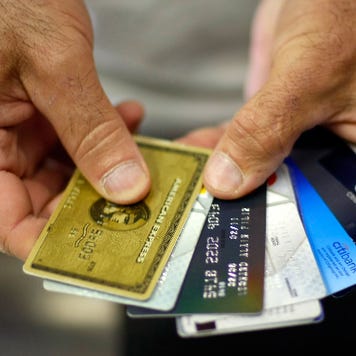
The plastic parade has grown longer over the last couple of years. First came credit cards. Then debit and check cards fell in line.

Now a new card takes the money directly from your paycheck.

- advertisement -

Christened payroll deduction cards, this latest piece of plastic is starting to show up as an employee benefit. The appeal: A worker with such a card has no bills piling up in the mailbox and no checks to write to the credit card company. Even better, since payment is made directly from the employee's paycheck, the charges are interest-free.

But some consumer advocates worry that what's a convenience for some could be the financial downfall for others.

The leader in the payroll deduction card movement is E-Duction, based in Blue Bell, Pa. The company has signed up around 15 employers to carry its Clear card, including Western Union and Reliance Standard Life Insurance. In addition, E-Duction has 10 resellers who peddle the card to companies as an employee benefit.

E-Duction founder Kirk Watkins is no stranger to payroll-deduction programs. His previous business enabled hospital workers to pay for uniforms directly from their checks. In the middle of one night, Watkins was struck by what he saw as the next logical step. He awakened at 3 a.m. with the idea of an actual card that employees of any company could use wherever other credit cards were accepted. The Clear card was born.

From purchase to payment
Here's how the E-Duction program works. An employer signs up to offer the Clear card to its employees as a benefit. It doesn't cost the employer anything and E-Duction does all the work interfacing with the company's payroll systems.

Once the employee gets his Clear card, he can use it wherever MasterCard is accepted, thanks to a partnership agreement between E-Duction, MasterCard and Capital One, which administers the transactions. But there's a big difference in how payment is made for a Clear charge and one placed with a traditionally issued card. The amount on the Clear account is automatically deducted from the employee's paycheck over the next two months.

For many workers, this time frame spreads the payroll deductions over four paychecks, two each month. In these cases, says Watkins, "If you buy a $200 watch, then you'd have $50 deducted from your next four paychecks."

The biggest benefit of Clear, say its supporters, is that the cardholder won't pay any interest or late fees since the money is automatically deducted. That could come in handy if a worker faces a substantial emergency expense, such as a car repair bill.

A worker without ready cash or money in a checking account could use a traditional credit card to get his car back on the road. But that might also mean additional interest charges for as long as a balance remains on the account. Someone with a payroll deduction card, however, could get the car fixed and know that the repair bill would be paid directly over two months without any added interest.

The Clear costs
The Clear card, however, is not totally without cost. An employee who opts for the card must pay an annual fee of $29. It can be charged to the card, with its payments spread out over two months just like purchases.

And as with traditional credit cards, there are restrictions.

To get a Clear card, a worker must be a full-time employee for a minimum of six months with the participating company and earn a minimum annual base salary of $20,000.

Worker wages also determine credit limits. Employees who earn less than $75,000 a year receive a purchase line equal to 2.5 percent of annual salary, so an employee earning $40,000 would have $1,000 in credit on the card.

The credit line starts at $3,000 for more well-paid workers. That's because those earning $75,000 or more receive a purchase line equal to 4 percent of their salaries.

Then there's that two-month payback period. Depending upon how often a worker gets paid, the Clear card payment method could take a sizable chunk out of a paycheck.

For workers paid every two weeks or twice a month, each transaction will be paid off in four equal payments. Workers paid weekly will find their charges deducted in eight payments. Where paychecks are issued monthly, two equal payroll deductions will erase the Clear charges.

The possibility that a worker could easily commit a large portion of pay before he ever sees his check raises a red flag for Steve Rhode, president and co-founder of MyVesta.org, a credit-counseling agency.

"They may end up with not enough money to cover their regular bills," the credit counselor says.

When Clear's rate gets muddied
A leaner paycheck isn't the only problem a worker might encounter. When the company's guidelines are breached, Clear carries penalties similar to those levied by standard credit card issuers.

What happens, for instance, if a worker charges a purchase but leaves his job, either voluntarily or is laid off, before the amount is paid off? Clear's zero interest rate suddenly balloons.

According to the Clear card disclosure statement on the company's Web site, the annual percentage rate will go from zero to 14.99 percent if:

  • You voluntarily close the account,

  • Your minimum payment exceeds your net pay for all payments due in any month or

  • You are no longer a full-time employee for the company through which you got the card or you remain employed but do not maintain the minimum $20,000 annual salary.

The rate could go up even more, to 25.99 percent APR, if you withdraw your authorization for automatic paycheck payments or, for whatever reason, automatic payments are no longer possible for your account.

And if you find yourself in need of cash instead of credit, you can get a cash advance on the Clear card. Again, there's no interest charged on the transaction amount, but there is an upfront fee: 3 percent of the cash advance or $5, whichever is more.

Credit cautions for some consumers
Even when used judiciously, consumer debt watchers worry that a payroll deduction card could pose credit management difficulties for some people.

"One problem that consumers face is remembering where they spent money," says Myvesta's Rhode. "It's like the 90 days same as cash. The time goes very quickly and then they don't have the money to pay it off."

And while Rhode acknowledges that Clear card could allow some people with troubled credit a chance to have a credit card, he's not so sure they should have the opportunity.

"One good thing about the Clear card is it will give credit to someone who might not be able to get credit otherwise. So it's a good idea provided you can handle it," Rhode says. "But people in that precarious a situation are usually living paycheck to paycheck. This could push them over the edge."

Jenny C. McCune is a contributing editor based in Montana.


-- Posted: Nov. 14, 2002


Looking for more stories like this? We'll send them directly to you!
Bankrate.com's corrections policy
Print   E-mail
 

Credit Cards
Compare weekly rates
WEEKLY AVERAGES
Type Fixed Variable
Standard 13.46% 11.48%
Gold 12.12% 9.90%
Platinum 10.97% 12.21%
All 12.31% 11.68%


RELATED CALCULATORS
  Loan calculator (includes amortization schedule)  
  See your FICO score range -- free  
  What will it take to pay off your credit card?  
VIEW ALL 

BASICS SERIES
Credit Card Basics
Don't get trapped by card debt. Learn to use it wisely.
How to find the best card
Check your credit report
Finance charges explained
How to ask for a lower rate
Improve credit with a card
How to repair your credit

MORE ON BANKRATE
Banking glossary  
News archive  
Keep an eye on the leading rates  
Find a high-yielding CD

ADVERTISING PARTNERS

- advertisement -

 
- advertisement -