- advertisement -

PIN vs. signature -- why you should care

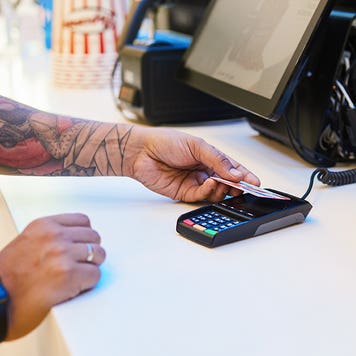
Many financial institutions are packing monthly statements with inserts urging customers to press "Credit" after swiping their check cards at the store.

If you press "Credit" you'll be given a receipt to sign. If you press "Debit" you'll have to enter a PIN (personal identification number).

- advertisement -

Their urging might mean that if you sign your name when you use the card you'll automatically be entered in Visa's sweepstakes, or you'll get frequent flier miles, or you'll get a 1 percent rebate for your purchases.

Use your PIN, and you won't get anything other than your groceries.

One bank's insert even states that it may seem "strange" to press credit for a debit card transaction, but for check-card issuers, the difference is dollars.

Most consumers realize check cards are debit cards. Money for the purchase is debited from their checking account, as opposed to a credit card, where they'll be billed later.

While they're both debit transactions -- the money will be deducted from your checking account -- not all debit transactions are created equal.

There are behind-the-scenes costs involved for processing the sale whether using a PIN or a signature with a check-card purchase. Use a PIN, the transaction is considered "online" and it's routed electronically, "real time" through an electronic financial transaction network, or EFT.

Sign for a check-card purchase, the transaction is "offline" and it can take two or three days to cycle through the credit card networks.

Follow the fee
Retailers pay a lot more in transaction costs with a signature-based purchase than with a PIN. Industry analyst Jefferies & Company estimates that retailers pay 60 cents in fees for every signature-based check card purchase vs. 15 cents for each PIN-based purchase. Who reaps the bulk of those transaction fees? The financial institutions that issue the cards.

As a result, retailers want you to use a PIN while banks want you to sign your name.

Some banks opt for the carrot -- sweepstakes, rebates, etc. -- to get you to sign your name. Others opt for the stick, charging a fee when you use a PIN. Some banks use both.

And then there are financial institutions, such as Minneapolis-based TCF Bank, that dropped the 75-cent fee it charged customers for using a PIN with its check card.

"We want to encourage customers to use their cards for purchases as many times as they can," says senior vice president Dan Engel. "We think it's punishing your very best customers to charge a transaction fee."

Engel says a variety of issues pushed TCF Bank into dropping the fee. Among them was that retailers often steer customers toward using a PIN.

"We think customers will do what they're asked in the checkout line. If they're prompted to use a PIN, they'll do it. If half of our volume was online point of sale, the fees (to the customer) would be onerous."

Engel says his bank has a competitive edge by not charging a fee.

Bank of America, the biggest card issuer in the country, is another institution that doesn't charge customers for PIN-based purchases. Customers using the bank's co-branded airline check card, for example, receive miles whether they use a PIN or a signature.

"I guess it goes back to the fact that we lead the pack in check cards, and it's another opportunity to allow our customers to decide how they're going to bank," says spokeswoman Angela Ashley.

Pinched by the PIN
But the number of institutions that punish customers for using a PIN is growing.

Jefferies and Company says 20 percent of the banks it surveyed distinguish between PIN and signature-based debit transactions. Of these banks, 77 percent charge customers a fee for using a PIN and 23 percent offer rewards for a signature.

Steve SaLoutos, senior vice president at Minneapolis-based U.S. Bank, says they charge a PIN fee in some markets based on what the competition is doing. The bank offers customers a 1 percent rebate for using a signature.

"Seldom do you see trends going in two different directions -- some banks dropping the fee and some increasing them. When you get in a situation like this there's a certain amount of consumer confusion if you don't give them a good reason," SaLoutos says.

"We're creating an incentive for them, and that's an incentive for us. Our focus is much more on growing accounts and what we can do to design a better mousetrap. That's really more the drive for us although online/offline is an economic issue for us."

Consumer advocates say consumers are better off punching in a PIN for check-card transactions.

"We generally don't like these cards with a signature," says Bill Apple of Consumer Reports. "They're not as secure. Also, if people sign, the bank collects much higher fees and ultimately it will raise the cost of goods and services for everyone.

"The merchants will be paying higher transaction fees, and that's coming out of overhead somewhere. Eventually, they may have to jack up prices."

The so-called "Wal-Mart case" could have a major impact on this battle between retailers and card-issuing banks. Wal-Mart and some 4 million other retailers have gone to court to fight Visa's and MasterCard's "honor all cards" rule, which says if a merchant accepts Visa or MasterCard credit cards they must also accept all Visa or MasterCard debit cards.

The retailers don't want to pay the high fees associated with signature-based debit cards and don't want to be forced to accept them. The case is scheduled for trial in April 2003.

In the meantime, be careful about how you use your check card. Your bank may not be charging a fee for PIN-based purchases, but that doesn't mean it won't start.

"People have to be very canny about how they use debit and credit cards," says Bill Apple. "They get these small-print cardholder agreements that get amended practically every month. Don't just throw them out. It's probably buried in there that there's a new fee, but they also tell you how you can avoid it. They usually give you a poison and the antidote."

New York senator Charles Schumer says disclosing fees in the fine print of the cardholder agreement isn't good enough. Schumer says he will introduce legislation that would require banks to disclose hidden debit card fees at the point of sale -- just as ATM customers are notified when making a withdrawal.

"Encouraging people to use debit cards instead of checks or cash and then springing hidden charges on them is not only dishonest, it's bad business," says Schumer. "If banks want to charge consumers for each transaction, let them know and let them decide whether it's worth it."

If your bank charges for point-of-sale debit transactions, you may want to get extra cash from the ATM to cover those purchases. Or you could vote with your feet and use a bank that doesn't charge a fee.


-- Posted: July 10, 2002


Looking for more stories like this? We'll send them directly to you!
Bankrate.com's corrections policy
Print   E-mail
 

Credit Cards
Compare weekly rates
WEEKLY AVERAGES
Type Fixed Variable
Standard 13.46% 11.48%
Gold 12.12% 9.90%
Platinum 10.97% 12.21%
All 12.31% 11.68%


RELATED CALCULATORS
  Loan calculator (includes amortization schedule)  
  See your FICO score range -- free  
  What will it take to pay off your credit card?  
VIEW ALL 

BASICS SERIES
Credit Card Basics
Don't get trapped by card debt. Learn to use it wisely.
How to find the best card
Check your credit report
Finance charges explained
How to ask for a lower rate
Improve credit with a card
How to repair your credit

MORE ON BANKRATE
Banking glossary  
News archive  
Keep an eye on the leading rates  
Find a high-yielding CD

ADVERTISING PARTNERS

- advertisement -

 
- advertisement -