Best credit cards with no annual fee in June 2026


 Edited by

 Reviewed by
 Edited by
Reviewed by
Edited by
Reviewed by
Advertiser Disclosure: Bankrate’s editorial team chooses and recommends the credit cards on this page. Our websites may earn compensation when a customer clicks on a link, when an application is approved, or when an account is opened. However, our recommendations and card ratings are produced independently without influence by advertising partnerships with issuers.
Filter by
Showing 12 results
Best for drugstore purchases
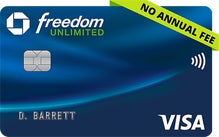
on Chase's secure site
See Rates & FeesIntro offer
Earn $200 cash back
Rewards Rate
1.5% - 5%
Annual fee
$0
Regular APR
18.24% - 27.74% Variable
Why you'll like this: It offers rewards on drugstore items and dining — two expenses you might make daily or weekly — and a decent catch-all rate on everything else.
Reward Details
What you should know
Card Details
Best for food & entertainment
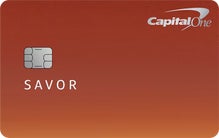
on Capital One's secure site
See Rates & FeesIntro offer
Earn a one-time $200 cash bonus
Rewards rate
1% - 8%
Annual fee
$0
Regular APR
18.49% - 28.49% (Variable)
Why you'll like this: It’s one of the few no-annual-fee cards to offer an excellent rewards rate on both dining and grocery purchases — many cards favor just one category.
Reward Details
What you should know
Card Details
Best for rotating bonus categories

on Capital One's secure site
See Rates & FeesIntro offer
Cashback Match
Rewards rate
1% - 5%
Annual fee
$0
Regular APR
17.49% - 26.49% Variable APR
Why you'll like this: It has one of the highest boosted rewards rates on quarterly categories of everyday spending.
Reward Details
What you should know
Card Details
Best for flat-rate cash rewards
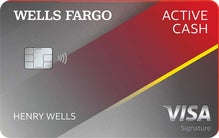
on Wells Fargo's secure site
See Rates & FeesIntro offer
$200 cash rewards
Rewards rate
2%
Annual fee
$0
Regular APR
18.49%, 24.49%, or 28.49% Variable APR
Why you'll like this: It offers the highest flat rewards rate on the market, earning you solid cash back on every purchase for no annual fee.
Reward Details
What you should know
Card Details
Best for shopping
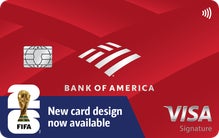
Intro offer
$200
Rewards rate
1% - 6%
Annual fee
$0
Regular APR
17.49% - 27.49% Variable APR on purchases and balance transfers
Why you'll like this: It offers the most flexibility since you can choose your top bonus category change it once per calendar month.
Reward Details
What you should know
Card Details
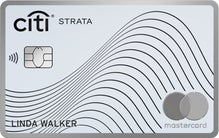
Intro offer
Earn 20,000 bonus Points
Rewards Rate
1X - 5X
Annual fee
$0
Regular APR
18.49% - 28.49% (Variable)
Why you'll like this: It earns rewards at a solid rate across all of the average person’s most important everyday spending categories.
Reward Details
What you should know
Card Details
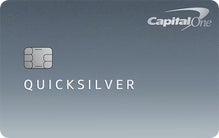
Best for beginners
on Capital One's secure site
See Rates & FeesIntro offer
Earn a one-time $200 cash bonus
Rewards rate
1.5% - 5%
Annual fee
$0
Regular APR
18.49% - 28.49% (Variable)
Why you'll like this: Its straightforward cash back makes it a good fit if you're new to rewards and already bank with Capital One.
Reward Details
What you should know
Card Details
Best for straightforward rent earnings
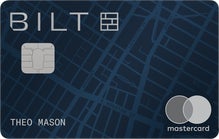
Intro offer
$100 of Bilt Cash
Rewards Rate
1X - 1.25X
Annual fee
$0
Regular APR
26.74 - 34.74% variable
Why you'll like this: Bilt’s no-annual-fee card is a solid choice for building credit or earning simple rewards with minimal effort.
Reward Details
What you should know
Card Details
Best for credit builders
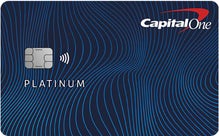
Intro offer
N/A
Annual fee
$0
Regular APR
28.99% (Variable)
Why you'll like this: It offers an unsecured credit option and potential credit limit increases for cardholders with less-than-perfect credit scores.
What you should know
Card Details
on Wells Fargo's secure site
See Rates & FeesIntro offer
20,000 bonus points
Rewards rate
1X - 3X
Annual fee
$0
Regular APR
18.49%, 24.49%, or 28.49% Variable APR
Why you'll like this: It offers one of the highest rewards rates for commuting costs like gas and transit.
Reward Details
What you should know
Card Details
Best for pairing
Intro offer
$200 bonus
Rewards Rate
1% - 5%
Annual fee
$0
Regular APR
18.24% - 27.74% Variable
Why you'll like this: It’s the perfect addition to any rewards-earning strategy with high rates in key categories.
Reward Details
What you should know
Best for automatic rewards
Intro offer
$200
Rewards rate
1% - 5%
Annual fee
$0
Regular APR
17.49% - 27.49% (Variable)
Why you'll like this: It boasts one of the most flexible cash back rewards structures, as you can earn elevated cash back in your top eligible spending category each billing cycle.
Reward Details
What you should know

Remove a card to add another to compare
Remove a card to add another to compare
Compare the best credit cards with no annual fee
| Our picks for | Rewards highlights | Welcome offer | |
|---|---|---|---|
Drugstore purchases |
| Intro Offer: Earn $200 cash back Hover to learn more Regular APR: 18.24% - 27.74% Variable | |
Dining & entertainment |
| Intro Offer: Earn a one-time $200 cash bonus Hover to learn more Regular APR: 18.49% - 28.49% (Variable) | |
Rotating bonus categories |
| Intro Offer: Cashback Match Hover to learn more Regular APR: 17.49% - 26.49% Variable APR | |
Flat-rate cash rewards |
| Intro Offer: $200 cash rewards Hover to learn more Regular APR: 18.49%, 24.49%, or 28.49% Variable APR | |
Apply now on Bank of America's secure site | Shopping |
| Intro Offer: $200 Hover to learn more Regular APR: 17.49% - 27.49% Variable APR on purchases and balance transfers |



How to pick a no-annual-fee card
If you’re wondering how to choose a no-annual-fee card, it helps to know your credit score and most common purchases. Then, you can compare rewards rates and other perks to choose the right card for you.
Is a no-annual-fee card right for you?
If the thought of paying money to spend money makes you cringe, you're in the right place. With a no-annual-fee card, as long as you pay your balance on time and in full, you can avoid interest and earn rewards for free.
Here are three scenarios that make sense to say no to an annual fee.
- You won’t spend enough to justify the fee. Big spenders can often earn enough value via rewards to offset an annual fee and then some. But if your cash back or points value won't add up to the annual fee, it's probably not worth paying for. And while annual-fee cards typically offer more perks — like statement credits or airport lounge access — those still may not offset the fee in the long run.
- The fee isn't worth it after the first year. Most of the no-annual-fee cards above offer welcome bonuses around $200, while an annual-fee card's welcome bonus can be worth upwards of $1,000, often in the form of points or miles. These bonuses can easily offset the annual fee on most cards for the first year. But paying an annual fee after the first year might not be worth it, depending on how you use the card.
- Paying a fee doesn't align with your values. Plenty of people believe paying an annual fee is unnecessary. You may not see the value of a fee or follow the “spend more to earn more” mentality. Or maybe you just don't want to add tracking the annual fee to your plate of worries.
The good news: Regardless of your reason for avoiding annual fees, you've got credit options.
Annual fee or no annual fee: Crunching the numbers
If you're eyeing a specific no-annual-fee card, it's worth comparing its potential value to that of an annual-fee card in the same family. You might find you'll get more value out of your credit card by paying an annual fee.
It all depends on how much you spend in rewards categories and whether you use the extra perks.
The Blue Cash Everyday and the Blue Cash Cash Preferred both offer solid rewards, while only one charges an annual fee. To run a simple test for when the Blue Cash Preferred card's annual fee may be worth it, let's look at one of the Amex Blue cards' key rewards category — groceries.
| Blue Cash Everyday® Card from American Express | Blue Cash Preferred® Card from American Express | |
| U.S. supermarket rewards | 3% (on up to $6,000 per year, then 1%) | 6% (on up to $6,000 per year, then 1%) |
| Rewards for $3,170* in annual grocery spending | $95 | $190 |
| Annual fee | $0 | $0 intro annual fee, $95 after first year |
| Rewards value after annual fee | $95 | $95 |
*We calculated this number as the turning point for when the annual fee would potentially be offset by grocery rewards alone.
You spend around $3,170 per year on groceries.
If you’d spent any less on groceries, say $3,000, you’d only net $85 in value with the Blue Cash Preferred, making the Blue Cash Everyday the better option.
But if you spend more than $3,170 at U.S. supermarkets with the Blue Cash Preferred, you'll not only offset the $95 fee, but also earn more on each subsequent dollar spent than you would with the Blue Cash Everyday.
Let's compare the cards in Capital One's Venture portfolio. The VentureOne and both Venture Rewards cards offer the same rewards rate on hotels and rental cars booked through Capital One, so it makes more sense to look at their rates on general purchases.
| Capital One VentureOne card | Capital One Venture Rewards Credit Card | Capital One Venture X Rewards Credit Card | |
| General spending rewards | 1.25X miles | 2X miles | 2X miles |
| Rewards for $12,700* in annual general spending | $158 | $254 | $254 |
| Annual fee | $0 (See Rates & Fees) | $95 (See Rates & Fees) | $395 (See Rates & Fees) |
| Anniversary points | $0 | $0 | 10,000 (worth $100) |
| Annual travel credit | $0 | $0 | $300 |
| Rewards value after annual fee | $158 | $159 | $259 |
*We calculated this number as the turning point for when the annual fee would potentially be offset by base spending rewards.
You spend around $12,700 per year on all purchases with the Venture.You book $400 worth of travel via Capital One Travel with the Venture X.
You'd need to spend around $12,700 per year with either Venture Rewards card to make it a better overall value than the VentureOne, not counting the additional perks. For example, the Venture Rewards card offers TSA Precheck and $50 for Lifestyle Collection hotel stays.
And although the Venture X has a high price tag, it can easily offer better value overall than the VentureOne, as long as you use the $300 travel credit and 10,000 miles. That's not to mention the value of perks like expedited airport security and lounge access.
Is it worth paying an annual fee for a credit card?

“Paying an annual fee for a credit card can certainly be worth it, but it all starts with being ‘smart’ about credit cards in the first place. That includes prioritizing paying for your credit card in full, rather than keeping a balance that is accruing interest, and not going into ‘bad’ debt. For an annual fee card, start with how much the fee is and subtract the dollar value you will be getting back … to see what the actual out-of-pocket spend would be each year.”

“A credit card with a fee can make sense if the value you’re getting (in perks, protections, or points) clearly exceeds what you’re paying, and it matches how you actually spend — not just how you want to spend.
So, when is it worth it?
You regularly redeem perks that offset the fee (e.g., travel credits, free nights, lounge access).
The rewards categories match your real spending habits (like groceries, gas, or streaming).
You use protections (trip delay, extended warranty, etc.) that would otherwise come out of pocket.
And when is it not worth it?
You’re forgetting to activate or use benefits, or feeling pressure to spend just to ‘earn.’
You’re carrying a balance — the interest will cancel out any reward gains.
You’re following trends that don’t reflect your values or financial priorities.”

“It’s not what you pay, it’s what you get for what you pay. The biggest error I see is that people pay for benefits that they don’t use. For example: they pay a $250 annual fee, so that they have lounge access in the airport. But they only fly once or twice a year and could buy lounge access for less money. Another error is paying a fee so you can be using a ‘fancy’ or ‘exclusive’ credit card. They believe it will impress people that they’ve qualified for this card. First off, the waiter doesn’t care what credit card you use, they just want to know how much the tip is. It’s much more impressive to keep the fee and grow your wealth.”
How to choose a no-annual-fee card that fits your goals
Anyone can put a no-annual-fee card to good use, but here are a few circumstances to consider when choosing the right one for you.
-
If you’re a frequent traveler
Cardholders who pay for flights, hotels or rental cars fairly often but don't want an annual fee cutting into rewards value can find a no-annual-fee travel card useful.
-
If you prefer cash back
If you love cash back, you're in good company — half of rewards cardholders (50%) say it's their favorite feature, according to Bankrate's 2024 Credit Card Rewards Survey. Fortunately, most cash back cards don't charge an annual fee.
-
If you spend a lot in a certain category
Big spenders on groceries, dining, gas or other everyday categories can benefit from a rotating or customizable category card. For no annual fee, you could earn up to 5% cash back on quarterly boosted categories that you manually activate or select. Just keep an eye on any spending cap, which is common for this type of card.
-
If you're building credit
Most credit-building cards don't charge an annual fee. They might be secured — where you have to put down a security deposit — or easier to qualify for. The Capital One Platinum card, for instance, is easy to use, offers automatic credit increase reviews and may let you upgrade to a better card once you've built up your credit.
What’s your favorite no-annual-fee card?

"My favorite no-annual-fee card is, hands-down, the Citi Custom Cash. I love the automatic-adjusting bonus category and use it exclusively for my grocery shopping — easily my biggest spending category behind housing and daycare costs.
My main complaint with the card is its $500 spending cap per billing cycle, but I don't think I would've found another card to suit my needs and wants as well as this card does. Sure, I could've traded unlimited bonus category spending for a lower rewards rate, but I'm quite happy with what the Custom Cash does for me."

“I love my Capital One Savor because it offers comparatively high rewards rates on most of my food purchases, whether I'm buying groceries or dining out. These expenses take a significant chunk of my budget, so cash back adds up fast. I also like how easy it is to convert it into Capital One miles so I can pool the rewards and redeem them for travel.
However, no-annual-fee cards typically don't provide any premium perks that I appreciate annual-fee cards for.”

"If I had a default credit card for everything, it's the Prime Visa. I don't really like spending time in stores or trying to find products, so Amazon Prime is a really convenient service that offers quick access to products that I might otherwise spend hours hunting down. Unfortunately, Prime is expensive, but I figured if I have the service anyway, I might as well do everything I can to make the most of my Amazon shopping."
*All information about the Chase Freedom Flex® Card and Citi Custom Cash® Card has been collected independently by Bankrate.com and has not been reviewed or approved by the issuer.
For Capital One products listed on this page, some of the benefits may be provided by Visa® or Mastercard® and may vary by product. See the respective Guide to Benefits for details, as terms and exclusions apply.
Frequently asked questions about no-annual-fee credit cards
How we choose the best cards with no annual fee
Bankrate's credit card expertise
250
cards compared
50
rewards programs evaluated
189
cards in our wallet
118
years of industry experience
We select cards for “Best” credit cards pages based primarily on how cards score in our proprietary card rating system, our editors’ subjective assessment of card quality, card approval odds and credit requirements and unique card features.
Cards typically must score a minimum of 3.0 stars to be included on a “Best” list. However, we may include cards with scores below 3.0 if they have low credit requirements or unique features — despite their scores, these cards may still be among the “best” in certain categories. Card ratings are not influenced by advertisers or issuer relationships in any way.
Card selection and ordering may vary based on business considerations, including Bankrate visitor interest, site interactions and card application volume. Affiliate commissions (see how we make money), limited-time offers and a card’s general popularity in the product landscape may also influence which cards we feature on our pages and the order in which they appear. Bankrate’s editorial and business teams also strive to feature a variety of card types from various issuers.
Here’s a quick look at how our rating methodology breaks down for no-annual-fee cards:
The vast majority of cards in our ratings database carry no annual fee. So a card with no annual fee doesn't automatically make it on our “Best of” list. We consider a number of other factors — listed below — and only include the cards that offer great value overall.
To give you a sense of how selective we are, here's a look at the annual fees across cards in our rating database, as of July 2024.
-
$0 annual fee 71.00%
-
$1 to $74 fee 5.00%
-
$75 to $99 fee 13.00%
-
$100 to $199 fee 3.00%
-
$200-plus fee 8.00%