Does homeowners insurance cover hurricane damage?


Key takeaways
- A standard home insurance policy does not cover all aspects of hurricane damage.
- Flood insurance covers hurricane-related storm surges and flood damage. Mold damage, however, is not included.
- You may have a separate, and higher, hurricane insurance deductible.
- Getting hurricane coverage before the season starts may be the best idea to ensure you have coverage. Typically, there are moratoriums (restrictions) for buying or adjusting coverage when storm warnings are issued.
Hurricane season 2025 is expected to run from June through the end of November, and experts anticipate another active year for storms. The National Oceanic and Atmospheric Administration (NOAA) predicts a 50 percent chance of an above-normal season, driven by warm Atlantic and Caribbean Ocean temperatures. This year, NOAA expects 13 to 19 named storms, with five to nine hurricanes and two to five major hurricanes.
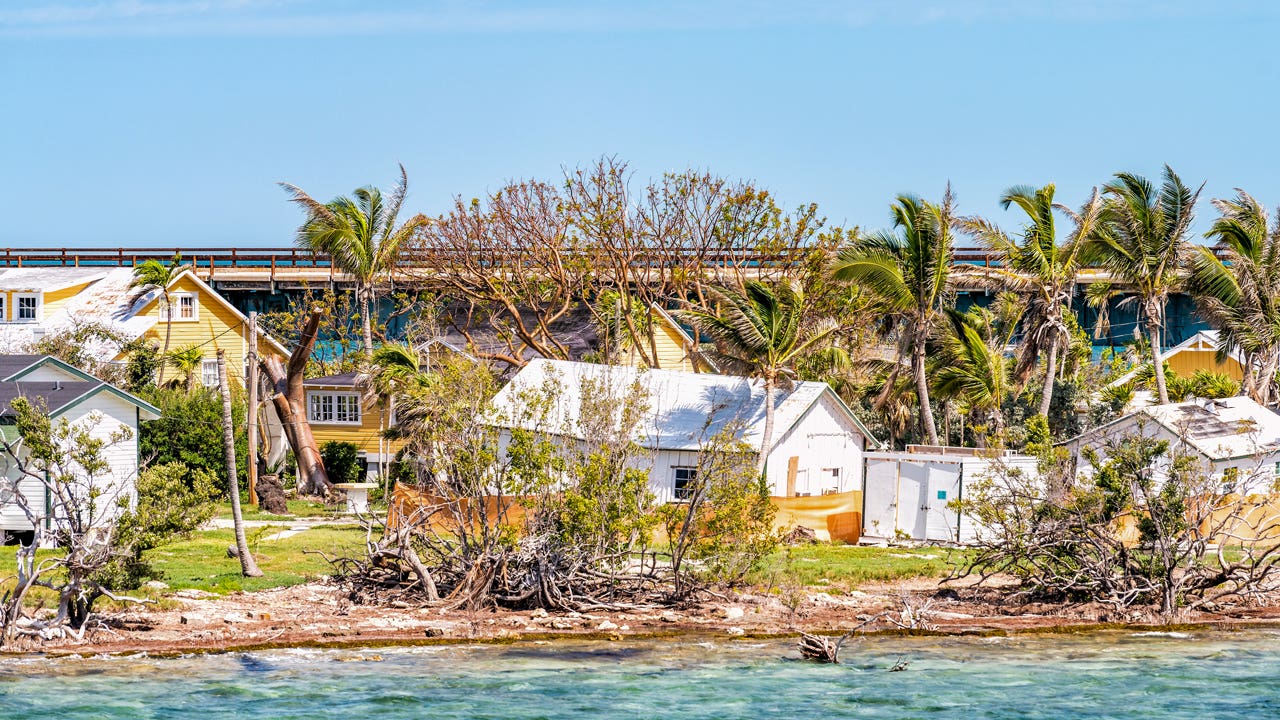
If you live in the path of a hurricane, you’re probably already familiar with what to do when a storm hits: prepare for power outages, have a go-bag at the ready and evacuate if need be. But another essential part of hurricane prep is to ensure that you’re covered by an insurance policy in case your home is damaged. Your home insurance does cover hurricane damage, but the amount and type of coverage depends on your policy. To be fully financially protected from a hurricane, you’ll likely need a flood insurance policy in addition to your home policy. Depending on your state, you may also need wind insurance.
How much hurricane coverage do you need?
Insurance companies don’t sell standalone “hurricane insurance policies,” so you will need to rely on your home insurance policy and some supplemental policies, like flood insurance, to get adequate hurricane coverage. Depending on your circumstances or preferred degree of financial protection, you may need to consider higher coverage limits or coverage add-ons to your policy, above what a standard HO-3 or HO-5 policy provides. Most homeowners policies provide financial protection from windstorm damage for:
- Your dwelling (the structure of the home)
- Detached units (like a shed or detached garage)
- Personal property (your belongings)
- Living expenses if you are displaced
However, in some more hurricane-prone places, wind may not be considered a covered peril. In that case, you would need separate wind insurance.
Dwelling coverage
Dwelling coverage covers the structure of your home, your roof, attached structures and built-in appliances such as your water heater or kitchen cabinets. You generally buy this coverage equal to the total rebuild cost of your home. However, home insurance shouldn’t be a “set it and forget it” type of expense. From October 2019 to October 2024, home replacement costs have risen by 43 percent, on average. If your home’s dwelling limit hasn’t changed in a couple of years, you could be underinsured. If raising your dwelling limit is out of your budget, consider adding an inflation guard or extended dwelling replacement endorsement. Depending on your insurance provider, this could be a more budget-friendly approach to limiting out-of-pocket expenses if your home is rendered a total loss.
Other structures coverage
Other structures coverage pays to repair or replace detached structures on your property, including garages, sheds, barns, gazebos, in-ground swimming pools and more. This coverage is based on a percentage, generally 10 percent, of your dwelling coverage limit. For example, if you have $400,000 in dwelling coverage, you may have up to $40,000 in coverage for detached units. Your yard and detached structures can sometimes bear the brunt of hurricane damage. Make sure your dwelling limit includes enough coverage for the other structures on your property.
Personal property coverage
Personal property insurance covers your personal items, like clothing, furniture and appliances. Generally, the limit for personal property coverage is a percentage of your dwelling coverage limit. Many insurers provide personal property coverage of 50 to 70 percent of your home’s insured value, according to the Insurance Information Institute (Triple-I).
If you live in a state where hurricanes are common, it’s important to make sure you have enough personal property coverage. For the highest amount of protection, consider insuring your belongings at their replacement cost value instead of their actual cash value. With replacement cost coverage, your insurance company reimburses you for items of equal value to the ones you lost without factoring depreciation.
If you have high-value items, such as jewelry, antiques, hobby equipment or fine arts, in your home, you may want to consider scheduled personal property coverage. Most home insurance policies have a sublimit of $2,500 or less per claim for high-value items. A separate scheduled policy or an endorsement on your home insurance covers each item for its appraised value.
Additional living expenses
Homeowners insurance helps pay for additional living expenses if you get temporarily displaced after a covered loss, like a hurricane. Your policy may reimburse you for the cost of hotel and food expenses while your home is being repaired. The coverage limit for additional living expenses is sometimes a default amount set by the insurance company, but you might have the option to increase the limits for more protection. In many cases, your additional living expenses coverage is 10 percent of your dwelling limit.
How do hurricane deductibles work for homeowners insurance?
If your homeowners insurance does cover for wind damage or other hurricane damage, then claims may be subject to a separate deductible. These deductibles are typically higher than standard homeowners insurance and set as a percentage – usually 1 to 5 percent – of your dwelling coverage. For example, if you are covered for $400,000 and your hurricane deductible is 5 percent, then you may have to cover a $20,000 deductible, which would be deducted from your claim payment.
Do you need a hurricane deductible?
All Atlantic and Gulf Coast states, as well as Pennsylvania, Washington, D.C. and Hawaii allow insurance companies to require a separate hurricane deductible, according to the Insurance Information Institute (Triple-I). It is possible that you may have the option to pay a higher premium to lower your fixed deductible.
Hurricane deductibles are usually triggered by a hurricane watch or warning issued by the National Weather Service, but can vary slightly by state and insurance company. While hurricane deductibles may be costly compared to your standard home insurance deductible, the coverage is essential protection for those in high-risk areas for hurricanes.
What states have hurricane deductibles?
19 states and Washington, D.C., have hurricane deductibles:
- Alabama
- Connecticut
- Delaware
- Florida
- Georgia
- Hawaii
- Louisiana
- Maine
- Maryland
- Massachusetts
- Mississippi
- New Jersey
- New York
- North Carolina
- Pennsylvania
- Rhode Island
- South Carolina
- Texas
- Virginia
- Washington, D.C.
Additional hurricane coverage options to consider
Flood insurance
Some homeowners may be surprised to learn that flooding — even from a hurricane — is generally not covered by a standard homeowners insurance policy. This is why many lenders require homeowners to carry flood insurance if they have a mortgage. One of the most common ways to get flood insurance is through the National Flood Insurance Program (NFIP).
NFIP policies provide up to $250,000 in dwelling coverage and $100,000 in personal property coverage for residential homes. Before your coverage takes effect, there is a 30-day waiting period, except in a few rare circumstances. Many private carriers also offer flood insurance now as well, and the waiting periods are often shorter than NFIP-backed policies. Private flood policies typically offer higher dwelling and personal property limits than NFIP policies, as well as additional living expenses.
Catastrophic flooding from hurricanes can occur in inland communities as well, as we have seen from several recent storms. Over 30 percent of flood claims come from properties outside high-risk federal flood zones, according to FEMA. Because of this, it may be better to err on the side of caution and buy flood insurance if your area is at all subject to flooding. Otherwise, you could be stuck with the entire bill if your home is damaged by water, says Sara Singhas, director at the Mortgage Bankers Association.
Windstorm insurance
Some insurance companies limit or exclude wind damage from homes in areas at high-risk for hurricane and tornado damage. Homeowners may have the option to purchase wind coverage as an additional endorsement from their current home provider. If not, they may need to secure a stand-alone windstorm insurance policy. Windstorm policies usually have a deductible of 1, 2, 5 or even 10 percent of the dwelling coverage. Some insurers also offer a standard flat deductible for “named storms” so that homeowners are not always required to meet a high deductible for wind damage from smaller storms.
Most homeowners find windstorm policies through non-profit government-backed policies like Louisiana Citizens Property Insurance. By law, these policies have a higher premium than those offered by private insurers, but can be a life-saving option for homeowners with no other way to secure coverage.
Water backup coverage
Sewage overflow is not something you want to think of after a hurricane, but it could happen as a result of flooding. Water backup coverage helps protect your home and personal property from water damage if sewage water backs up into your home through your plumbing or sump pump. An electric sump pump could fail during a hurricane power outage, which could flood your basement.
Debris removal coverage
Homeowners insurance generally covers debris removal if, for instance, a tree falls on your property. However, the coverage usually only goes up to a certain amount. Usually, your insurance policy will cover up to $1,000 for one tree debris removal instance, with up to $500 per tree. Debris removal following a hurricane can easily exceed that cap, so you may want to check if your insurer offers a coverage endorsement to increase your debris removal reimbursement.
Hurricane season 2025 is shaping up to an active few months. The NOAA predicts there will be three to five major hurricanes, meaning the storms are Category 3 and above. Predictions from the Tropical Weather and Climate Research Team at Colorado State University (CSU) show a slightly milder forecast. CSU anticipates three major hurricanes and a total of eight major hurricane days. CSU predicts there is a 24 percent chance that a major hurricane makes landfall along the East Coast, including the Florida Peninsula. The odds are slightly worse for the Gulf Coast and the Florida Panhandle; CSU anticipates a 31 percent chance of major hurricane landfall in that part of the country.
Living in the path of a hurricane comes with major financial risks, but understanding your home insurance policy can help mitigate some of those risks. Here’s the run-down of what you need to know about home insurance and hurricanes to help you be ready for the historic 2024 hurricane season:
- Homeowners insurance typically covers some forms of hurricane damage but does not cover flood damage. Homes in high-risk areas may need windstorm insurance and flood insurance to avoid potential gaps in coverage. When a hurricane approaches, most insurance companies put a moratorium on increasing coverage or lowering deductibles until the storm passes.
- Bankrate’s hurricane resources aim to help you understand how your home insurance coverage may financially protect you from storm damage. These guides also provide tips to prepare your home for a storm and resources on how to file a claim for hurricane-related damage.
How to be prepared to make a home insurance claim after a hurricane
To prepare for an insurance claim after a hurricane, there are several things you can do. Take photos and videos of the interior and exterior of your home routinely (every six months to a year) to document what your home looks like and what is in it. If you have done major renovations or repairs, make an inventory of that, too, and upload all of the documentation to the cloud so you can access it remotely.
After a storm, it could take time for an insurance adjuster to inspect your home so document everything again as soon as you can. Moss advises that having your own documentation can help your insurer process your claim more quickly and resolve potential claim disputes.
Do I need hurricane coverage if I rent or own a condo?
When it comes to hurricane protection, renters insurance policies are just as important as homeowners policies. If you live in an apartment, your landlord insures the building, but you still need to carry insurance for your possessions and additional living expenses. Renters insurance does not cover flood loss; however, renters who live in an area prone to flooding may be able to purchase a standalone flood policy through NFIP or a private flood insurer.
If you own a condo, find out what areas of the structure are covered by the association and what you will need to insure. In addition to your personal items, you may be responsible for helping to pay for a portion of the repairs to the damaged structure. Check with your association attorney or property management company before you buy and find out exactly what type of coverage you will need under your condo insurance policy. You may also want to have your insurance agent review the master condo policy to help you determine what additional coverage you need for full financial protection. You may need separate flood and windstorm policies to cover damage to attached fixtures and personal property inside your home.
Frequently asked questions
Why we ask for feedback Your feedback helps us improve our content and services. It takes less than a minute to complete.
Your responses are anonymous and will only be used for improving our website.

You may also like
Best high-risk homeowners insurance companies

Will my homeowners insurance policy cover tree removal?

Does homeowners insurance cover tsunami damage?
Does car insurance cover hurricane damage?