What happens when a bank fails?



Key takeaways
- When a bank fails, the FDIC or a state regulatory agency takes control and either sells or dissolves the bank.
- The FDIC insures deposits up to $250,000 per depositor, per FDIC-insured bank, per account ownership category.
- In a bank failure, the FDIC aims to return insured funds to depositors within two business days.
Bank failures can be unsettling for depositors, especially during times of economic uncertainty. In 2023, the high-profile collapses of Silicon Valley Bank, Signature Bank, and First Republic Bank have led to increased concerns about the stability of the banking system.
But, it’s important to understand the protections in place and the process that unfolds when a bank becomes insolvent. Here’s what you need to know.
What happens in a bank failure
Bank failures occur when institutions are unable to meet their obligations to depositors or other creditors. Some common triggers include:
- Excessive risk in investments or loan portfolios
- Significant losses due to economic downturns or market volatility
- Insufficient capital to absorb losses
- Liquidity crises caused by rapid deposit withdrawals (bank runs)
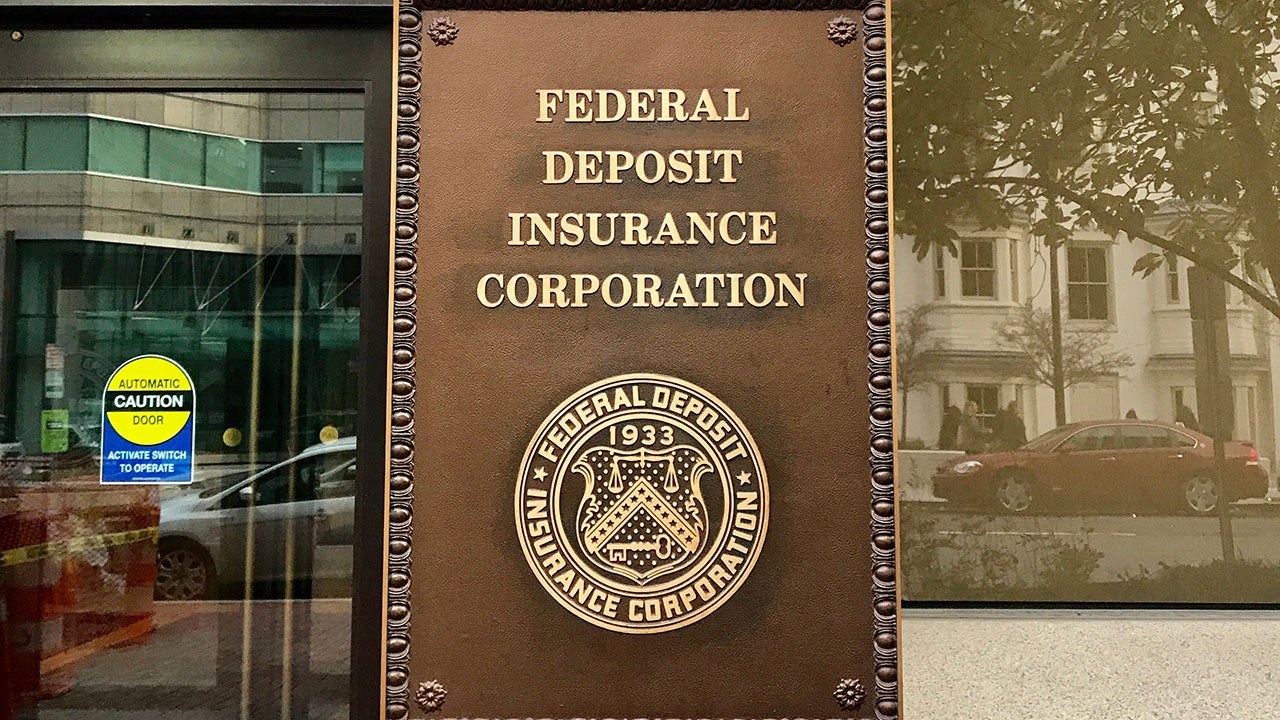
When a bank becomes insolvent and is unable to meet its obligations to depositors and creditors, the Federal Deposit Insurance Corporation (FDIC) or a state regulatory agency steps in to take control.
“When an institution fails, it will generally be announced on a Friday evening, when the regulators take over the institution and work to either sell it or dissolve it,” says Kirk Meyer, a Registered Financial Consultant and former bank examiner with the FDIC. “If sold, the buying institution will be announced and a process for the transition will be developed.”
The FDIC is an independent agency of the federal government that insures deposits at member banks. The standard FDIC deposit insurance limit is $250,000 per depositor, per FDIC-insured bank, per account ownership category.
This means that if you have $250,000 or less in your accounts at a single FDIC-insured bank, your money is fully protected in the event of a bank failure.
It’s important to note that this coverage applies to various account ownership categories, such as single accounts, joint accounts and certain retirement accounts, each separately insured up to $250,000.
What happens to your money when a bank fails
The fate of your funds in a bank failure depends on whether they are insured by the FDIC, according to Jim Pendergast, senior vice president at altLINE by The Southern Bank.
“In theory, your money is safe,” Pendergast says. “But that’s a bit like saying your house is safe during an inferno if you have fire coverage. It’s not a stress-free process to go through.”
- Insured deposits: If your deposits are at an FDIC-insured bank within the FDIC insurance limit, you can expect a full reimbursement. The FDIC aims to return insured funds to depositors within two business days of the bank’s closing.
- Uninsured deposits: For amounts exceeding the FDIC coverage limit, the outcome is less certain. If the failed bank is acquired by a healthier institution, there’s a chance your uninsured funds will be transferred. However, if the bank is dissolved, you may need to file a claim with the FDIC for the excess funds. Reimbursement of uninsured deposits depends on the availability of money after the bank’s assets are sold.
The National Credit Union Association (NCUA) provides a similar service for credit unions. If your money is at a credit union, it is similarly protected by the NCUA, with the same limits.
Protecting your money beyond FDIC limits
While the FDIC insurance limit provides a solid safety net, savers with funds exceeding $250,000 at a single bank may want to consider additional protection:
- Spread funds across multiple FDIC-insured banks to ensure maximum coverage.
- Explore the CDARS (Certificate of Deposit Account Registry Service) or ICS (Insured Cash Sweep) programs, which allow you to access FDIC insurance beyond $250,000 while working with a single bank.
- If you have a brokerage account through your bank, that money may be covered by the Securities Investor Protection Corporation (SIPC). The SIPC covers up to $500,000 of the securities and cash held in your brokerage account, which includes a $250,000 limit for cash.
Read more: 5 best ways to insure excess deposits
Bottom line
For the most part, if you keep your money at an institution that’s FDIC-insured, your money is safe — at least up to $250,000 in accounts at the failing institution. You’re guaranteed that $250,000, and if the bank is acquired, even amounts over the limit may be smoothly transferred to the new bank.
If your bank fails and you have more money deposited than the insured limit, you can still at least file a claim with the FDIC asking for some of your assets to be returned to you. It means more paperwork, but you might also have a chance to recover more than the limit if there are assets left over after the liquidation.
In many cases, though, as altLINE’s Pendergast points out, the whole process is smooth and you might not have any money at risk.
“If they find a bank to take over, and things go according to plan, you may not even realize that the original bank failed,” Pendergast says. “All you’ll know is that your checks and debit account still work fine, then one day you’ll be issued new debit cards.”
Why we ask for feedback Your feedback helps us improve our content and services. It takes less than a minute to complete.
Your responses are anonymous and will only be used for improving our website.

Up next




We appreciate your feedback
Thank you for taking the time to share your experience.