The history of credit cards
 Written by

 Edited by

The Bankrate promise
At Bankrate we strive to help you make smarter financial decisions. While we adhere to strict , this post may contain references to products from our partners. Here's an explanation for . The content on this page is accurate as of the posting date; however, some of the offers mentioned may have expired. Terms apply to the offers listed on this page. Any opinions, analyses, reviews or recommendations expressed in this article are those of the author’s alone, and have not been reviewed, approved or otherwise endorsed by any card issuer.
Using a credit card has become easier and easier over the years. The term “swipe your card” is quickly becoming outdated now that we have the ability to tap and even use digital wallets on cell phones instead of physical cards.
Despite the many recent advancements, the evolution of credit card technology dates back further than you may think. Even in ancient civilizations, humans saw the benefit of a credit system. Let’s dive into credit card history, from clay tablets to metal cards.
The ancient history of credit
The credit cards we use today are an American invention, but credit systems themselves have been around for as long as civilized humans have. During the Bronze Age, almost all economic transactions occurred on what we would now consider a line of credit. This system of credit existed because the space between planting a crop and harvesting the crop was spread out over months. According to American economist Michael Hudson, our ancestors would often rack up debt while their crops were growing that they would then pay off when harvest time came.
The first recorded transaction that laid a foundation for our modern credit card system occurred over 5,000 years ago when the ancient civilization of Mesopotamia used clay tablets to trade with the neighboring Harappan civilization.
Fast forward a few thousand years to the United States in the early 1800s and you can find further examples of credit card-like systems. Merchants in the budding Wild West used credit coins and charge plates to give farmers credit until their crops were harvested for the season.
From metal plates to the Charg-It card
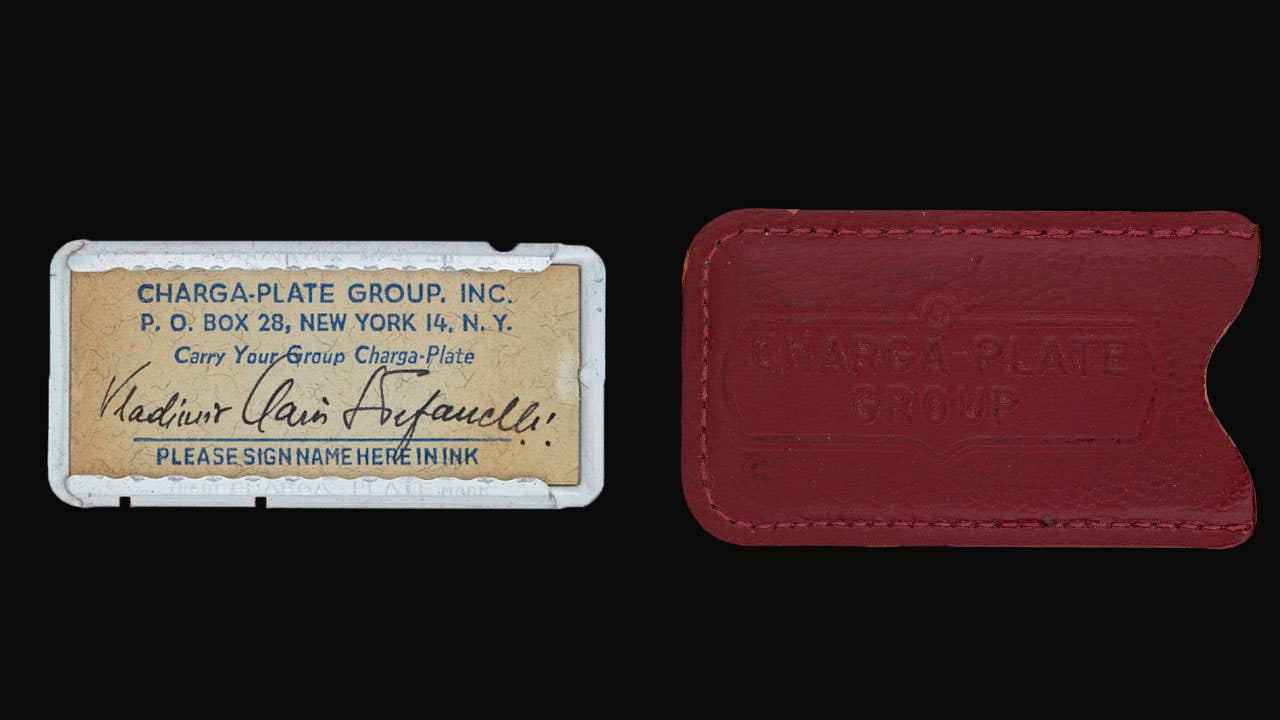
The beginning of the 20th century saw further advancements in the concept of a modern credit card system. when in 1918, Western Union began to issue metal plates, called “Metal Money”, to a select group of their customers.
These metal plates allowed the consumer to defer payments on the purchases they made. The metal plates issued by Western Union were like modern credit cards in concept, but they were highly limited when compared to their contemporary counterparts and could only be used by a select group of customers on certain transactions. A few years later, in the 1920s, oil companies and hotels also issued their own form of credit cards that customers could use at these company locations.
Fast forward almost 30 years to 1946, and these metal plates became obsolete due to a new payment method called the “Charg-It card”. Created by John Briggins, a Brooklyn banker, the Charg-It card used Biggins’s bank as a go-between for transactions. The bank initially paid merchants for items purchased by the consumer and was then paid back by the owner of the Charg-It card later. Biggins’ Charg-It card was the first example of a closed-loop credit card.
The dawn of modern credit cards
The Diner’s Club credit card
The first example of the credit card as we know it today is often credited to a man named Frank McNamara and his business partner Ralph Schneider, who created the “Diner’s Club” in 1949.
As the story goes, Frank McNamara was dining at Major’s Cabin Grill restaurant in New York City. When it came time to pay the bill, he realized he had forgotten his wallet at home.
Though versions of the story vary, it is said that McNamara got out of having to wash dishes in the back of the restaurant by signing that he would come to pay his bill the next day.
This incident gave McNamara the idea for the first credit card. The Diner’s Club started with cardboard cards that select men could use at 27 participating restaurants. When the Diner’s Club was formed, it had 200 members who were primarily friends and acquaintances of Schneider and McNamara. Within two years, its 200 initial members would grow to an astonishing 42,000 throughout the U.S., and Diner’s Club became the first credit card users could use internationally. The card could be used in the U.K., Cuba, Canada, and Mexico.
The first bank-issued credit cards
Many credit cards today are issued by big banks like Chase, Capital One, and Bank of America. Shortly after the Diner’s Club card came on the scene, these banks jumped in, offering the first credit cards to allow users to carry credit card balance from month to month.
Bank of America was the first bank to throw its name in the ring, sending the first bank credit cards to a few of its California customers back in 1958. In 1966, they released the famous BankAmericard. Despite high fraud and delinquency rates, the company didn’t give up. Long story short, Bank of America, with the help of a few other companies, made BankAmericard the country’s first credit card that allowed revolving debt. A decade later, BankAmericard split off from Bank of America and became Visa.
In 1966 a group of banks in California got together and formed the Interbank Card Association (ITC). Together, they released Visa’s biggest competitor to this day: Mastercard. Originally named Master Charge, the name was later changed in 1979.
The plastic credit card as we know it today
American Express made the first plastic credit card in 1959 and it was quickly followed by Bank of America, Carte Blanche, Diner’s Club and other newly formed credit card companies. Later in 1969, the modern magnetic strip was invented when an IBM engineer named Forrest Parry couldn’t figure out how to adhere a magnetic strip to a plastic card.
A solution came when Parry took the card home and complained about the problem to his wife who then suggested he try to iron it onto the card. The iron proved to be hot enough to melt the magnetic strip into the card, and the invention was soon adopted by credit card companies as a tool for both convenience and security.
EMV and contactless credit cards
In 2021 alone, there were over 65,000 reports of credit card fraud, according to the FTC. This persistent fraud has led to an increase in credit card security in a number of ways.
EMV—an acronym for Europay, Mastercard and Visa—is type of credit card that uses a chip and pin for completing a transaction, rather than a magnetic strip. The chips embedded in credit cards increase the security of the card by generating a unique encrypted code each time you use your card in a transaction. EMV cards were widely adopted in the U.S. in the 2010s, several years after Europe began using them widely.
The invention of credit scores
While credit cards currently can help you grow your credit, credit scores and credit cards haven’t always been linked. So, when were credit scores invented?
While the credit system has been around since ancient times, the beginnings of our credit scoring system started in 1841 with the Mercantile Agency, one of the first credit reporting agencies. Employees of the company, known as correspondents, collected information about borrowers and lenders all over the country. The Mercantile Agency employed relied on personal impressions of borrowers, leading to discrimination amongst minority communities.
While today we know a credit score as a three digit number between 300 – 850 that depicts our financial lending and borrowing habits, it took a while to get to this point. In 1956, Bill Fair and Earl Issac created the very first credit scoring system through the Fair Isaac Company, but it didn’t catch on right away. It wasn’t until 1989 that the FICO scoring model was released and all bureaus used a standard formula. Nowadays, three credit bureaus dominate the industry:
Credit card legislation
The credit card industry grew rapidly from 1951 through the late 1960s, but it was not a perfect system. Early credit card companies were often discriminatory and would not extend lines of credit to African Americans and other people of color. Additionally, women were not allowed to get a credit card without a male co-signer until 1974.
The pitfalls of the credit card industry didn’t only impact women and minorities. Before 1970 there was little to no regulatory legislation protecting card holders in the United States. This meant no terms and conditions, no standard calculation of APR and no protection against predatory debt collection.
This started to change in the 1960s and 1970s when a series of legislation was introduced and passed to help protect credit card owners. Landmark legislation included the Fair Credit Reporting Act of 1970, which forced credit card companies to fairly and accurately report information to credit reporting agencies, and the 1974 Equal Credit Opportunity Act, which made it illegal for credit card companies to discriminate based on gender and race.
Slightly earlier on, in 1968, the Truth in Lending Act (TILA) act was also passed to protect consumers from poor practices by lenders and creditors. In regards to credit cards, the act prohibits lenders from raising credit card limits without considering the user’s ability to pay down that credit line. It also protects credit card companies from opening accounts on behalf of users.
More recently, the Credit Card Accountability Responsibility and Disclosure Act was passed in 2009. The act, also known as the CARD Act, protects consumers by making it illegal for credit card companies to change interest rates on existing accounts and drastically reduced “over-limit” fees, among other things.
The future of credit cards
From verbal agreements to clay tablets to metal charge plates, the credit system dates back much farther than the plastic cards invented in the late 20th century.
Today, the credit card industry is far more regulated and equitable than its predecessors, but it’s still growing and transforming. Physical credit cards are transforming, and a new generation of consumers seems to be favoring solely digital banking options. As the trend continues toward digital-only options, virtual credit cards are also gaining popularity. Virtual cards are attached to your physical card, but a different number is generated and they can be used to shop online. While this number looks like just a regular credit card number, it provides an added layer of safety by differing from your regular card.
As time goes on, the future of the credit card is not set in stone. But if looking at history gives you any indication, credit cards in some form or another are here to stay.


Related Articles