Best American Express credit cards for June 2026


 Edited by

 Reviewed by
 Edited by
Reviewed by
Edited by
Reviewed by
Advertiser Disclosure: Bankrate’s editorial team chooses and recommends the credit cards on this page. Our websites may earn compensation when a customer clicks on a link, when an application is approved, or when an account is opened. However, our recommendations and card ratings are produced independently without influence by advertising partnerships with issuers.
Filter by
Showing 11 results
Apply with confidence
By applying, you can see if you're approved before impacting your credit
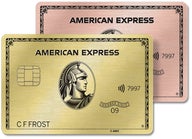
on American Express's secure site
See Rates & Fees, Terms ApplyIntro offer
As High As 100,000 points. Find Out Your Offer.
Rewards rate
1X - 5X
Annual fee
$325
APR
See Pay Over Time APR
Why you'll like this: It combines generous rewards rates on everyday spending with valuable perks that can offset its annual fee.
Reward Details
What you should know
Card Details
Apply with confidence
By applying, you can see if you're approved before impacting your credit
Best for large welcome bonus

on American Express's secure site
See Rates & Fees, Terms ApplyIntro offer
As High As 175,000 points. Find Out Your Offer.
Rewards rate
5X
Annual fee
$895
APR
See Pay Over Time APR
Why you'll like this: It offers valuable perks and credits, plus one of the best rewards rates you can get on travel.
Reward Details
What you should know
Card Details
Apply with confidence
By applying, you can see if you're approved before impacting your credit
Best for everyday spending

on American Express's secure site
See Rates & Fees, Terms ApplyIntro offer
As High As $200 Cash Back. Find Out Your Offer.
Rewards rate
1% - 3%
Annual fee
$0
APR
19.49%-28.49% Variable
Why you'll like this: You’ll enjoy a solid rewards rate on everyday spending and valuable perks like a Disney Bundle streaming credit, all for no annual fee.
Reward Details
What you should know
Card Details
Apply with confidence
By applying, you can see if you're approved before impacting your credit
Best cash back card for families

on American Express's secure site
See Rates & Fees, Terms ApplyIntro offer
As High As $300 Cash Back. Find Out Your Offer.
Rewards rate
1% - 6%
Annual fee
$0 intro annual fee for the first year, then $95.
APR
19.49%-28.49% Variable
Why you'll like this: Since it offers the best rewards rate you can get at U.S. supermarkets, it’s the ideal card for families who spend $6,000 or less annually on groceries.
Reward Details
What you should know
Card Details
Best general business card
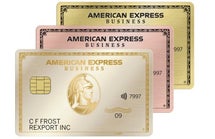
on American Express's secure site
See Rates & Fees, Terms ApplyIntro offer
As High As 200,000 points. Find Out Your Offer.
Rewards Rate
1X - 4X
Annual fee
$375
Regular APR
17.74% - 28.49% Variable
Why you'll like this: It adapts to your business spending and offers a great rewards rate in your top two eligible spending categories each billing cycle.
Reward Details
What you should know
Card Details
Best business card for travel
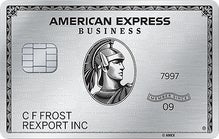
on American Express's secure site
See Rates & Fees, Terms ApplyIntro offer
As High As 300,000 points. Find Out Your Offer.
Rewards Rate
1X - 5X
Annual fee
$895
Regular APR
17.74% - 28.49% Variable
Why you'll like this: You’ll enjoy a solid rewards rate across various popular business spending categories while earning flexible, high-value Amex points.
Reward Details
What you should know
Card Details
Best Delta card for value travelers
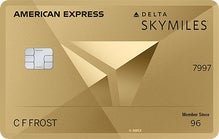
on American Express's secure site
See Rates & Fees, Terms ApplyIntro offer
Earn up to 90,000 Bonus Miles
Rewards rate
1X - 2X
Annual fee
$0 introductory annual fee for the first year, then $150.
APR
19.49%-28.49% Variable
Why you'll like this: You’ll earn rewards at a boosted rate on Delta purchases and in a mix of everyday spending categories, making it a strong standalone option.
Reward Details
What you should know
Card Details
Apply with confidence
By applying, you can see if you're approved before impacting your credit
Best Hilton card with no annual fee
on American Express's secure site
See Rates & Fees, Terms ApplyIntro offer
Earn 100,000 Hilton Honors Bonus Points + a $100 Statement Credit
Rewards rate
3X - 7X
Annual fee
$0
APR
19.49%-28.49% Variable
Why you'll like this: Its combination of rewards for Hilton stays and everyday spending makes it a great choice for Hilton regulars who wish to use a single travel card.
Reward Details
What you should know
Card Details
Apply with confidence
By applying, you can see if you're approved before impacting your credit
Best for luxury Marriott stays

on American Express's secure site
See Rates & Fees, Terms ApplyIntro offer
Earn up to 150,000 Marriott Bonvoy® bonus points
Rewards rate
2X - Up to 21X
Annual fee
$650
APR
19.49%-28.49% Variable
Why you'll like this: The card's valuable credits and perks make the annual fee well worth it, not to mention the generous rewards rate.
Reward Details
What you should know
Card Details
Apply with confidence
By applying, you can see if you're approved before impacting your credit
Best for free Hilton nights
on American Express's secure site
See Rates & Fees, Terms ApplyIntro offer
Intro Annual Fee Offer + 130,000 Points
Rewards rate
3X - 12X
Annual fee
$0 introductory annual fee for the first year, then $150.
APR
19.49%-28.49% Variable
Why you'll like this: It offers a boosted rewards rate on both everyday spending and Hilton purchases, making it a versatile pick for Hilton regulars.
Reward Details
What you should know
Card Details
Best for Delta Medallion members
on American Express's secure site
See Rates & Fees, Terms ApplyIntro offer
Earn up to 125,000 Bonus Miles
Rewards rate
1X - 3X
Annual fee
$650
APR
19.49%-28.49% Variable
Why you'll like this: Its loyalty bonuses make it easier to qualify for Delta’s Medallion Status, which offers the best perks and a higher rewards rate for Delta purchases.
Reward Details
What you should know
Card Details

Remove a card to add another to compare
Remove a card to add another to compare
| Card name | Our picks for | Annual fee |
|---|---|---|
Apply with confidence Hover to learn more on American Express's secure site See Rates & Fees, Terms Apply | Dining + Best overall | $325 |
Apply with confidence Hover to learn more on American Express's secure site See Rates & Fees, Terms Apply | Large welcome bonus | $895 |
Apply with confidence Hover to learn more on American Express's secure site See Rates & Fees, Terms Apply | Everyday spending | $0 |
Apply with confidence Hover to learn more on American Express's secure site See Rates & Fees, Terms Apply | Cash back for families | $0 intro annual fee for the first year, then $95. |
General business rewards | $375 | |
Business card for travel | $895 | |
Delta card for value travelers | $0 introductory annual fee for the first year, then $150. | |
Apply with confidence Hover to learn more on American Express's secure site See Rates & Fees, Terms Apply | Hilton card with no annual fee | $0 |
Apply with confidence Hover to learn more on American Express's secure site See Rates & Fees, Terms Apply | Luxury Marriott stays | $650 |
Apply with confidence Hover to learn more on American Express's secure site See Rates & Fees, Terms Apply | Free Hilton nights | $0 introductory annual fee for the first year, then $150. |
Delta Medallion members | $650 |


What is an American Express credit card?
American Express, also known as Amex, is both a payment processing network and a credit card issuer. This means that Amex issues credit cards to consumers and facilitates consumer transactions with merchants through its network.
Amex offers a variety of personal and business credit cards, including those for luxury travel, cash back, rewards and co-branded credit cards with Delta, Hilton and Marriott. It has some of the most rewarding credit cards available on the market, and Amex points rank among the most valuable rewards currencies.
If you’re looking to earn rewards, you shouldn’t have much trouble finding an Amex card that suits your needs, as many of them offer generous rates in everyday spending categories and carry practical perks. That said, Amex cards are not the best fit for credit-builders or people new to credit (you’ll typically need at least a good credit score to qualify for Amex cards). Additionally, most Amex cards charge comparatively high annual fees.
American Express customer experience
American Express boasts the highest customer satisfaction ratings among all credit card issuers, according to J.D. Power’s 2025 customer satisfaction study. The issuer leads the pack with a score of 643, with Bank of America coming in second with a score of 622.
Amex has held the top spot for the last six years, assuring cardholders that their service concerns are in capable hands and is consistent in its quality. J.D. Power evaluates cards based on category and cost, and several American Express cards consistently rank at the top of each specific card list. The study, conducted annually, assesses issuers and their products based on account management, benefits, customer service, new accounts, rewards earning, rewards redeeming and terms.
You can reach American Express customer service any time of day by calling 1-800-528-4800. You can also contact Amex customer service through the issuer’s mobile app. Chat and phone services are available 24/7.
Pros and cons of American Express credit cards
Pros
-
Wide consumer base: American Express offers a wide range of card options for nearly any type of consumer or business, whether you prefer cash back or rewards.
-
Loyalty perks: American Express connects with top hotel and airline brands worldwide, providing cardholders access to unique, valuable perks and opportunities to maximize their rewards.
-
Affordable options available: American Express has multiple no-annual-fee cards that still carry generous rewards and welcome offers.
Cons
-
High annual fees: Some of Amex’s best credit cards come with steep annual fees. Although the rewards and perks associated with these cards can make these fees worthwhile, sticker shock may deter some potential cardholders.
-
Limited acceptance internationally: Amex cards aren’t as widely accepted globally as cards issued by Visa or Mastercard.
-
High approval threshold: Most of Amex’s options require a good to excellent credit score for approval.
Why one Bankrate editor loves her Amex credit card
Here’s what Bankrate editor Madison Hoehn had to say about her experience with American Express:
I applied for the American Express® Gold Card back in 2024 and was thrilled to not only be approved for the card but to also have the opportunity to earn a boosted welcome offer. Since then, I’ve been very pleased with my Amex Gold Card, since I can transfer the points I’ve earned on dining and grocery shopping to multiple transfer partners for flights. I’m also a big fan of the mobile app experience and Amex’s Plan It® feature, which allows me to split up large purchases without accumulating high interest (rather, it applies a fixed fee).Madison Hoehn, Bankrate editor
Expert advice for American Express cards
Our experts provide valuable insights and tips on how to choose the best American Express credit card for your financial needs, as well as strategies to maximize the benefits and rewards offered by your American Express card.
How to choose the best American Express card
American Express cards are worth it as long as you pick cards that fit your lifestyle and take advantage of additional perks. Some cards are better for people who want simple rewards and others are great for those who make the most of every feature and boosted rewards rate.
The most important factor is that your Amex card provides you more value in rewards and perks than you pay in fees to hold and use the card. It’s a good idea to research all of the cards Amex offers to determine which card best aligns with your financial goals.
Here are some tips to keep in mind:
-
Review your spending habits and needs
Amex covers most bonus categories with several cards, look for ones with high rewards rates for your highest spending categories.
-
Check your credit score
You should have good or excellent credit when applying for any of the best Amex cards. Make sure you meet this requirement by checking your credit report.
-
Understand the benefits and fees
Compare each card’s benefits and make sure you can actually use them when you’re trying to justify an annual fee. Understanding how much the card could cost you can help you determine which one is best for you.
-
Factor in application rules
American Express cards have restrictions on how many you can have and how frequently you can obtain new cards. Make you sure you won’t exceed this limit as you search for a new card.
How to maximize your Amex card
If you find an Amex card that matches your credit card needs, you’ll want to make the most of it, especially if it has a hefty annual fee. Here are some ways to maximize a new American Express card:
Earn your welcome offer: Since Membership Rewards points are so valuable, a welcome offer can be worth much more than its base value when you make strategic transfers to Amex travel partners.
Decide if you want to earn Membership Rewards or cash back: Not all American Express cards earn Membership Rewards, and though they offer great redemption value, they aren’t the best fit for everyone. Unless you plan to use rewards for travel, you might be better served with an Amex cash back card, as redeeming Membership Rewards for cash back offers less than 1 cent per point in value. For frequent travelers, however, Membership Rewards are generally the better choice.
Use perks and credits: Several Amex cards offer valuable perks that can help offset their annual fees, including dining and streaming service credits, travel and shopping credits and airport lounge access. Make sure to lean into these perks to get the full value of your Amex card. Be mindful when evaluating the ongoing value to ensure you’re justifying the annual fee long-term.
Bankrate’s take: Through Amex Travel, cardholders can book travel with points through the Membership Rewards program and even take advantage of some added benefits. You can earn a percentage of your points back when redeeming through the website or earn at boosted rates by using select cards with the Amex travel portal.
Frequently asked questions about American Express credit cards
How we choose the best American Express credit cards
We select cards for “Best” credit cards" pages based primarily on how cards score in our proprietary card rating system, our editors’ subjective assessment of card quality, card approval odds and credit requirements and unique card features.
Cards typically must score a minimum of 3.0 stars to be included on a “Best” list. However, we may include cards with scores below 3.0 if they have low credit requirements or unique features — despite their scores, these cards may still be among the “best” in certain categories. Card ratings are not influenced by advertisers or issuer relationships in any way.
Card selection and ordering may vary based on business considerations, including Bankrate visitor interest, site interactions and card application volume. Affiliate commissions (see how we make money), limited-time offers and a card’s general popularity in the product landscape may also influence which cards we feature on our pages and the order in which they appear. Bankrate’s editorial and business teams also strive to feature a variety of card types from various issuers.
Here’s a quick look at how our rating methodology breaks down for American Express cards:
-
5 stars 2%
-
4 - 4.9 stars 35%
-
3 - 3.9 stars 39%
-
2 - 2.9 stars 22%
-
1 - 1.9 stars 2%