Bankrate.com Archives
 

Consumer debt reaching critical mass

The sluggish economy is really starting to get to people. The result? Some Americans are feeling queasy about their financial futures.

- advertisement -

"People with high debt burdens who would be in big trouble if they lost a job are not so confident," says Keith Leggett, a senior economist at the American Bankers Association.

"They're starting to feel it. They may be beyond the nervous stage."

So are the people who have already lost their jobs. Some folks have been hit and hit hard by the recent waves of layoffs. Others are worried that they'll be next. And they may have cause to be.

Layoffs at U.S. companies jumped 56 percent to 124,852 in June, up from 80,140 in May, according to Challenger, Gray & Christmas, an outplacement firm. The June layoffs marked the sixth time in seven months that job cuts totaled more than 100,000.

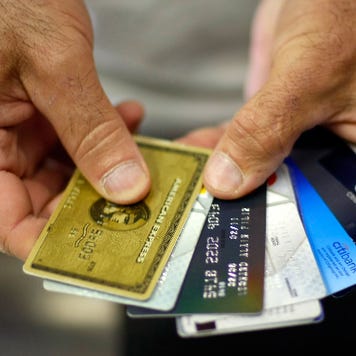
And let's not forget about the debt so many Americans are packing. According to the Federal Reserve Board, consumer credit debt hit an all-time record $1.59 trillion in May. That figure, which includes credit card debt and car loans but excludes mortgages, comes out to about $14,500 per household.

Charge syndrome
Still, despite layoffs and huge debt burdens, Americans continue to charge away.

Revolving credit, which is mostly credit cards, grew at an annual rate of 14.7 percent in the first quarter of 2001, according to the Federal Reserve Board. In April, revolving credit rose by $9.2 billion or at an annual rate of 16 percent.

There are signs that the spending surge of 2001 may be slowing. In May, revolving credit rose by just $3.2 billion or at an annual rate of 5.5 percent.

Maybe people took a good, hard look at their credit card bills and decided to pull back a bit? It would certainly be a step in the right direction.

"There's no question, based on every single index you can point to, that consumers have spent at a rate that cannot be sustained," says David Levy, director of forecasting at the Jerome Levy Economics Institute in Mount Kisco, N.Y.

"There's too much financial stress."

And it's starting to show. More people are falling behind on credit card payments. After easing down a bit in the first quarter of 2001, credit card delinquencies -- payments 30 or more days late -- are on the way up again. The rate of late credit card payments in April was more than 13 percent higher than the previous year, according to Moody's Investor Service.

Bankruptcy filings in the first quarter of 2001 are the highest in any quarter since 1998, according to statistics from the Administrative Office of the United States Courts.

With so many American households carrying so much debt, many more families may be hard hit if the economy continues to slow.

"As personal income slows down, more people will fall behind on bills. The faster the economy weakens, the more trouble we'll see," Levy says.

"We're not at a crisis yet, but we have a very vulnerable consumer."

While much has been written about high-tech layoffs, the manufacturing industry has taken quite a hit as well.

"The manufacturing sector really entered into a recession in the third and fourth quarter of last year," Leggett says. "It's people who are employed in those industries who may be feeling the pinch, especially if they've been aggressively taking on debt."

A crisis away from disaster
A layoff can certainly throw a family for a serious financial loop. A cut in wages or overtime hours or bonuses can also do plenty of damage.

For a family living from paycheck to paycheck, something as simple as a high heating bill or an unexpected car repair can mean trouble.

"They're just a major inconvenience away from needing help," says Suzanne Boas, president of Consumer Credit Counseling Service (CCCS) in Atlanta.

Consumers needing help have been flooding the agency's door since the start of the year.

"When January 2001 came, it was like they all hit the wall," Boas says.

The number of clients visiting the agency through May is up 33 percent from a year ago. Not surprisingly, job loss and fear of job loss are key reasons behind the surge of traffic at the Atlanta counseling center.

"You've got both things happening -- someone loses their job and people who see it happening to a neighbor across the street and wonder how they would handle it," Boas says.

What should you do if you're feeling nervous about your financial future? Put away the plastic.

"If they feel like things are out of control, they need to stop charging and stop adding to that debt," Boas says.

Next step. Sit down and really evaluate your financial situation. Just how bad is it?

Are there ways to cut expenses and whittle down debt? It's also a good idea to build up a bit of a savings cushion, just in case you lose your job or your wages get cut. Do the best you can.

"Some people may only need one month to find another job," says Ginita Wall, a certified financial planner and co-founder of the Women's Institute for Financial Education. "Some people may be out of work for six months or longer."


-- Posted: July 11, 2001


Looking for more stories like this? We'll send them directly to you!
Bankrate.com's corrections policy
Print   E-mail
 

Credit Cards
Compare weekly rates
WEEKLY AVERAGES
Type Fixed Variable
Standard 14.43% 14.10%
Gold 11.99% 12.59%
Platinum 13.53% 14.74%
All 13.71% 14.49%


RELATED CALCULATORS
  Loan calculator (includes amortization schedule)  
  See your FICO score range -- free  
  What will it take to pay off your credit card?  
VIEW ALL 

BASICS SERIES
Credit Card Basics
Don't get trapped by card debt. Learn to use it wisely.
How to find the best card
Check your credit report
Finance charges explained
How to ask for a lower rate
Improve credit with a card
How to repair your credit

MORE ON BANKRATE
Banking glossary  
News archive  
Keep an eye on the leading rates  
Find a high-yielding CD


- advertisement -

 
- advertisement -